
Why I Keep Searching “Chipotle Near Me”: The Story of Chipotle Mexican Grill
Why I keep going back
Every so often, I do what a lot of people do when dinner needs to be fast without feeling like an afterthought: I search “Chipotle near me,” pick a nearby location, and order a bowl.
That sounds like an ordinary habit. It also happens to be a pretty good summary of why Chipotle became such a large business.
The food is quick, but it does not feel assembled from a completely fixed menu. I can see the ingredients, choose what goes into the bowl, change the proportions, and end up with something that feels more like my order than a standard combo meal. The locations I visit are usually fresh, the portions are generally generous, and the price feels fair for what I get. Apparently proximity may improve the scoop size too — at least the Chipotle near me seems more generous than some of the portion complaints I see online.
I also like Moe’s, so this is not a declaration that one burrito chain has conquered all others. What interests me about Chipotle is something bigger: how did a restaurant that was originally supposed to finance somebody else’s “real restaurant” become one of the defining fast-casual businesses in the United States?
That story starts with one tiny Denver shop in 1993. It runs through an investment by McDonald’s, a blockbuster public offering, a food-safety crisis serious enough to threaten the brand’s identity, a digital turnaround, and an expansion strategy that had Chipotle operating more than 4,200 restaurants by mid-2026.
The bowl is good. The business story may be better.
What is Chipotle?
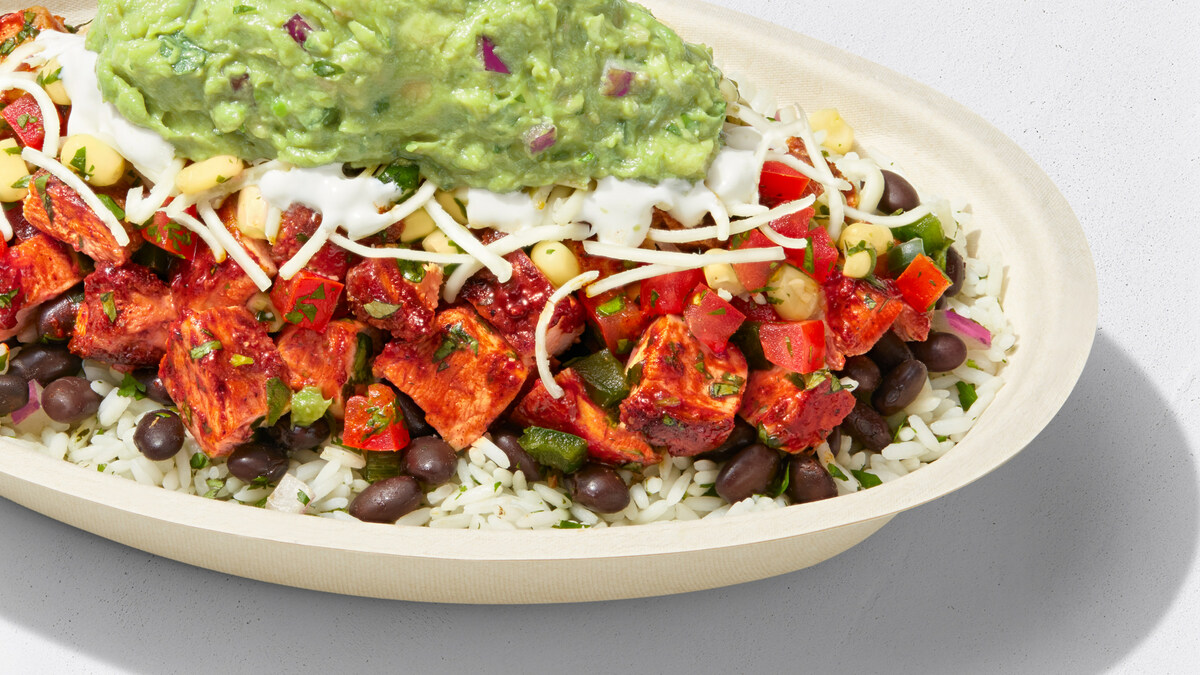
Chipotle Mexican Grill is a fast-casual restaurant company built around a focused menu of customizable burritos, bowls, tacos, salads and related items prepared in an open-kitchen format. The company was founded by Steve Ells in Denver in 1993. Its original idea was unusually simple: food could be served quickly without being designed like conventional fast food.
That distinction still explains much of the experience. Instead of choosing from dozens of finished entrées, the customer moves through a line and builds one from a relatively small set of ingredients. Chipotle described this model in an early SEC filing as “A Few Things, Thousands of Ways.”
The phrase is useful because Chipotle’s advantage has never really been an enormous menu. It is the number of combinations that can come out of a small one.
Current food-safety note: the 2026 jalapeño Salmonella outbreak
Because this article is being published in August 2026, there is a current issue that should not be buried beneath a favorable company history.
The FDA and CDC are investigating a multistate outbreak of Salmonella Javiana linked to fresh jalapeños from Sinaloa, Mexico, distributed by Coast Citrus Distributors. In its August 5 update, the FDA reported 345 illnesses across 27 states, 36 hospitalizations and no deaths. People who became ill reported eating at Mexican-style restaurants including Chipotle and QDOBA.
Chipotle received implicated jalapeños and switched its jalapeño supplier nationwide beginning July 20, 2026. The FDA says that because Chipotle and QDOBA removed the affected product and changed their handling of the jalapeños, it does not consider there to be a current ongoing risk from those establishments in this outbreak. The broader investigation remains open.
That distinction matters. A supplier-linked outbreak should not be minimized, but it also should not be described as though Chipotle is currently serving the recalled product after the FDA says the restaurant has taken the relevant removal action.
This section should be revisited when the FDA closes the investigation.
Chipotle history at a glance
Why the food still works for me
My usual Chipotle order is a bowl, and the format captures most of what I like about the chain.
A bowl is simple: rice or another base, beans if you want them, a protein or vegetable option, salsas, toppings and extras assembled in front of you. What makes that basic idea work is control. I can make the same general order repeatedly without it feeling locked into a factory-set combination.
For me, Chipotle is better than the average fast-casual meal, but not because every individual ingredient is extraordinary. It is the combination:
- the food usually tastes fresh;
- there is enough customization to change the meal without studying a huge menu;
- service is designed to move quickly;
- portions at the locations I visit are usually substantial;
- a bowl can feel reasonably balanced compared with many convenience meals; and
- the price still feels fair relative to the quality I receive.
None of that means every location is perfect. Restaurant execution always depends partly on the people working that shift. But my experience has been consistent enough that “Chipotle near me” is not just a search query. It is an actual decision I make when I want something quick and predictable without wanting conventional fast food.
And again, I like Moe’s too. The interesting distinction is not that Chipotle invented customizable burritos and bowls. It is that Chipotle built an unusually disciplined business around a very focused version of the idea.
Primary source: Chipotle’s history of Restaurant No. 1
The restaurant that was supposed to finance another restaurant
The first Chipotle opened in 1993 on East Evans Avenue across from the University of Denver, in a former Dolly Madison ice cream shop.
Steve Ells had graduated from the Culinary Institute of America and later cooked at Stars in San Francisco. While in California, he became interested in the large burritos sold by taquerias in the Mission District. He returned to Colorado, borrowed money from his father and opened Chipotle.
But the remarkable part is that Chipotle was not originally the grand plan.
According to the company’s account of its early history, Ells expected the burrito shop to become a cash-generating business that could help finance a fine-dining restaurant. Instead, customers responded to the burritos. A second Chipotle opened in 1995 and a third in 1996.
There is a useful business lesson hidden in that origin story: sometimes the side project is the product.
Ells had identified a gap between traditional fast food and slower restaurant dining. He was using classic cooking techniques and recognizable ingredients, but packaging the experience around speed, customization and a small space.
Today that sounds ordinary because fast casual is everywhere. In 1993, the model was much less obvious.
Then McDonald’s showed up
Chipotle’s next chapter is frequently simplified into “McDonald’s owned Chipotle,” but the actual relationship is more interesting.
McDonald’s made an equity investment in Chipotle in February 1998 and later became its majority shareholder. The investment gave a still-small restaurant company access to capital and expansion experience that would have been difficult to reproduce on its own.
This is one reason the Chipotle story is more complicated than a romantic tale of a founder slowly building stores one by one. The concept mattered, but scale also required money, systems, real estate and organizational discipline.
The partnership eventually ended, but not before Chipotle had grown from a regional concept into a national company.
The 2006 IPO — and independence
Chipotle went public in January 2006. SEC records show the company sold roughly 6.1 million shares in its initial public offering at $22 per share, generating about $120.9 million in net proceeds for Chipotle.
McDonald’s sold part of its holding during the IPO, sold more shares later that year and then completed its separation from Chipotle in October 2006 through an exchange of its remaining shares.
By the end of that process, McDonald’s no longer had an ownership interest in Chipotle.
That separation matters because it left Chipotle free to build its own identity around a model that was deliberately different from conventional fast food — even though one of the largest fast-food companies in the world had played a major role in helping it scale.
The business advantage of a short menu
One of the most durable things about Chipotle is also one of the easiest to overlook: the menu is intentionally constrained.
The customer perceives variety because the combinations are extensive. Operationally, however, the restaurant can organize itself around a smaller universe of ingredients.
That creates several advantages. Employees repeat the same core preparation processes. Customers can understand the line quickly. New ingredients can be introduced without rebuilding the entire menu. A burrito, bowl, tacos and salad can share much of the same ingredient system.
This is where the Chipotle bowl becomes more than a food item. It is a particularly efficient expression of the company’s operating model.
Customization makes the experience feel broad. The ingredient system keeps the kitchen relatively focused.
That balance — limited back-end complexity, high front-end choice — is one of the smartest parts of the concept.
“Food With Integrity” — philosophy, marketing and something worth verifying
Chipotle has spent years arguing that the ingredients behind fast food matter.
Its Food With Integrity philosophy emphasizes sourcing standards, animal welfare, ingredient simplicity and environmental goals. Chipotle’s current sustainability materials say its standards include restrictions on antibiotics in meat sourcing, supplier audits and programs focused on issues such as soil health and emissions.
Those claims should be treated for what they are: company sourcing standards and company-reported performance, not a blanket guarantee that every sustainability claim is beyond debate.
Chipotle does provide more detail than a vague “we care about the planet” slogan. Its Real Foodprint system says the environmental estimates behind individual ingredients are calculated by HowGood, an independent food-sustainability research company that compares Chipotle’s sourcing standards with conventional industry averages using hundreds of data sources and certifications.
That gives the program more substance than a purely internal marketing calculator, while still leaving the underlying sourcing information and corporate targets open to scrutiny.
I think that is the fair way to evaluate Food With Integrity: it is a real part of Chipotle’s identity and operating decisions, but the company should still be judged against the evidence behind its claims rather than receiving a sustainability halo simply because the phrase sounds good.
Current public-health source: FDA, updated Aug. 5, 2026
The food-safety crisis that could have ended the story
No serious Chipotle history can skip the period from 2015 through 2018.
In 2015, federal and state investigators investigated two outbreaks of Shiga toxin-producing E. coli O26 linked epidemiologically to Chipotle restaurants. The larger outbreak involved 55 reported cases in 11 states and 21 hospitalizations; a smaller separate outbreak involved five cases. No deaths were reported in either outbreak.
Those were not the only incidents.
In 2020, the U.S. Department of Justice announced that Chipotle would pay a $25 million criminal fine to resolve charges connected to foodborne-illness incidents that sickened more than 1,100 people between 2015 and 2018. The resolution included a three-year deferred prosecution agreement and requirements for an improved food-safety compliance program.
The DOJ’s account is especially important because it makes clear that some incidents were not simply bad luck in an agricultural supply chain. Investigators described failures involving sick employees, food-temperature controls, staffing and adherence to food-safety policies.
For a company whose brand rested so heavily on the idea of better food, the damage was existential. “Fresh” stops being a selling point very quickly when customers begin associating the brand with getting sick.
Chipotle had to rebuild trust, not just traffic.
The turnaround: better operations, digital ordering and a new CEO
Chipotle’s modern recovery accelerated when Brian Niccol became CEO in March 2018 after leading Taco Bell.
His appointment signaled that Chipotle was going to preserve the basic food concept while becoming more sophisticated about branding, technology and operations.
The company’s 2018 growth strategy emphasized digital ordering, a second production line for digital orders, marketing, loyalty and improved restaurant execution. By the end of 2018, annual revenue had reached $4.9 billion, and digital sales had grown 42.4% for the year.
The food did not need to become unrecognizable for the company to modernize. The more important change was how customers could access it.
That approach eventually led to a Chipotle experience that is now split between two worlds: the traditional line where you watch your bowl being assembled and a large digital business that can send orders through apps, websites, delivery services and dedicated pickup systems.
Chipotlanes and the evolution of convenience
Chipotle’s drive-through pickup lanes — called Chipotlanes — are an interesting example of the company adapting without simply copying a traditional drive-through.
The concept is built around digital pickup rather than a customer ordering at a speaker and waiting for the entire meal to be prepared from scratch.
That matters because it protects the restaurant’s basic workflow while solving a modern convenience problem.
In the second quarter of 2026, Chipotle opened 100 company-owned restaurants, 80 of them with a Chipotlane. Digital sales represented 38.3% of food and beverage revenue for the quarter.
The company that began with customers standing directly in front of an open prep line now gets more than a third of its food-and-beverage revenue through digital channels.
That is a major transformation — and the core meal still looks recognizable.
From one Denver shop to more than 4,200 restaurants
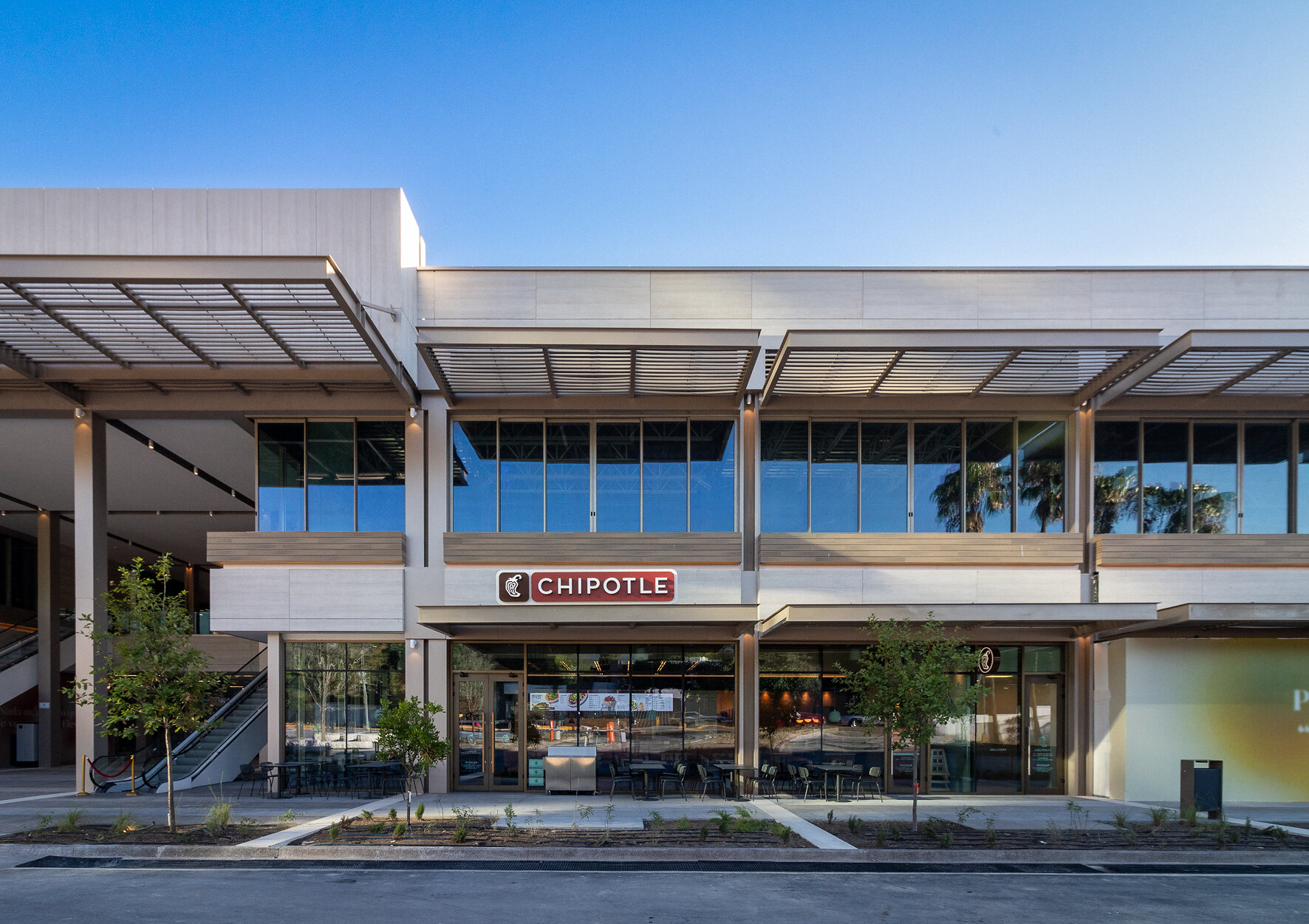
As of June 30, 2026, Chipotle reported more than 4,200 restaurants across the United States, Canada, the United Kingdom, France, Germany and the Middle East, along with nearly 140,000 employees.
The company reported $3.35 billion in revenue for the second quarter of 2026, up 9.3% from the same quarter a year earlier. Comparable restaurant sales increased 2.2%.
Its international ambitions are also becoming more visible. In July 2026, Chipotle opened its first restaurant in Mexico, in San Pedro Garza García, Nuevo León, through a partnership with restaurant operator Alsea. More openings in Nuevo León are planned, with Mexico City targeted for 2027.
There is a bit of historical symmetry in that move. A company founded in Denver after its founder was inspired by Mission District taquerias is now trying to establish the Chipotle model in Mexico itself. Chipotle has said it is approaching that expansion with respect for Mexican culinary heritage; whether the concept earns a durable audience there will be something customers, not a press release, ultimately decide.
Why cilantro, lime and jalapeños are suddenly part of the story
One of the Google Trends signals that pushed me toward this article was a sharp increase around searches for Chipotle cilantro lime sauce.
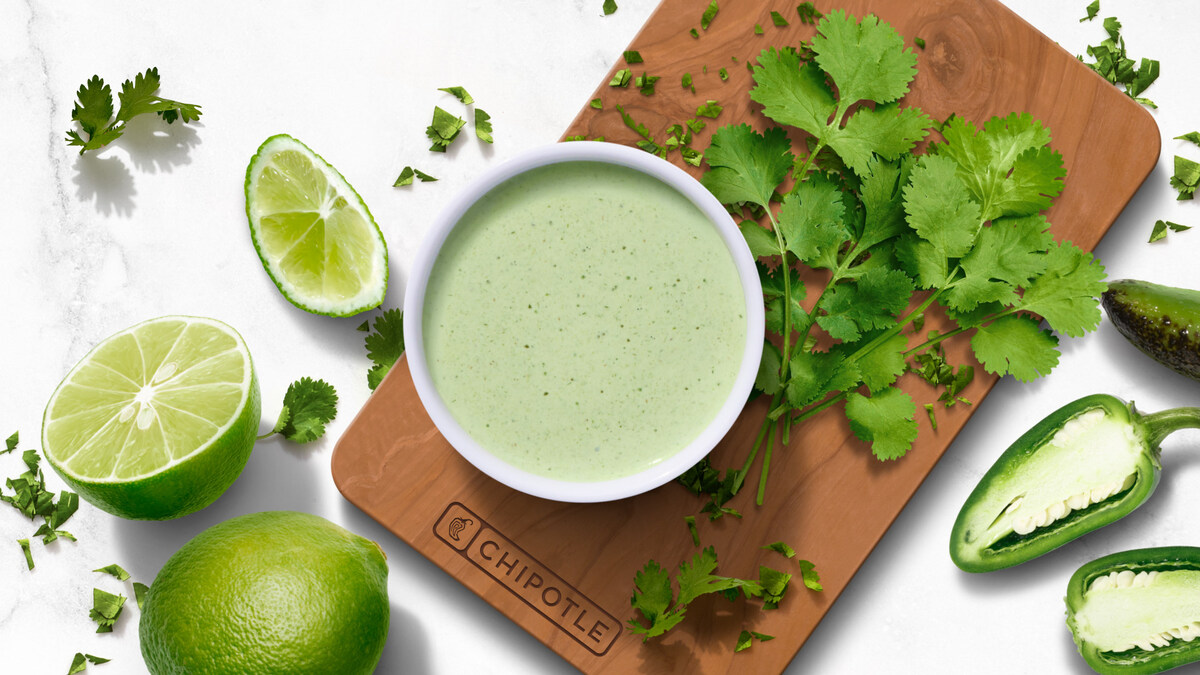
That is not just random search behavior. Chipotle launched a Cilantro Lime Sauce in March 2026 as a limited-time item in the United States and Canada. The company says it is made with cilantro, lime, Mexican spices, sour cream and roasted jalapeños and that it became its highest-performing sauce in company test markets at the time.
The recipe also has a small story that fits the larger Chipotle history. It was created by culinary analyst Danny Boyzo, who began working at Chipotle as a crew member in 2019 before moving into culinary development.
A giant restaurant chain can easily become so standardized that innovation feels like it arrives from a distant corporate laboratory. A menu item developed by someone who actually worked the line is a more interesting model.
Availability can change because the sauce was introduced as a limited-time item, so check the current menu rather than assuming it is still offered at every restaurant.
Chipotle vs. Moe’s? I’m not interested in declaring a winner
Restaurant comparisons often become artificially absolute.
I like Chipotle. I also like Moe’s.
Those two statements can coexist.
For me, Chipotle’s appeal is the combination of fresh-tasting ingredients, a bowl that is easy to customize, dependable speed and reasonable value. Moe’s has its own strengths and a different personality.
The more interesting question for this article is why Chipotle became such an important business case.
Its history shows that focus can scale. It did not win by building the biggest possible menu. It built a system around a relatively small menu, made customization part of the product, attached a sourcing philosophy to the brand, survived an enormous trust crisis and then used digital ordering and new restaurant formats to make the same basic meal easier to buy.
You do not have to decide that every burrito bowl elsewhere is inferior to recognize how influential that formula became.
From “Chipotle near me” to a 33-year business story
When I search “Chipotle near me,” I am not thinking about a 1993 ice cream shop, McDonald’s equity investment, a 2006 IPO, federal food-safety investigations, digital sales or international expansion.
I am thinking about lunch.
That may be the clearest evidence that Chipotle’s business model worked.
All of that complexity sits behind a remarkably simple customer decision: I want a bowl, I know roughly what it will taste like, I can customize it, and there is probably a restaurant reasonably close to me.
The favorable part of my view is not complicated. I generally like the food. The ingredients usually taste fresh to me, the format offers enough choice, the portions at the locations I visit are good, and the price feels fair for the quality.
The historical part is more complicated — and more interesting.
Chipotle benefited from a major corporate investor, faced serious failures that justified scrutiny, rebuilt its systems, modernized aggressively and kept growing. It now has the challenge that comes with becoming the kind of giant company its first restaurant was never intended to become: preserving the sense that a meal is still being prepared rather than merely processed.
So yes, I will probably search “Chipotle near me” again.
But now I will be thinking about the strange path from one Denver burrito shop to a global company every time I do.
Frequently asked questions
When was Chipotle founded?
Chipotle opened its first restaurant in Denver, Colorado, in 1993.
Who founded Chipotle?
Chipotle was founded by Steve Ells, a Culinary Institute of America graduate who had worked at Stars in San Francisco and was influenced by Mission District taquerias.
Was Chipotle owned by McDonald’s?
McDonald’s invested in Chipotle beginning in 1998 and later became its majority shareholder. Chipotle went public in 2006, and McDonald’s disposed of its remaining ownership interest by October of that year.
What is a Chipotle bowl?
A Chipotle bowl is a customizable entrée served without a tortilla and built from the same ingredient system used across much of the menu, such as rice, beans, protein or vegetables, salsas and toppings. Exact ingredients and availability can change.
How many Chipotle restaurants are there?
Chipotle reported more than 4,200 restaurants as of June 30, 2026.
Who is the CEO of Chipotle?
Scott Boatwright has served as Chipotle’s CEO since November 2024. He had previously been the company’s chief operating officer.
Is Chipotle safe to eat during the 2026 Salmonella outbreak?
The FDA says Chipotle received jalapeños implicated in the 2026 Salmonella Javiana outbreak, but Chipotle switched suppliers nationwide beginning July 20. In its August 5 update, the FDA said it did not consider there to be a current ongoing risk from Chipotle or QDOBA after the restaurants removed the affected product and took those actions. The FDA investigation itself remains ongoing.
Does Chipotle still have Cilantro Lime Sauce?
Chipotle launched Cilantro Lime Sauce in March 2026 as a limited-time item in the United States and Canada. Because it was not announced as a permanent menu item, current availability should be checked with Chipotle.
Sources
This article relies primarily on original company records and public-agency documentation:
- Chipotle Mexican Grill Newsroom — first restaurant history and 2017 renovation of Restaurant No. 1.
- Chipotle Mexican Grill SEC filings — McDonald’s investment history, menu strategy and 2006 public offering.
- McDonald’s SEC filings — 2006 separation from Chipotle.
- U.S. Department of Justice — 2020 food-safety resolution.
- Centers for Disease Control and Prevention — final 2015 E. coli outbreak investigation.
- U.S. Food and Drug Administration — August 2026 Salmonella Javiana / jalapeño outbreak investigation.
- Chipotle Mexican Grill Newsroom — 2018 leadership and growth strategy.
- Chipotle Mexican Grill Newsroom — Q2 2026 results and current restaurant count.
- Chipotle Mexican Grill Newsroom — Mexico expansion.
- Chipotle Mexican Grill / HowGood — Real Foodprint methodology.
- Chipotle Mexican Grill Newsroom — 2026 Cilantro Lime Sauce launch.
Editorial note: A Wandering Mind is not affiliated with Chipotle Mexican Grill or Moe’s. This article combines a favorable personal assessment of the dining experience with sourced company history and current public-health information.