
Black & White Photography: Camera Settings, Photoshoot Ideas & How to See in Monochrome
Good black-and-white photography is not color photography with the color removed. It is a way of seeing that gives more weight to light, shadow, tone, shape, texture and timing. The camera matters, but the photograph usually succeeds before the file ever reaches an editing screen.
If a scene depends on color to separate the subject from the background, converting it to monochrome may make it weaker. If the scene already has strong light, distinct tones, useful negative space, texture, lines or a compelling expression, black and white can make those elements more obvious.
The easiest way to improve is to ask one question before pressing the shutter: if every color disappeared, what would still hold this frame together?
Start with tone, not a filter.
In monochrome, a bright red jacket and a bright green wall can collapse into nearly the same shade of gray. That is why color contrast and tonal contrast are not the same thing. A strong black-and-white photograph needs separation you can still read after hue is gone.
This environmental portrait works because the visual hierarchy survives without color: the face and hair create the strongest shapes, the foreground adds depth, the background falls away, and the lighting creates enough tonal separation to keep the subject readable.
For more original work, browse the A Wandering Mind photography portfolio. For the cameras behind the portfolio, see the camera and equipment guide.
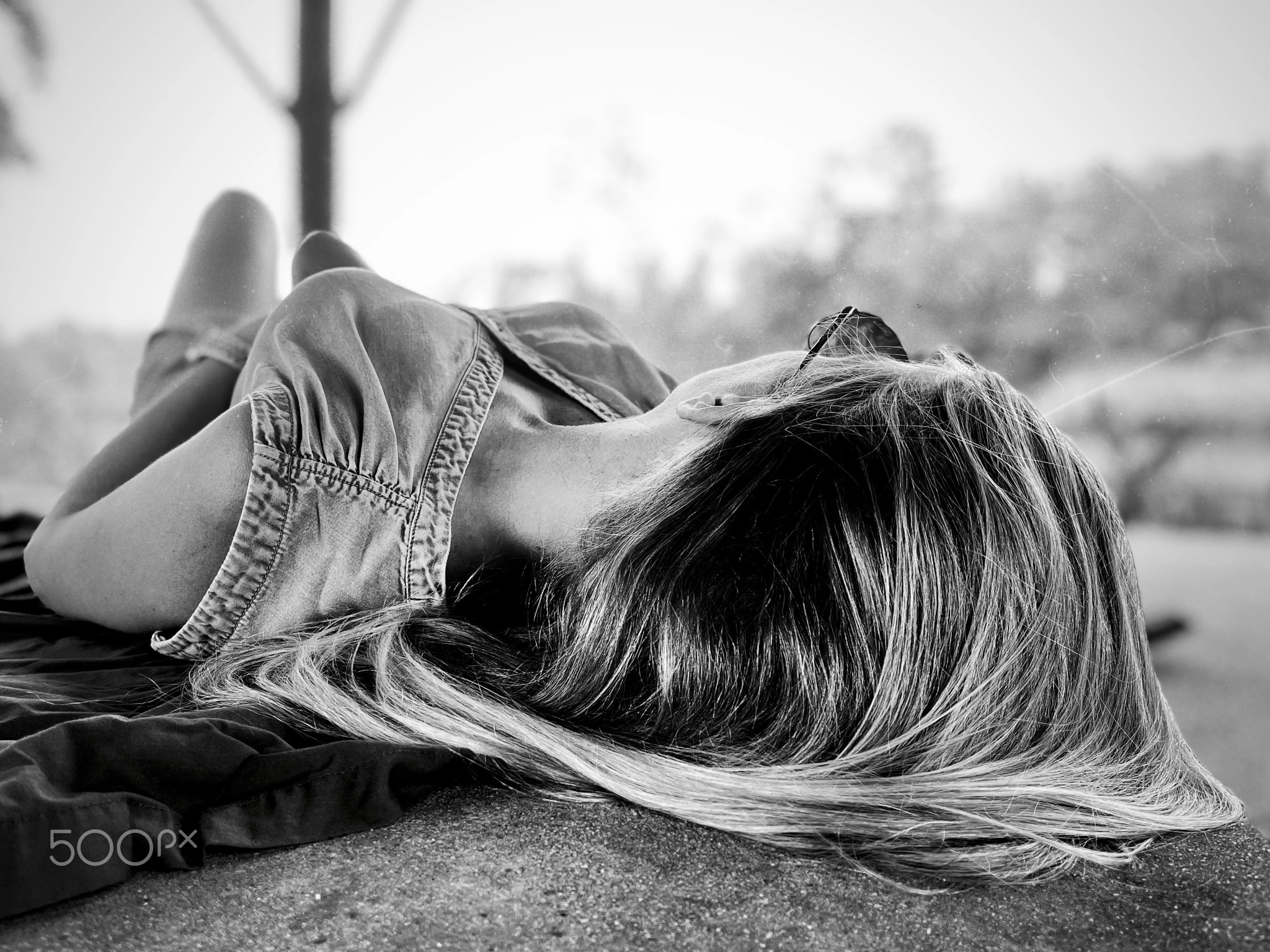 Black & white portrait
What makes a photo work in black and white?
The strongest candidates usually give you something more durable than color: contrast, texture, geometry or emotion.
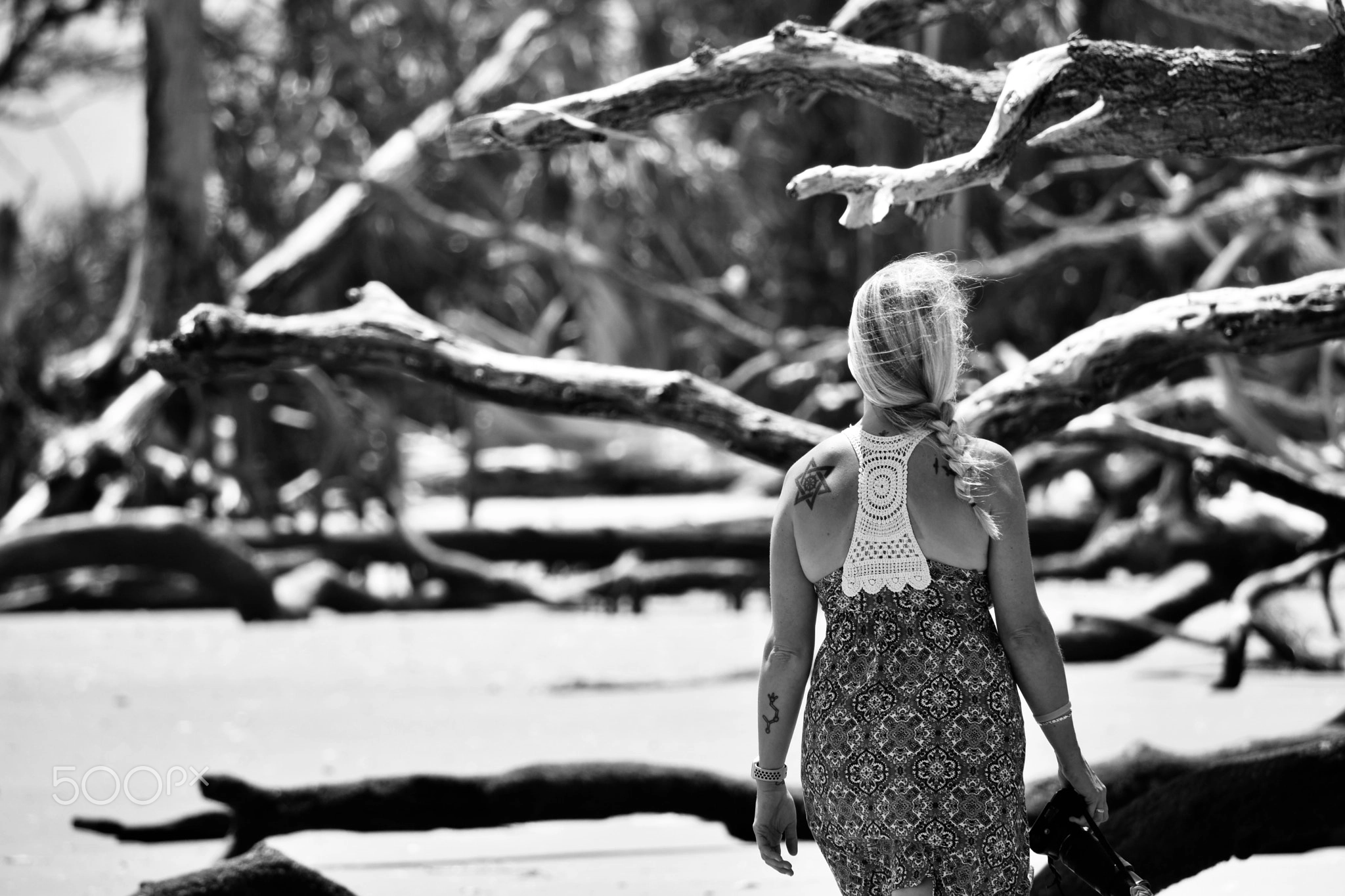 Texture + environment
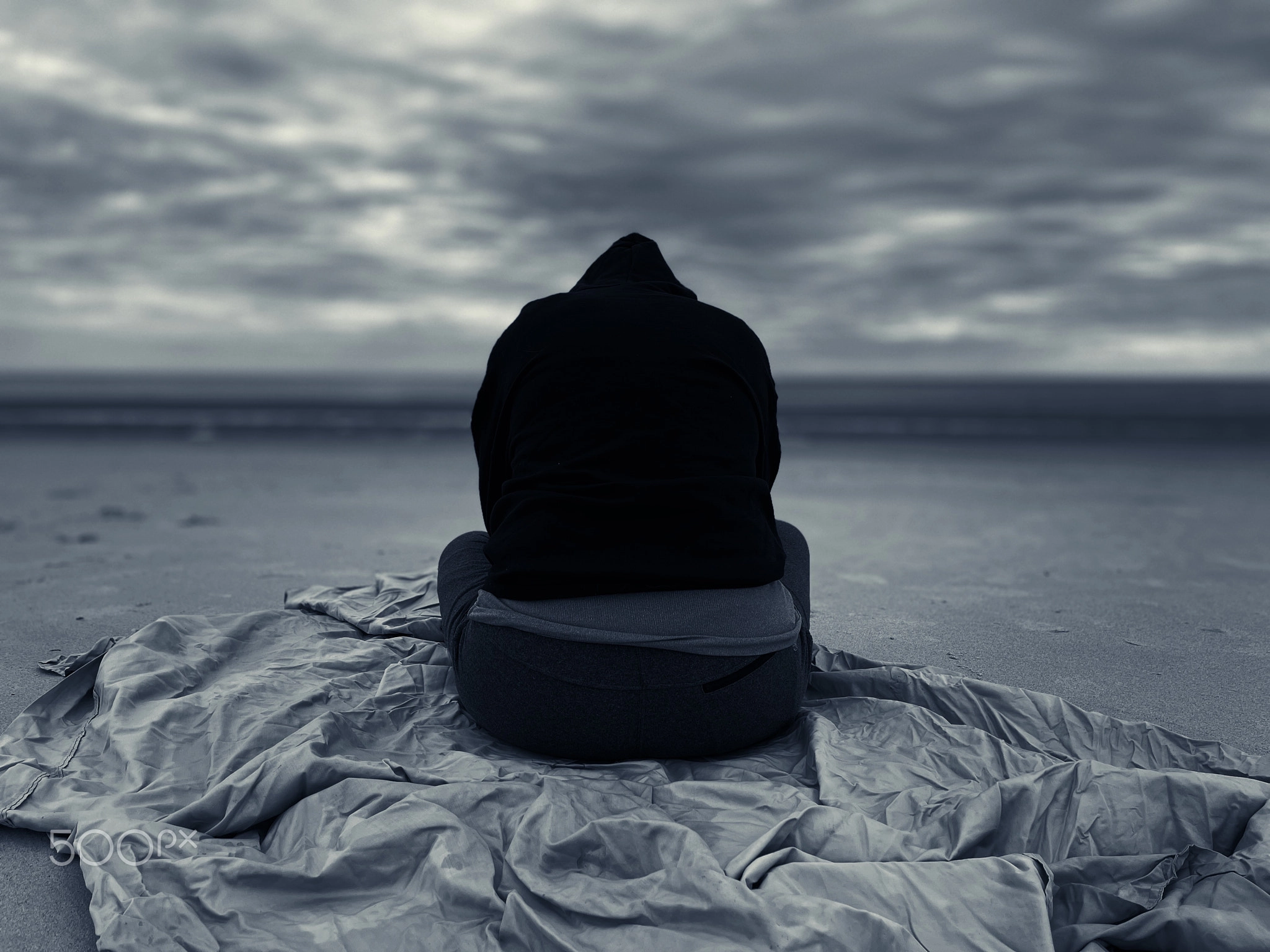 Subtle tonal range
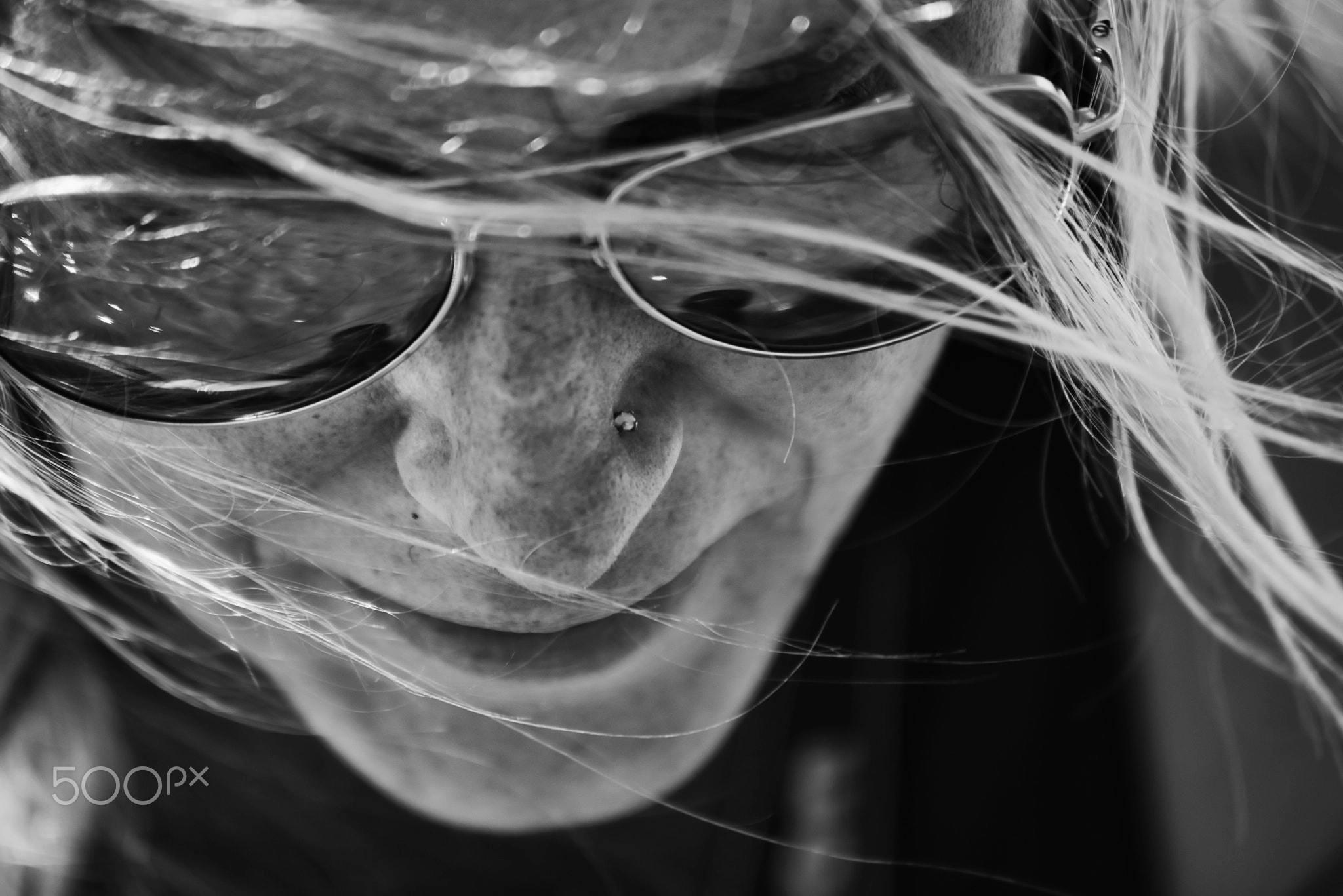 Portrait + movement
The best black-and-white camera settings are the ones that protect the photograph.
There is no single monochrome exposure recipe. A portrait, a bird in flight and a long-exposure cityscape need different settings. What you can standardize is the way you think.
| File format | RAW, or RAW + JPEG, when practical. It gives you more flexibility to shape tones later. If you use a monochrome preview, the JPEG may reflect that look while RAW behavior depends on the camera and software. |
|---|---|
| Picture style | Try a monochrome preview. Seeing the scene without color in the EVF or rear screen can help you judge separation, light and shape before you shoot. Treat it as a visualization aid, not a substitute for composition. |
| ISO | Use the ISO the shutter speed and aperture require. Low ISO is useful when you want smooth tonal transitions. Higher ISO can be worth it when it prevents motion blur or when grain supports the mood. |
| Aperture | Choose depth of field for the story. Open up for subject isolation and intimate portraits; stop down when architecture, landscapes or environmental detail need to stay readable. |
| Shutter speed | Decide whether motion should freeze or show. A faster shutter protects detail in moving subjects. A slower shutter can turn water, people or clouds into part of the design. |
| Exposure | Watch important highlights. Bright clouds, white clothing and reflected light can lose texture quickly. Check the histogram or highlight warnings when the scene is difficult. |
Should you shoot black and white in camera?
Using a monochrome picture style can be extremely useful because it changes what you notice. Instead of reacting to a blue sky, green grass or a red sign, you begin asking whether those areas are lighter or darker than one another.
For maximum editing flexibility, many photographers pair that preview with RAW capture. On many cameras the monochrome setting changes the preview and JPEG interpretation while the RAW file retains more underlying sensor information; verify how your camera and RAW software handle picture controls before relying on that workflow.
Do you need a special black-and-white camera?
No. A dedicated monochrome sensor can be interesting, but it is not a requirement for serious black-and-white photography. Any capable camera can produce strong monochrome work if the lens, exposure, focus and composition are doing their jobs.
Black-and-white photoshoot ideas that give monochrome something to do.
A good idea is not “take a normal photo and make it black and white.” Give the lack of color a reason to exist.
Need a prompt?
Pick a category, then generate one practical assignment. The exercise is local to this page; it does not collect or send any personal information.
Portrait: one light, one expression
Use one window or one directional light. Remove visual clutter, keep the wardrobe simple and ask for a sequence of expressions rather than a fixed pose. Watch the catchlight, cheek highlight and shadow edge.
Architecture: hunt for repeating lines
Bridges, parking garages, staircases, fences, fire escapes and modern facades can become almost abstract when color is removed. Frame for rhythm, symmetry, converging lines and hard shadow.
Coast: photograph texture instead of sunset color
Try driftwood, dunes, sea foam, wet sand, cloud layers, shells and weathered docks. A gray day can be useful because subtle tones and texture replace the pressure to chase saturated light.
Street: build around a patch of light
Find a doorway, beam of sun or reflected patch of brightness and wait for a person to enter it. The photograph is already composed; timing becomes the variable.
Indoor: reflections and glass
Use windows, mirrors, polished tables or dark screens to layer a subject with reflections. In black and white, overlapping shapes can read more clearly because competing hues disappear.
Why bridges are almost made for monochrome.
Suspension cables, stone towers, steel, repeating lines and the contrast between a bridge and open sky give a photographer an unusually strong set of graphic tools. Color can be beautiful, but the structure itself is often enough.
When photographing a bridge in black and white, try three variations before moving on: a centered symmetry frame, a compressed detail of cables and stone, and a wider environmental composition that uses skyline, people or water for scale.
Also watch the sky. A featureless bright sky can flatten the image, while clouds or mist can create layers of gray that separate architecture from the background.
If you want to see a Brooklyn Bridge photograph as a physical canvas rather than only on a screen, A Wandering Mind also has a Fine Art America print listing.
Nikon Z9 vs. Z7 II for black-and-white photography
Neither camera makes a photograph “more black and white.” What they change is how easily you can capture the file you want.
Affiliate disclosure: As an Amazon Associate, A Wandering Mind may earn from qualifying purchases made through the Amazon links below. It costs you nothing extra and does not affect our editorial conclusions.

Nikon Z9
The Z9 is the better fit here when the monochrome subject moves: wildlife, sports, documentary work, fast street moments or portraits where you want flagship autofocus and high-speed capture. Nikon lists a 45.7MP FX-format stacked CMOS sensor, native ISO 64–25,600 and subject detection that includes people, birds and several vehicle types.
Camera image: Peachyeung316 / Wikimedia Commons, CC BY-SA 4.0. Image is used for identification; the photographer does not endorse this article or affiliate link. Source & license ↗

Nikon Z7 II
The Z7 II is the more compact, resolution-focused option in this pairing. Nikon lists a 45.7MP full-frame backside-illuminated sensor with no optical low-pass filter, ISO 64–25,600, a 493-point hybrid autofocus system and dual card slots. That combination makes it especially easy to imagine as a portrait, landscape, architecture or fine-detail monochrome camera.
Camera image: Wilfredor / Wikimedia Commons, CC0 1.0 public-domain dedication. Source & license ↗
For wildlife, fast action or a do-everything professional body, the Z9 has the clearer advantage. For portraits, architecture, landscapes and deliberate fine-art work where 45.7MP resolution is the priority and you do not need the Z9’s speed or integrated pro body, the Z7 II is the more focused choice. Either way, spend as much thought on lens, light and location as the body.
Make the image understandable before Pinterest ever sees it.
A useful image title is not “IMG_4821.” Image SEO starts with accurately describing what the photograph is, why it appears on the page and what a person would search for to find it.
When you control the uploaded file, use a descriptive name that matches the actual photo.
black-and-white-photographer-driftwood-beach.jpgDescribe the visible image first, then add a relevant photography term only when it fits naturally.
Black and white photographer on Driftwood Beach with weathered trees and coastal textureUse the caption to explain what the image demonstrates: contrast, lighting, pose, texture, architecture or another concept from the article.
Driftwood Beach photoshoot idea: use weathered wood and open sky as tonal layers.The surrounding heading and paragraph should reinforce the image honestly. Do not stuff “black and white photography” into every field if the photograph does not support it.
H2: Black-and-white photoshoot ideas for beaches and coastal locationsThat is why this article’s recommended social image filename is black-and-white-photography-lowcountry-portrait.jpg. The live article can still link every original photo back to its 500px portfolio page.
A black-and-white photograph can be art, a portfolio piece, or a licensable asset.
Those goals overlap, but they are not identical. A personal fine-art image can be powerful even when it has almost no commercial stock use. A strong stock image may be less personal but easier for a buyer to use.
Interested in contributing your own photography to Shutterstock?
Treat stock as a separate craft: useful subjects, technically clean files, accurate keywords, releases when required and realistic expectations. Black and white can work when monochrome is integral to the concept, but do not convert every image just to create another submission.
Become a Shutterstock contributor ↗Disclosure: Kestrel Ventures LLC may receive compensation if you use this referral link. It costs you nothing extra and does not affect our editorial decisions.
- Check focus at 100%.
- Inspect shadows for distracting noise.
- Remove dust spots and accidental artifacts.
- Use literal, accurate keywords.
- Confirm model/property release needs.
Black-and-white photography questions
What camera settings are best for black-and-white photography?
There is no universal exposure recipe. A practical starting point is RAW capture, a monochrome preview if it helps you see tones, the lowest ISO that still gives you the shutter speed and aperture you need, and careful attention to highlight detail. Choose aperture and shutter speed based on the subject rather than the fact that the final image will be monochrome.
Should I shoot black and white in camera or convert RAW later?
Both can be useful. An in-camera monochrome preview helps you judge tone while shooting. RAW gives you more flexibility later. On many cameras, the monochrome picture style affects the preview/JPEG while RAW retains more underlying sensor data, but you should verify how your specific camera and software handle picture controls.
What makes a photo look good in black and white?
Look for a strong arrangement of light and dark areas, texture, lines, shape, expression, negative space or atmosphere. If color is doing most of the work in the original scene, a monochrome conversion may reduce separation instead of improving it.
What are good black-and-white photoshoot ideas?
Try window-light portraits, silhouettes, driftwood or beach textures, architecture with repeating lines, street scenes built around hard light, reflections through glass, fog, shadows, weathered hands or faces, long exposures of water, and close details of stone, fabric or metal.
Is the Nikon Z9 good for black-and-white photography?
Yes. It is especially compelling when the subject moves because Nikon pairs its 45.7MP stacked full-frame sensor with high-speed capture and advanced subject-detection autofocus. Those features do not create the monochrome aesthetic; they simply make demanding moments easier to capture.
Is the Nikon Z7 II good for black-and-white photography?
Yes. Its 45.7MP full-frame sensor, ISO 64 base sensitivity and high-resolution focus make it a natural fit for portraits, landscapes, architecture and fine-detail work. The artistic result still depends much more on light, lens choice, composition and processing than on the camera body alone.
Does high ISO noise look better in black and white?
Sometimes, but not automatically. Removing color can make chroma noise less distracting, and visible grain can support a documentary or film-like mood. It can also destroy smooth skin, shadow detail or fine texture. Raise ISO because the photograph needs it, not because black and white is expected to hide every technical problem.
Can I sell black-and-white photography as stock or prints?
Yes, but stock and print buyers are looking for different things. Prints can succeed as personal or decorative art. Stock imagery usually needs clear commercial usefulness, accurate metadata and any required releases. Neither route guarantees sales.
If color disappeared, would the photograph still have a reason to exist?
That is the question worth carrying into the next photoshoot. Look for the subject before the preset. Look for light before the slider. Look for a relationship between dark and bright areas before deciding that black and white will make a weak frame feel serious.
Then experiment. Make one version with hard contrast and another with a long gray scale. Photograph the same person in window light and open shade. Revisit a familiar bridge when the weather is ugly. Use the camera’s monochrome preview for a day. The goal is not to eliminate color forever. It is to learn what remains when color is no longer available to rescue the composition.
That way of seeing will improve color photography, too.