

A Wandering Mind · Photography
The tools behind the photographs.
A practical field guide to the phones, Nikon cameras and lenses used along the way—organized around what each tool changes, not around buying gear for its own sake.
Cameras & equipment.
Photography starts before the upgrade. This page follows the phones, Nikon bodies and lenses behind the work, with the photographs themselves kept at the center of the story.
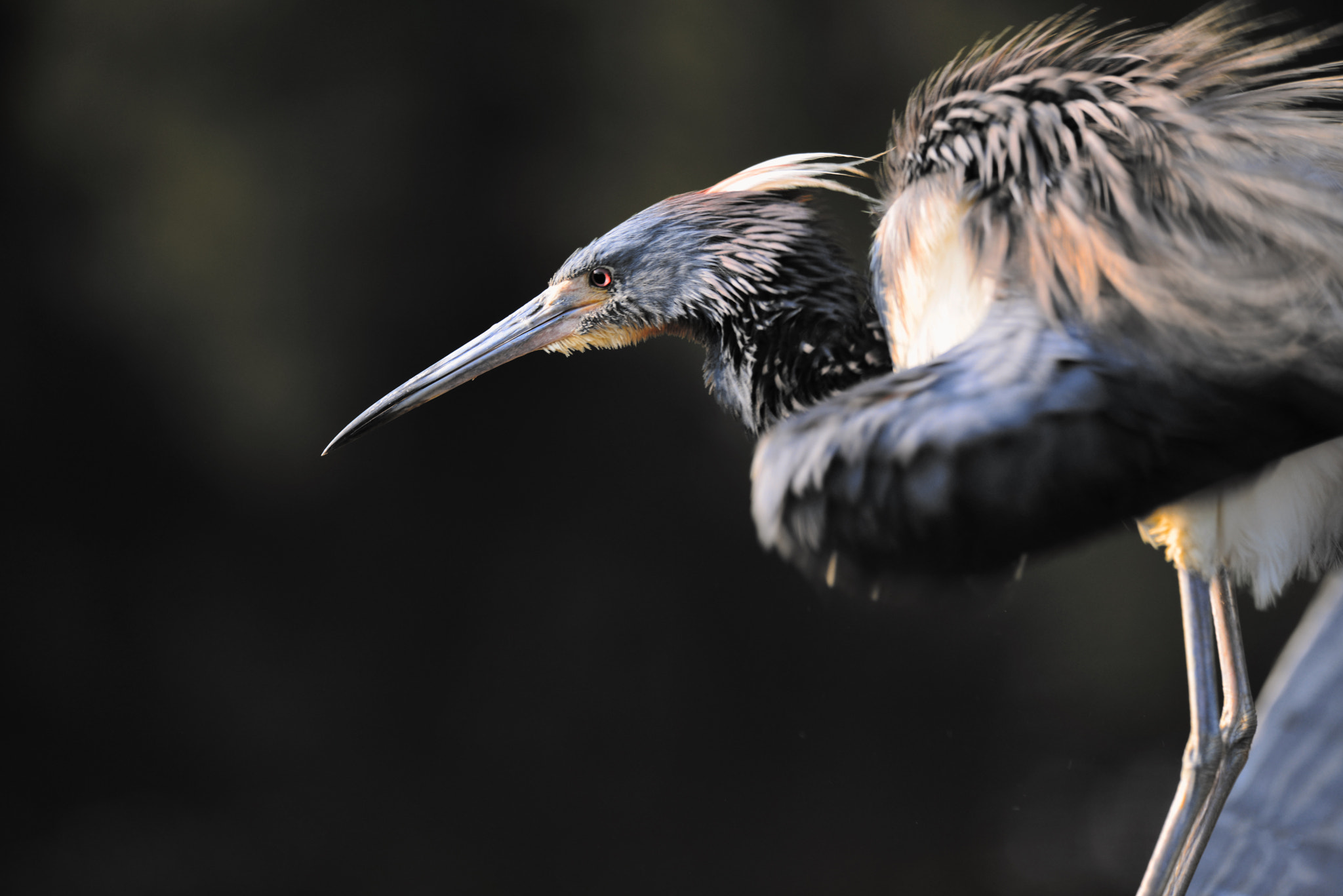
Photograph by Finley Delouche · 500px ↗
Start with the camera already in your hand.
The first camera shown here is an iPhone 6s because that was the phone available when Finley was beginning to photograph seriously. It is not a recommendation to hunt down an old phone: the lesson is that useful photography starts before the upgrade.
Apple iPhone 6s ↗
The iPhone 6s rear camera used a 12MP sensor, an ƒ/2.2 five-element lens, Focus Pixels autofocus, exposure control, Auto HDR and 4K video. By current standards its single-camera system is limited, but it is still enough to learn framing, timing, light, perspective and what belongs outside the frame.
Someone starting today can begin with whatever phone they already own. Newer iPhones add the things the 6s lacked: multiple focal lengths, stronger stabilization, much better low-light processing, higher-resolution capture, macro capability and substantially more useful telephoto reach.
Notable iPhone camera steps after the 6s
These are camera milestones, not a ranking and not a requirement to upgrade. The model names are Amazon affiliate links; no product photos are needed here.
iPhone 7 Plus ↗
Dual 12MP wide + telephoto cameras, 2× optical zoom and Portrait mode.
iPhone 11 Pro ↗
Ultra Wide + Wide + Telephoto system and Night mode made low-light and lens choice much more flexible.
iPhone 13 Pro ↗
Sensor-shift stabilization, 3× telephoto reach, macro photography and a broader 6× optical zoom range.
iPhone 14 Pro ↗
The first 48MP Main camera on iPhone, plus Photonic Engine for stronger detail and low-light processing.
iPhone 15 Pro Max ↗
48MP Main camera with a 5× 120mm-equivalent telephoto for much more practical distant-subject framing.
iPhone 16 Pro ↗
48MP Fusion + 48MP Ultra Wide, 5× telephoto on both Pro sizes and Camera Control for faster capture adjustments.
iPhone 17 Pro ↗
Three 48MP rear cameras, with 4× and 8× optical-quality telephoto options extending the system to 200mm equivalent.
Two photographs, one phone.
Manhattan and Sit are the curated iPhone 6s examples here. The point is not that an old phone matches a modern camera system; it is that composition and attention were already available before dedicated gear entered the picture.
Amazon disclosure: As an Amazon Associate I earn from qualifying purchases. The iPhone model links above use A Wandering Mind affiliate tracking.
Upgrade when you can name the limitation.
For this body of work, the next step was Nikon: first a D3300, then a D800. The preference grew from familiarity—not from a claim that every photographer should choose the same brand.
A compact DX DSLR with a 24.2MP sensor, Nikon F mount and 5 fps continuous shooting. It opens the door to lenses, optical-viewfinder shooting and direct physical controls without starting at the professional end of the system.
Why this step matters
A DSLR does not automatically make a photograph better. What changes is access: a longer lens can place distant wildlife larger in the frame; manual controls become faster to reach; an optical finder makes tracking feel different; RAW files give more room for deliberate processing.
The D800 moves to a 36.3MP FX sensor, 51-point autofocus and a larger high-resolution file that gives considerably more cropping latitude—especially useful when wildlife refuses to occupy the ideal part of the frame.
What changed from the D3300
The shift is less about a simple “better camera” ladder and more about working style: full-frame field of view, much higher resolution, stronger build, more direct controls and a deeper professional F-mount ecosystem. The tradeoff is a larger, heavier body and slower full-resolution burst rate than action-oriented flagships.
Blue-and-Gold Macaw — Detailed Parrot Portrait
Blue-and-Gold Macaw is one of the featured photographs from the Nikon D800 phase of the portfolio. The D800 pairs a 36.3MP FX-format sensor with Nikon’s 51-point Multi-CAM 3500FX autofocus system and the F-mount lens ecosystem, giving this stage of the work substantially more resolution and cropping latitude than the earlier D3300.
Brooklyn Bridge to Manhattan
Photographed on the Nikon D3300, this New York City image uses the Brooklyn Bridge and Manhattan skyline to show what changed after moving from a phone to an interchangeable-lens DSLR: more deliberate framing, a larger DX sensor and a system that could grow through lenses.
Snowy Egret
Snowy Egret is a second Nikon D800 wildlife example. The 36.3MP FX sensor provides fine feather detail and substantial room to crop, while the 51-point autofocus system and full-frame F-mount workflow make the D800 a meaningful step beyond an entry-level DSLR.
Nikon is highlighted here because it became the familiar system. Camera brands often place controls, menu concepts and terminology in different places; familiarity reduces friction when the subject is moving. That is a reason to value a system you know—not a reason to treat Nikon as the only serious choice. Canon, Sony, Fujifilm, OM System and others all make capable cameras. The better choice is the one whose controls, lenses, price and support fit the photographer.
Flagship DSLR or flagship mirrorless?
The D6 represents the mature end of Nikon’s professional DSLR line. The Z9 represents Nikon’s current flagship mirrorless direction. They solve some of the same problems with very different tools.
20.8MP FX DSLR built around speed, reliability, optical-viewfinder shooting and a 105-point all-cross-type autofocus system.
- 14 fps mechanical-shutter continuous shooting.
- ISO 100–102,400, expandable far beyond that range.
- Direct continuation of the professional F-mount DSLR workflow.
- Best fit when optical viewing and an existing F-mount lens system are central priorities.
Short specification summary
FX format · 20.8MP · 14 fps · 105 selectable cross-type AF points · CFexpress Type B/XQD · 4K UHD.
45.7MP stacked-sensor Z-mount flagship built around high-resolution speed, electronic viewing, deep-learning subject detection and modern still/video integration.
- 20 fps full-resolution RAW/JPEG, 30 fps full-resolution JPEG and 120 fps at 11MP.
- Automatic detection includes birds and other fast-moving subjects.
- Blackout-free electronic viewfinder and no mechanical shutter.
- Z mount is Nikon’s current mirrorless lens platform.
Short specification summary
FX stacked CMOS · 45.7MP · EXPEED 7 · dual CFexpress Type B/XQD · up to 8K video · electronic shutter only.
Nikon Mount Adapter FTZ II ↗
Moving to Z mount does not necessarily mean abandoning every F-mount lens at once. Nikon says the FTZ II can mount more than 360 F-mount NIKKOR lenses on Z cameras; functionality varies by lens, so exact compatibility should be checked before purchase.
Why an adapter matters in a real upgrade path
It lets a photographer preserve useful F-mount glass while gradually deciding which lenses are worth replacing with native Z versions. Nikon notes that many AF-S, AF-P and AF-I lenses retain autofocus/auto-exposure functionality, while older lenses may have limitations.
More reach, chosen for a reason.
A premium, relatively portable wildlife/action zoom. It is a logical “carry it often” option when 400mm is enough and handling matters as much as maximum reach.
Key facts
100–400mm · S-Line · optical VR · about 1.4kg · compatible with Z teleconverters.
Longer native Z reach for birds and distant wildlife, with internal zoom and 5.5-stop VR. Nikon positions it as a modernized follow-up to the popular F-mount 200–500mm class.
Key facts
180–600mm · internal zoom · 5.5-stop VR · roughly 1.96kg · full-frame Z mount.
A specialist prime that trades zoom flexibility for a comparatively compact, lightweight 600mm design intended to be practical for handheld wildlife work.
Key facts
600mm prime · S-Line · 6-stop VR on supported bodies · about 1.39kg without tripod collar.
These are upgrade paths, not requirements. The 100–400mm emphasizes portability and flexibility; the 180–600mm prioritizes long zoom reach for birds and distant wildlife; the 600mm f/6.3 offers a lighter fixed-focal-length route to 600mm; and the 600mm f/4 TC is the specialist professional option for maximum light-gathering performance and built-in 840mm reach. FTZ II provides a practical bridge for compatible F-mount lenses while moving gradually into native Z glass.
Device image credits, sources & licenses
Build photographs before building a shopping list.
For an aspiring photographer, the useful next step may be taking more photographs—not buying another body. Build a small portfolio, learn what you consistently photograph, and let repeated limitations tell you what equipment would actually change the work.
Stock licensing can also be a useful way to learn the commercial side of photography: metadata, releases, recognizable property, technical quality and what buyers need are all different questions from whether a photograph feels personally successful.
Explore Shutterstock for contributors ↗
Referral disclosure: Shutterstock links use referral ID 3898640 and may generate compensation from qualifying activity. No earnings are promised, and the referral relationship does not determine which photography or equipment is discussed.
Amazon disclosure: As an Amazon Associate I earn from qualifying purchases. Product-name Amazon links on this page use A Wandering Mind tracking tag wandermind08-20. Product availability changes; exact mount, seller, condition and compatibility should be confirmed before purchase.
Apple and iPhone are trademarks of Apple Inc., registered in the U.S. and other countries and regions. Nikon, NIKKOR and product names referenced on this page belong to their respective trademark owners. A Wandering Mind is not presented as an authorized Apple or Nikon reseller. Official Apple/Nikon logos and manufacturer product-page photography are not republished here. Device and lens photographs shown on this page come from independently licensed Wikimedia Commons files; individual attribution and license information appears beneath each image and in the device-image credits section.