
Walgreens Is Closing Stores in 2026. Is the Economy Sending a Warning?
What is the job market saying?
The closures reveal real pressure on neighborhood retail, pharmacy margins and accessible jobs—but one company's retreat is not the same thing as a recession forecast.
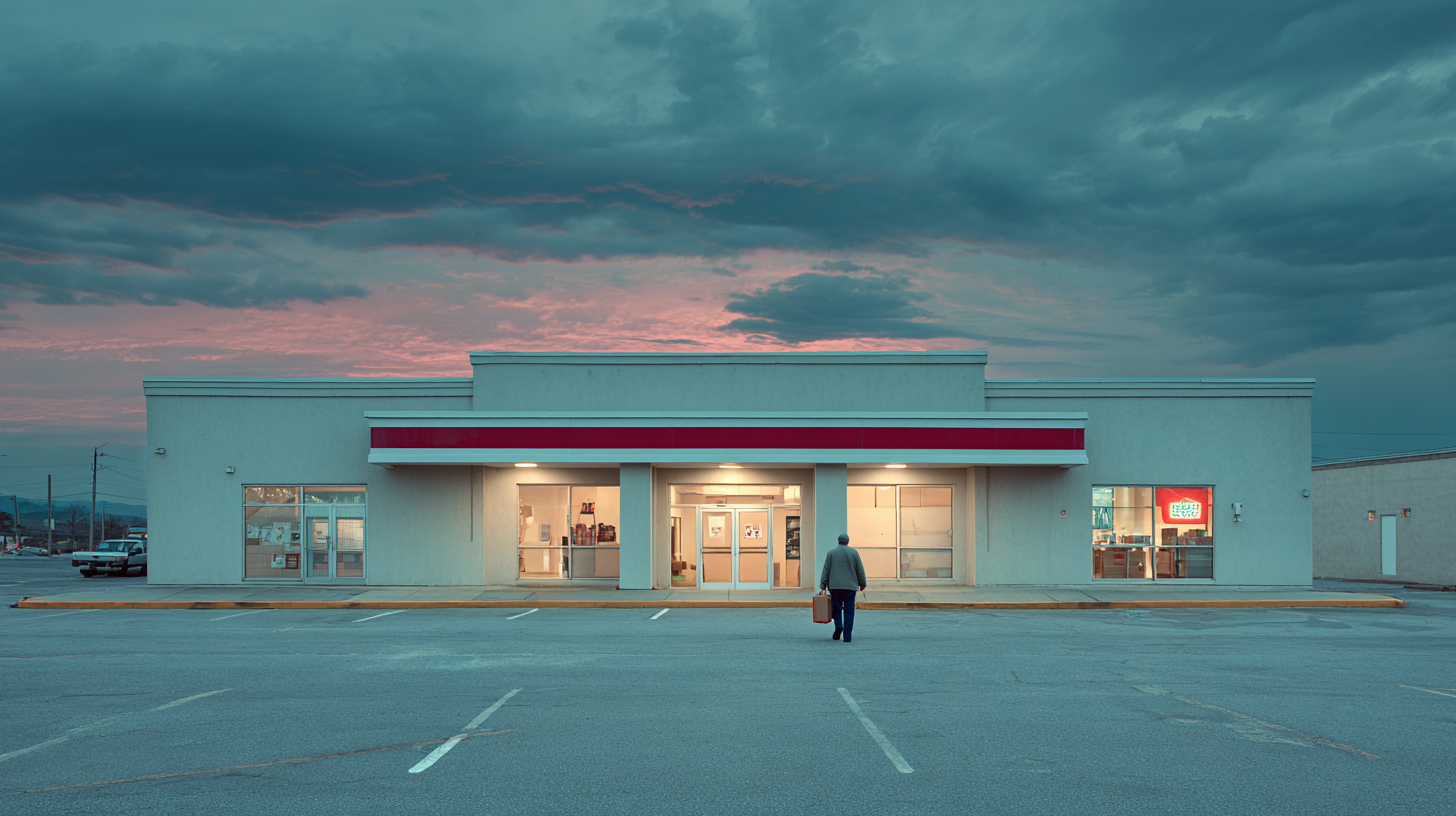
Walgreens' 2026 closures are a warning, but not a recession alarm by themselves. They show how quickly an old retail model can lose locations and routine jobs when pharmacy reimbursements tighten, store traffic weakens and fixed costs remain high. Yet national employment data still show a labor market that is cooling rather than collapsing, while healthcare occupations continue to add jobs.
Three different warnings are hiding in one headline
Walgreens is shrinking its footprint after years of weak store economics, costly strategic missteps and pressure from lower-cost competitors.
Routine, location-based jobs are vulnerable when shoppers move online, stores automate and companies consolidate fulfillment.
June payrolls still rose and unemployment held at 4.2%. Walgreens alone cannot tell us whether the whole economy is contracting.
Reported Walgreens store locations closing in 2026
Walgreens has not released one authoritative national master list. The 17 locations below were compiled from reporting available through August 3, 2026. A reported location should not be treated as proof that every closure is still pending; several have already closed.
Separate operational closure: Walgreens is also closing a Houston distribution center, with 159 Texas positions scheduled to be cut. For a prescription affected by a store closing, use the official Walgreens store-closure guidance.
Why is Walgreens closing stores?
Walgreens originally described a multiyear plan to close roughly 1,200 to 1,300 stores by the end of fiscal 2027. After private-equity firm Sycamore Partners completed its acquisition in 2025, the expected 2026 pace reportedly fell to fewer than 100 closures—far below earlier projections closer to 700. The smaller number is good news relative to the original plan, but the underlying pressures did not disappear.
Underperforming locations
Walgreens' last public filings said closure timing prioritized cash-flow benefits and stores that were not producing acceptable returns.
Lease economics
An expiring lease creates a natural decision point. A weak store is easier to leave when renewal would lock the company into years of additional costs.
Thin prescription margins
Pharmacies can fill more prescriptions without earning proportionally more. Lower reimbursement and complex benefit-manager contracts squeeze the profit left after labor and occupancy costs.
Weak front-end retail sales
In Walgreens' final public quarter, comparable retail sales declined 2.4%, with weakness in grocery, household, health, wellness and beauty categories.
Competition and convenience
Walmart, Amazon, grocery pharmacies, mail order and same-day delivery have made the neighborhood drugstore less essential for many nonprescription purchases.
Safety and loss at some stores
Theft and security costs have contributed to individual closure decisions, but they are only one part of a larger profitability problem—not a complete explanation for the national reset.

Is this a sign of worse things to come?
It is a sign of a less forgiving economy. Companies can no longer assume that a familiar brand, a prime corner and steady prescription volume will rescue every store. When financing, rent, wages and inventory are expensive, management cuts the weakest locations faster. Private ownership can intensify that discipline because operating cash flow becomes an immediate priority.
But Walgreens is also an unusually complicated company story. Its margins were squeezed by pharmacy reimbursement, its front-end retail business weakened and its healthcare expansion produced major impairments. Those issues make Walgreens a poor stand-alone recession indicator.
The June 2026 employment report points to cooling, not collapse. The United States added 57,000 payroll jobs and unemployment was 4.2%. Retail trade showed little change. The more concerning detail was that 1.9 million people had been unemployed for at least 27 weeks—286,000 more than a year earlier. That suggests job searches are becoming harder for some workers even while the headline unemployment rate remains stable.
Our reading: Walgreens is a yellow light for the economy and a red light for the traditional chain-drugstore model. It becomes a broader recession warning only if similar cuts spread rapidly while payrolls, consumer spending and business investment deteriorate together.
There is also a local effect that national statistics miss. A closed store means fewer walkable prescription options, less traffic for neighboring businesses and fewer jobs with relatively low barriers to entry. Research on pharmacy access has found that closures can reduce medication adherence among older adults, especially where alternatives are limited. The economic cost is therefore not confined to Walgreens' payroll.
What could the closures mean for the job market?
The immediate impact extends beyond store employees. Reuters reported more than 600 planned job cuts after the buyout: 469 positions in Illinois and 159 tied to the Houston distribution-center closure. Store closures may add disruption, although Walgreens says workers at the two New Jersey stores are being supported with opportunities at nearby locations. A transfer preserves employment; it does not necessarily preserve the same commute, schedule or hours.
The longer-term divide is between healthcare expertise and routine retail tasks. The Bureau of Labor Statistics projects pharmacist employment to grow 5% from 2024 to 2034 and pharmacy-technician employment to grow 6%. Cashier employment, by contrast, is projected to decline 10% as self-checkout and online sales expand. In other words, pharmacy work is changing location—not disappearing—while the front register is structurally shrinking.
Follow care into hospitals and clinics
Clinical, ambulatory, specialty and health-system roles may offer stronger demand than traditional chain retail, although licensing and experience requirements remain.
Translate precision into healthcare
Hospital pharmacies, grocery pharmacies, specialty pharmacies and fulfillment operations value medication knowledge, inventory control and insurance-processing experience.
Market the operations skills
Scheduling, cash controls, inventory, de-escalation and customer service transfer to grocery, medical-office, hospitality and logistics operations.
Move toward regulated logistics
Distribution experience can transfer to hospitals, medical suppliers, grocery distribution and other compliance-heavy warehouse environments.

What affected workers should do now
- Save the proof of your work. Record metrics such as prescription volume, inventory accuracy, shrink reduction, vaccinations supported, customer-service scores and team size before systems access ends.
- Translate the job title. A cashier handled transactions and conflict; a technician managed regulated inventory and insurance claims; a manager ran staffing, compliance and operations.
- Search adjacent employers first. Hospitals, clinics, grocery pharmacies, medical suppliers, insurers, fulfillment centers and county health systems may value the same experience.
- Check local requirements. Pharmacy-technician registration and certification rules vary by state. Confirm requirements before paying for a course or exam.
- Protect cash flow. Apply for unemployment promptly if eligible, review health-insurance deadlines and reduce recurring expenses before severance or final pay is exhausted.
Free starting points include the Pharmacy Technician Certification Board's CPhT requirements and the U.S. Department of Labor's CareerOneStop training and job-search tools.
A warning about where work is moving
Walgreens' closures do not prove that a recession is imminent. They do show an economy that is rewarding scale, automation, delivery and specialized healthcare while removing marginal stores and routine retail positions. The strongest signal is not that pharmacy jobs are vanishing; it is that those jobs are separating from the traditional neighborhood drugstore.
For communities, that can mean longer trips for prescriptions and fewer accessible jobs. For workers, the best defense is to describe their experience as healthcare, compliance, inventory and operations expertise—not merely retail. The storefront may be shrinking, but many of the underlying skills still have a market.
Walgreens closures FAQ
How many Walgreens stores are closing in 2026?
Walgreens reportedly expects to close fewer than 100 stores in 2026. The company has not released one complete national address list.
Why is Walgreens closing stores?
The recurring reasons include underperforming locations, lease expirations, weak front-end retail sales, prescription-reimbursement pressure, competition, operating costs and location-specific theft or safety concerns.
Are Walgreens employees losing their jobs?
Some positions are being eliminated, including reported cuts in Illinois and at a Texas distribution center. Some store workers may be offered transfers, so a closure does not automatically mean every employee is laid off.
Do the closures mean a recession is coming?
No single company's closures can establish that. Walgreens reflects real retail and labor-market pressure, but June 2026 national data showed continued job growth and 4.2% unemployment.
Sources and further reading
- Inc.: Updated Walgreens locations reported closed in 2026
- NJBIZ: Walgreens closing stores in Bogota and Dumont, New Jersey
- Fast Company: Fewer than 100 Walgreens closures expected in 2026
- Reuters: Walgreens workforce reductions after the private-equity buyout
- Walgreens Boots Alliance Form 10-Q for the quarter ended May 31, 2025
- U.S. Bureau of Labor Statistics: Employment Situation, June 2026
- BLS Occupational Outlook Handbook: Pharmacists
- BLS Occupational Outlook Handbook: Pharmacy technicians
- BLS Occupational Outlook Handbook: Cashiers
- JAMA Network Open: Pharmacy closures and medication adherence
Reporting cutoff: August 3, 2026. Closure plans and dates can change; verify a local store directly before traveling.