
Inflation and the Cost of Living: Why Prices Rise and How Households Can Adapt
Inflation is the rate at which prices change. Cost of living is what a particular household must spend to maintain its life in a particular place. Those ideas overlap, but they are not interchangeable—and the difference explains why improving inflation news can feel disconnected from a family's budget.
Slower inflation does not mean lower prices
If a $100 basket rises to $108 and then inflation slows, the basket does not return to $100. It simply begins rising from the higher level at a slower rate. Broad deflation is uncommon and can bring its own economic problems; households usually need income and plans to catch up with a permanently higher price level.
What the July 2026 CPI showed
| Measure | 12-month change through July 2026 |
|---|---|
| All items CPI | 3.4% |
| Core CPI, excluding food and energy | 2.5% |
| Energy | 14.7% |
| Food | 3.0% |
| Shelter | 3.2% |
These figures describe national averages, not a promise about any individual receipt. Energy was the conspicuous pressure in this release, while household experiences also depended on rent or mortgage terms, commute, family size, insurance and local prices.
CPI and the Fed's target are not the same measure
CPI is produced by the Bureau of Labor Statistics. The Federal Reserve states its longer-run two-percent inflation goal using the price index for personal consumption expenditures, or PCE, produced by the Bureau of Economic Analysis. The measures use different weights and methods, so a CPI reading should not be directly labeled the Fed's target measure.
Advertisement
See the underlying BLS CPI release and tables. Open the official resource.
Public information; no purchase required.
Build a spending-pressure dashboard—not a homemade economic index
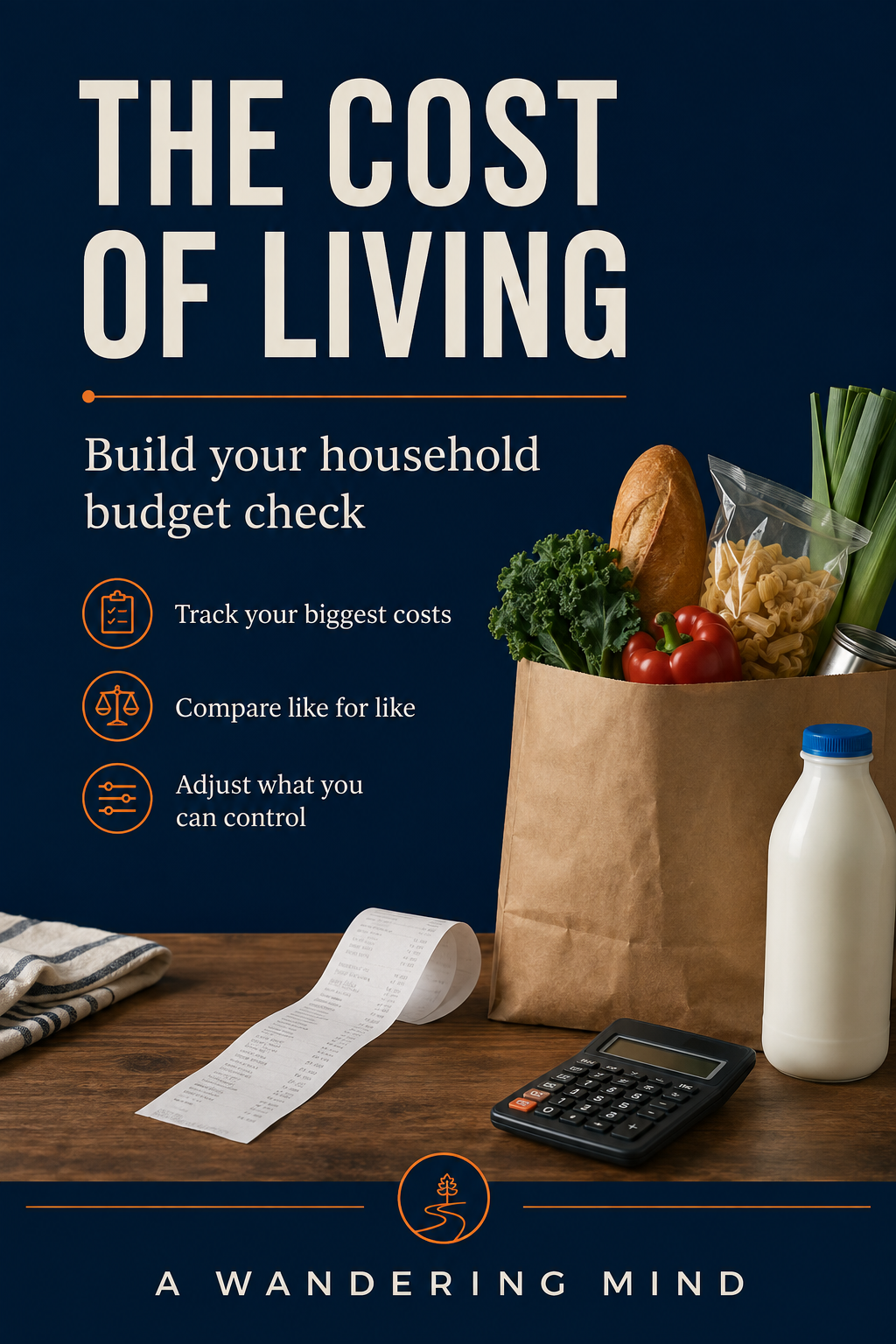
A personal dashboard is useful precisely because it is personal. Start with the last three to six months of actual transactions and group recurring essentials separately from flexible spending. Compare dollars and shares of take-home pay, not just one unusually expensive week.
| Category | Question worth tracking |
|---|---|
| Housing | Did rent, taxes, insurance, utilities or maintenance reset? |
| Food | Are prices rising, quantities growing, or convenience purchases multiplying? |
| Transportation | What changed in fuel, payment, insurance, maintenance or transit? |
| Health and care | Are premiums, prescriptions, childcare or eldercare creating the squeeze? |
| Debt | Are rates variable, fixed, promotional or due for refinancing? |
This is an editorial budgeting tool, not an official inflation statistic. It should reveal where pressure is concentrated, not generate a score that pretends to compare every household.
Prioritize changes by impact and reversibility
- Protect housing, utilities, insurance, food, medication and minimum debt payments first.
- Renegotiate recurring bills before pursuing dozens of tiny cuts.
- Compare unit prices and substitutes, but include time, transport and food waste.
- Treat income changes—raises, hours, benefits or job moves—as part of the response, not a separate topic.
- Keep an emergency buffer where possible; volatility hurts more when every dollar is already assigned.
Debt and inflation require careful wording
Unexpected inflation can reduce the real burden of a fixed-rate payment when income rises too, because the payment stays nominally unchanged. That benefit is conditional: wages may lag, household costs may rise faster, and variable-rate debt can become more expensive when interest rates rise. The loan's terms matter more than the slogan that inflation helps borrowers.
Advertisement
Review the Federal Reserve's explanation of its inflation goal. Open the official resource.
Public information; no purchase required.
A better monthly question
Instead of asking whether inflation is “good” or “bad,” ask which costs changed, whether the change is temporary or contractual, and what response has the largest durable effect. National measures provide context. A household plan still has to be built from the household's own cash flow.
Sources and editorial notes
Sources checked September 7, 2026. Published by A Wandering Mind. Editorial review is not medical, legal, tax or financial review. No affiliate links or sponsorship are included.