
BMI, Obesity and Healthy Weight: What the Numbers Can and Cannot Tell You
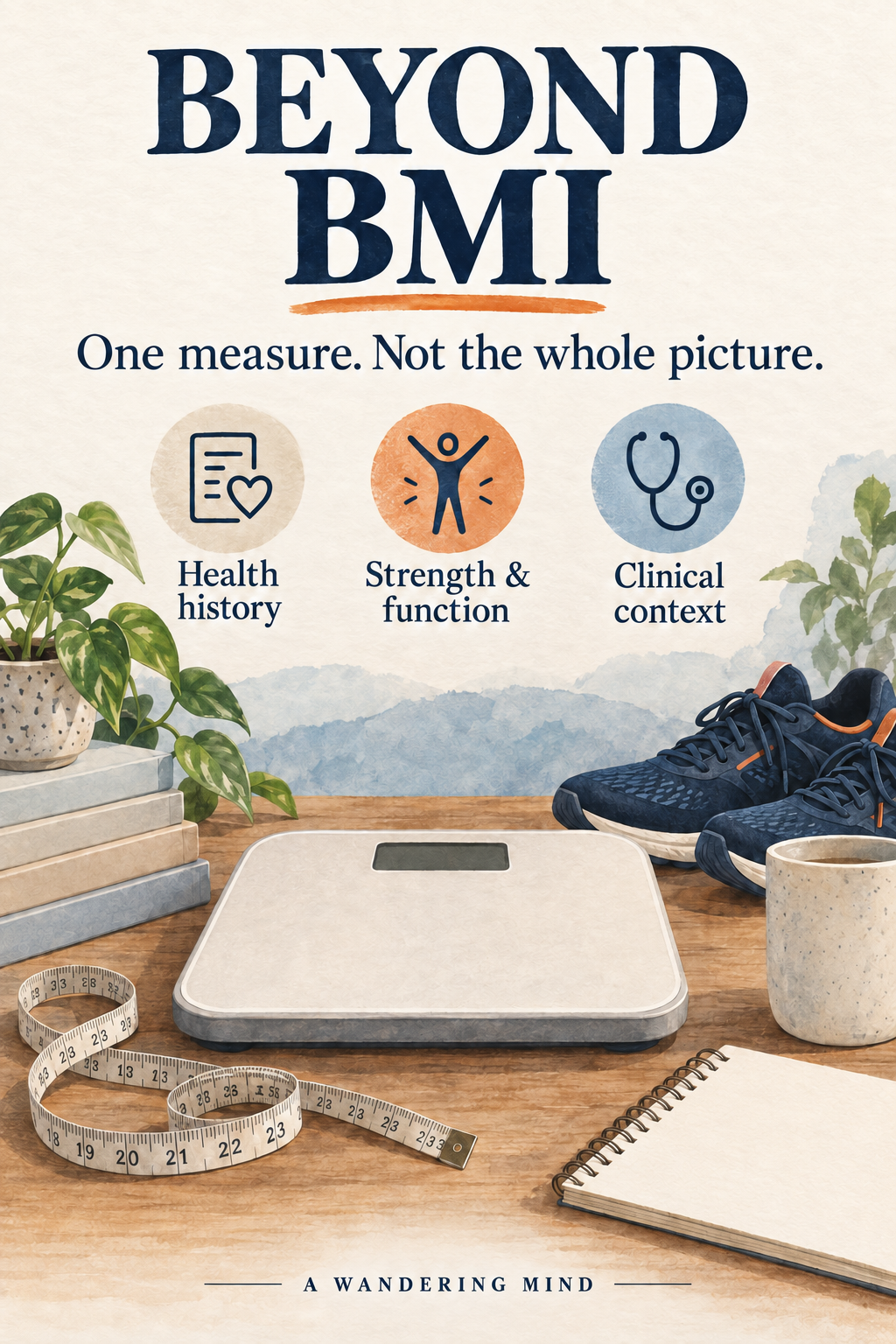
Body mass index is a quick calculation using height and weight. It is useful for screening groups and starting some clinical conversations. It does not measure body fat directly, locate fat, diagnose disease, account for muscle and bone, or summarize nutrition, fitness, sleep, medications, genetics and social conditions.
What BMI can do
BMI is inexpensive, reproducible and associated at the population level with several health outcomes. In a clinic it may prompt a fuller assessment of blood pressure, blood glucose, lipids, sleep, mobility, medication effects, eating patterns and family history. The association does not mean BMI alone identifies who has a disease or why.
What BMI misses
Body composition
The same BMI can reflect very different proportions of muscle, fat, bone and water.
Fat distribution
Visceral abdominal fat may carry different risk from fat stored elsewhere; BMI does not locate it.
Life stage and population
Pregnancy, aging, disability, athletic training and population differences can change interpretation.
Health behavior and access
Food security, stress, sleep, medication and safe places to move are absent from the calculation.
Waist and body composition answer different questions
Waist circumference can provide information about abdominal fat but is affected by technique and is not appropriate in every circumstance. Skinfolds, bioelectrical impedance and imaging estimate or measure body composition with different costs and error. None turns health into one perfect score; each should be used for a defined reason.
Advertisement
Read CDC's explanation of adult BMI categories and limitations. Open the official resource.
Public information; no purchase required.
Children are not small adults
For children and teenagers, clinicians use age- and sex-specific growth charts and BMI percentiles rather than adult cutoffs. Growth pattern, development, family history and clinical findings matter. A child's body should not be placed on an adult diet plan from an online calculator; concerns belong with a qualified pediatric professional.
Healthy change does not require shame
Weight-stigmatizing healthcare experiences have been associated with delaying or avoiding care; the observational evidence does not prove stigma caused every instance. Shame is not a treatment. Respectful care can focus on symptoms, function, cardiometabolic risk and the person's goals. Some people may benefit from weight loss, others from weight stability, strength, improved nutrition, better sleep, medication review or treatment of a separate condition.
Treatment is individualized
| Path | What it can include |
|---|---|
| Behavioral care | Nutrition, movement, sleep, stress skills, monitoring and support adapted to access and ability. |
| Medication | Prescription treatment for eligible patients, with benefits, adverse effects, contraindications and long-term plan reviewed by a clinician. |
| Metabolic or bariatric surgery | A clinical option for some patients after assessment, with lifelong nutrition and follow-up needs. |
| Condition-focused care | Treating diabetes, sleep apnea, pain, eating disorders or medication effects even when weight is not the only target. |
A supplement, app or rigid elimination diet should not displace evaluation. Sustainable care includes the environment around a person, not only instructions to try harder.
When to seek care sooner
Prompt medical advice is appropriate for unexplained rapid weight change, fainting, severe weakness, dehydration, persistent vomiting, swelling, difficulty breathing, chest pain, possible eating-disorder symptoms, or a child crossing growth percentiles unexpectedly. Call emergency services for life-threatening symptoms.
Advertisement
Review NIDDK's guidance on choosing a safe program. Open the official resource.
Public information; no purchase required.
The better question
Instead of asking whether BMI is good or bad, ask what decision the measurement is meant to support and what other evidence is needed. Used modestly, it is one useful screen. Used as a complete explanation of health or worth, it becomes misleading.
Sources and editorial notes
- CDC — Adult BMI categories
- CDC — BMI FAQ
- NIDDK — healthy-weight assessment
- NIDDK — safe and successful weight-loss programs
- NIDDK — prescription medicines
- 2025 national weight-stigma survey
Sources checked September 7, 2026. Published by A Wandering Mind. Editorial review is not medical, legal, tax or financial review. No affiliate links or sponsorship are included.