
 Discovery · Resources · Tools · Culture
AYITI · HAÏTI · HAITI
A country born from revolution. A future still being written.
Haiti's story is bigger than the crisis headlines that so often define it abroad. It is the story of Indigenous Caribbean history, one of the most consequential revolutions in the modern world, Black sovereignty, extraordinary cultural influence, repeated foreign intervention, natural disaster, political failure, diaspora achievement—and a country whose future remains open.
A national return worth noticing
For a few minutes in Atlanta, Haiti made the world look twice.
Haiti lost 4–2 to Morocco at the 2026 World Cup, but the final score hides how competitive the match became. Haiti took the lead twice against a Moroccan team that had reached the previous World Cup semifinal. Wilson Isidor's strike put Les Grenadiers ahead 2–1 before halftime.
That match is a useful place to begin because Haiti is often discussed internationally only when something has gone wrong. The country's return to the World Cup after 52 years offered a different image: Haitian flags filling an American stadium, a diaspora showing up in force, and a team competing on one of the world's largest stages.
Match result and timeline: Concacaf, June 25, 2026.
The premise of this page is simple: Haiti deserves to be understood as a whole country, not as a collection of emergencies. History explains many of the constraints Haiti inherited. Present-day institutions explain many of the problems Haitians face now. And neither history nor institutions make decline inevitable. The useful question is not whether Haiti has potential. It is what would have to change—practically, measurably and in what order—for that potential to become prosperity.
Haiti at a glance
The short answers people search for
Each number is labeled with its source year. “Latest available” does not always mean 2026.
Where is Haiti?
Haiti occupies the western portion of Hispaniola in the Greater Antilles, sharing the island with the Dominican Republic. Cuba lies to the west and Puerto Rico to the east. Haiti's geography is intensely mountainous—an important fact for agriculture, roads, disaster response, regional development and the country's visual identity.
The ten departments are Artibonite, Centre, Grand'Anse, Nippes, Nord, Nord-Est, Nord-Ouest, Ouest, Sud and Sud-Est.
Library of Congress Haiti country guide →
Part I · Before the headlines
To understand Haiti, start before 1804.
Long before the word “Haiti” appeared on modern maps, Indigenous peoples lived across the island Europeans later called Hispaniola. The name Haiti—or Ayiti—is commonly associated with the island's Taíno heritage. When independence was declared in 1804, the revolutionary state deliberately restored that name instead of keeping the colonial name Saint-Domingue.
Spanish colonization beginning at the end of the fifteenth century devastated Indigenous populations through violence, forced labor, displacement and disease. Over time, the western side of Hispaniola became increasingly contested by French settlers and privateers. Spain formally ceded the western portion to France in the 1697 Treaty of Ryswick. France called the colony Saint-Domingue.
Saint-Domingue became extraordinarily rich—and extraordinarily brutal.
By the eighteenth century, Saint-Domingue was one of the most valuable plantation colonies in the Atlantic economy. Sugar and coffee wealth depended on the forced labor of enslaved Africans under a violent plantation system. Enslaved people dramatically outnumbered white colonists. There was also a substantial population of free people of color, creating a complex racial, legal and economic hierarchy.
The wealth visible in European trade accounts therefore has to be read together with the human system that produced it. Saint-Domingue's prosperity was not proof of a sustainable Haitian economy waiting to be inherited; it was colonial wealth organized around coerced labor, international shipping, land concentration and the extraction of value for owners and merchants.
1791–1804
The Haitian Revolution changed what the world thought was possible.

In August 1791, a massive uprising of enslaved people began in Saint-Domingue. What followed was not a single rebellion but years of shifting alliances and warfare involving enslaved insurgents, free people of color, French royalists and republicans, Spanish forces, British forces and competing leaders inside the colony.
Toussaint Louverture emerged as the revolution's most internationally famous leader. The abolition of slavery in the French colonies in 1794 changed the political landscape, and Louverture eventually became the dominant authority in Saint-Domingue. Napoleon Bonaparte's government later sent a major expedition to restore metropolitan control. Louverture was captured and deported to France, where he died in 1803.
The struggle continued under leaders including Jean-Jacques Dessalines. French forces were defeated, culminating in the declaration of independence on January 1, 1804.
Haiti became the first independent Black nation in the Americas and the first modern state created by a successful uprising of enslaved people.
The historical importance goes beyond Haiti. The revolution challenged slavery, colonial hierarchy and assumptions about Black political capacity across the Atlantic world. It frightened slaveholding societies, inspired abolitionists and revolutionaries, and became a symbol of Black self-determination. The Library of Congress describes the Haitian Revolution as the most successful revolution in the Western Hemisphere by enslaved African descendants and emphasizes Haiti's influence across the Black diaspora.
Primary-source gateway: Library of Congress, “Ayiti Reimagined”. UNESCO historical overview: National History Park.
Interactive timeline
Two centuries of Haiti in context
Use the filters to move between political, international, disaster, cultural and football milestones.
Independence
Jean-Jacques Dessalines proclaims an independent Haiti on January 1 after the defeat of French forces.
Post-Dessalines division
After Dessalines is killed, political power divides between Alexandre Pétion in the south and Henri Christophe in the north.
Christophe's kingdom
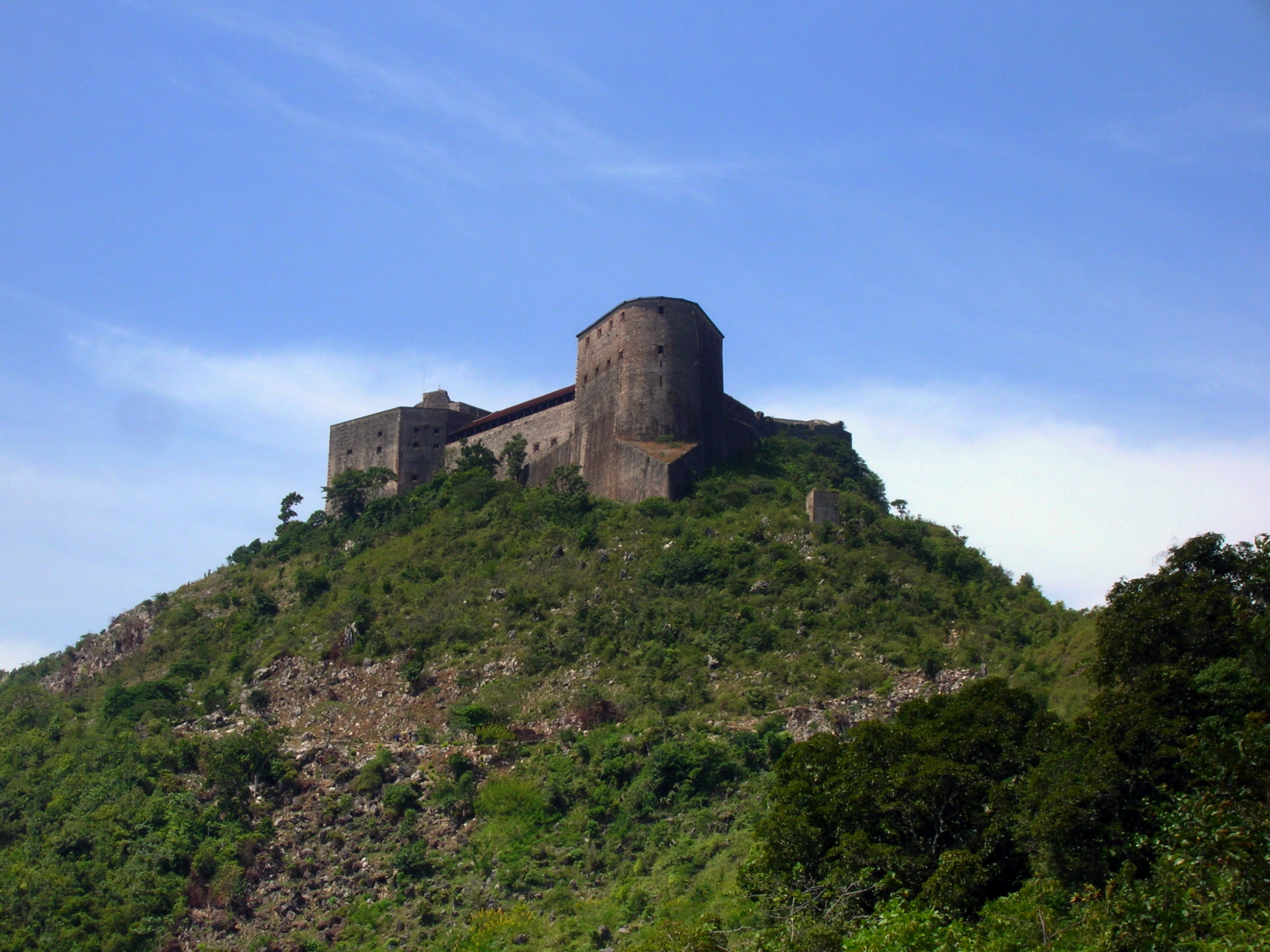
Henri Christophe rules the north as king. The Citadelle and Sans-Souci become monumental expressions of sovereignty and defense.
Boyer governs all Hispaniola
Jean-Pierre Boyer extends Haitian rule over the eastern part of the island until Dominican independence in 1844.
France recognizes Haiti—with a price
France conditions recognition on a massive indemnity to compensate former French property owners, including slaveholders.
United States recognizes Haiti
The Lincoln administration formally recognizes Haiti nearly six decades after independence.
U.S. occupation
U.S. Marines occupy Haiti; American authorities gain extensive control over finances and security institutions.
Parsley Massacre
Under Rafael Trujillo, Dominican forces and collaborators kill thousands of Haitians and people perceived as Haitian near the border.
Duvalier era
François “Papa Doc” Duvalier and later Jean-Claude “Baby Doc” Duvalier preside over authoritarian rule, repression and corruption.
First World Cup
Haiti competes at the FIFA World Cup in West Germany.
Magnitude 7.0 earthquake
A shallow earthquake near Léogâne devastates Port-au-Prince and surrounding communities and destroys critical infrastructure.
President Jovenel Moïse assassinated
The assassination deepens an already severe institutional and security crisis.
Soup Joumou recognized by UNESCO
The Independence Day dish is inscribed on UNESCO's Representative List of the Intangible Cultural Heritage of Humanity.
Interim transition
The Transitional Presidential Council's mandate ends February 7; Prime Minister Didier Fils Aimé and the Council of Ministers assume governance responsibilities.
Haiti returns to the World Cup
After 52 years, Les Grenadiers play Scotland, Brazil and Morocco—and lead Morocco twice in Atlanta.
Scheduled national elections
The OAS says presidential and legislative elections are scheduled for December 13, subject to the security and operational environment.
The price imposed on independence
France recognized Haiti in 1825—but demanded 150 million francs.
Haiti's independence was real in 1804, but France refused to recognize it for more than two decades. In 1825, under the threat represented by a French fleet, King Charles X issued an ordinance recognizing Haitian independence in exchange for an indemnity initially set at 150 million francs. The payment was framed as compensation for the losses of former French colonists—including property that had consisted of enslaved human beings and plantations built on their labor.
Haiti did not have 150 million francs sitting in a treasury. Servicing the obligation required borrowing, including from French banks, creating layers of debt around the recognition settlement. The original amount was later reduced, but debt service placed a long-term burden on public finances.
The indemnity matters because it shows how the international order constrained the new republic after military victory. But it should not be used as a one-cause explanation for every problem Haiti experiences two centuries later. Domestic political choices, later foreign interventions, weak institutions, corruption, geographic risks, demographic pressures and contemporary violence all matter too.
1915–1934
The U.S. occupation reshaped the Haitian state—and Haitian sovereignty.
In July 1915, after President Vilbrun Guillaume Sam was killed amid severe political instability, President Woodrow Wilson sent U.S. Marines into Haiti. American officials were concerned about disorder, U.S. commercial interests and potential German influence in the Caribbean. The occupation lasted until 1934.
The 1915 Haitian-American convention gave the United States sweeping influence over Haitian finances. U.S. authorities took control of customs revenue, created a constabulary organized and initially officered by Americans, and pressured Haitian political institutions. A new constitution permitted foreign land ownership. When Haitian lawmakers resisted, the legislature was dissolved and did not meet again until 1929.
The occupation also built roads and other public works. Those improvements cannot be separated from the coercive structure under which some were built. The U.S. State Department's own historical account notes racial segregation, press censorship and forced labor among the occupation's most unpopular policies, helping drive armed resistance.
This history matters for modern development debates. “Outside help” is not automatically benevolent merely because it produces infrastructure. Who controls the institutions, who bears the cost, who decides priorities, and whether Haitians retain political agency matter as much as the physical project.
One island, two countries
Why are Haiti and the Dominican Republic so different?
Haiti
French colonial Saint-Domingue; Haitian Creole and French; independence in 1804 through a revolution against slavery and French rule.
Dominican Republic
Predominantly Spanish colonial history; Spanish language; Dominican independence from Haitian rule declared in 1844.
Geography alone does not explain the divergence. The two sides of Hispaniola passed through different colonial systems, demographic patterns, international relationships and post-independence institutions. Jean-Pierre Boyer's government unified political control of the island from 1822 until Dominican independence in 1844, a period remembered very differently on each side of the border.
Relations have also been marked by profound violence. In 1937, Dominican dictator Rafael Trujillo's regime carried out the massacre of thousands of Haitians and people perceived as Haitian near the border—often called the Parsley Massacre. Modern relations are simultaneously economic and human: cross-border trade, migration, agriculture, construction labor, family ties, deportation policy, security concerns and disputes over shared resources all connect the two states.
Comparative indicators: World Bank Data.
1957–1986
The Duvalier era concentrated power and damaged institutions.
François “Papa Doc” Duvalier became president in 1957 and built an authoritarian system around personal rule, intimidation and the Tonton Macoute militia. When he died in 1971, power passed to his son, Jean-Claude “Baby Doc” Duvalier. The younger Duvalier fled the country in 1986 after mounting unrest.
The fall of dictatorship did not produce an easy democratic transition. Haiti moved through coups, contested elections, foreign interventions and periods of constitutional government. The repeated breakdown of political continuity made long-term state-building difficult: institutions cannot accumulate competence when rules, leadership and security repeatedly collapse.
January 12, 2010
The earthquake was a natural hazard. The scale of destruction was also an infrastructure story.
At 4:53 p.m. local time on January 12, 2010, a magnitude 7.0 earthquake struck near Léogâne, about 25 kilometers southwest of Port-au-Prince. It was shallow and close to a densely populated metropolitan area.
Death estimates differ significantly by source, so this page avoids pretending there is a single uncontested number. What is beyond dispute is the extraordinary scale of loss. Government buildings, homes, hospitals, schools, roads and other critical systems were damaged or destroyed.
A USGS/EERI reconnaissance team concluded that catastrophic losses were strongly connected to weak construction and insufficient attention to earthquake-resistant design. That lesson belongs in any prosperity roadmap: Haiti cannot afford development that has to be rebuilt after every major hazard. Building codes, drainage, land use, resilient power and regional redundancy are economic policy.
Source: USGS earthquake event page and USGS/EERI reconnaissance report.
Latest available context · August 2026
Haiti's immediate problem is security. Its deeper problem is that insecurity blocks almost everything else.
The World Bank says Haiti's economy contracted for a seventh consecutive year in 2025. Violence has displaced roughly 1.4 million people. Inflation remains punishing. Government revenue is extremely low relative to the demands placed on the state. Banks cannot efficiently finance growth when security, logistics and repayment risk are unstable.
The political transition also remains unfinished. The mandate of the Transitional Presidential Council ended on February 7, 2026. The OAS and Inter-American Commission on Human Rights state that Prime Minister Didier Fils Aimé and the Council of Ministers assumed governance responsibilities for the interim period. Presidential and legislative elections are scheduled for December 13, 2026, while security conditions remain the central prerequisite.
The IMF's May 2026 review gives a more nuanced picture than “everything is broken.” Haiti met all program targets measured at the end of December 2025, including reserve, fiscal and social-spending benchmarks, even as reform implementation slowed under political and security pressure. That distinction matters: institutions can still perform under extreme constraints, and a recovery strategy should strengthen the parts that work rather than assume the state must be rebuilt from zero.
Haiti is not a problem set
Culture is not decoration around Haitian history. It is part of the country's economic and political power.
Language
Haitian Creole is an official language and the language most Haitians use in daily life. A serious education strategy treats Kreyòl as an asset rather than an obstacle.
Soup Joumou
UNESCO recognizes the Independence Day soup as intangible cultural heritage—a food transformed from colonial exclusion into a ritual of freedom and dignity.
Art in public
Jacmel's papier-mâché and carnival tradition represents the exuberant visual language this page borrows from: saturated color, satire, folklore, memory and invention.
Music
Haitian music travels with the diaspora and carries language, rhythm and identity well beyond the country's borders.
Architecture of freedom
UNESCO calls the Citadelle, Sans-Souci and Ramiers universal symbols of liberty and unique witnesses to Haitian independence.
Global Haiti
Haitian communities across the Americas, Caribbean and Europe are part of the country's cultural, financial and professional network—not merely a population that left.


Why Soup Joumou belongs in a history article
UNESCO describes joumou as a Haitian pumpkin soup associated with independence. During slavery, the dish was reserved for slave owners; after independence Haitians made it their own. It is prepared and eaten especially on January 1. In that sense, a bowl of soup carries a political message: freedom becomes real when people can claim what was once forbidden to them.
UNESCO: Joumou soup →Haiti at the 2026 World Cup
Three defeats can still mark a national return.
Haiti had not appeared at a men's World Cup since 1974. In 2026, the team qualified while unable to play normal home qualifiers in Haiti because of insecurity. That made the tournament as much a diaspora event as a sporting one.
The final group match against Morocco was the clearest glimpse of what the team could do. Haiti went ahead in the 10th minute after a Lenny Joseph backheel was turned into Morocco's goal. After Achraf Hakimi equalized, Wilson Isidor restored Haiti's lead with a long-range strike. Morocco tied the game again before halftime and won it with two late goals.
Football will not repair a grid, train teachers or reform customs administration. But national visibility matters. A team that competes well can change how a country is talked about, especially for a generation of diaspora children who may know Haiti mainly through family stories and crisis news.
Part II · 1804 → 2026 → 2040
An evidence-informed roadmap toward a more prosperous Haiti
This is a sequence, not a magic list. Some things can happen in parallel. Others cannot scale until security and state capacity improve.
Secure
Restore freedom of movement, professional policing, courts, ports, roads and commercial corridors. Security is economic infrastructure.
Govern
Hold credible elections, strengthen legal identity, public finance, customs, courts, procurement, anticorruption systems and continuity of institutions.
Power
Expand reliable electricity through grid rehabilitation, distributed generation, solar-plus-storage and transparent utility regulation.
Connect
Lower the cost of broadband, improve backhaul and mobile coverage, and create resilient public/community access points.
Educate
Build literacy, numeracy, Kreyòl-accessible learning, French/English opportunity, vocational education, digital skills and teacher capacity.
Build
Roads, drainage, water, sanitation, ports, resilient housing and enforceable construction standards multiply every other investment.
Produce
Raise agricultural productivity and food processing, support light manufacturing, construction inputs and locally useful businesses.
Export digitally
Develop software, design, translation, QA, BPO, media and remote professional services that earn foreign revenue without shipping containers.
Mobilize diaspora capital
Create trustworthy ways to turn a portion of voluntary diaspora savings into business, education and infrastructure investment.
Grow regions
Strengthen Cap-Haïtien, Les Cayes, Jacmel, Gonaïves and other regional centers so opportunity is not concentrated in Port-au-Prince.
Sell culture
Art, music, food, publishing, film, fashion and heritage can become export industries—and tourism can recover when security permits.
Measure
Publish transparent annual indicators. A roadmap without measurement becomes a slogan; a scorecard creates accountability.
Security + institutional continuity
People cannot invest, attend school or move goods reliably when armed groups control movement.
Power + roads + education + digital access
These create the capacity for private investment and productive work.
Production + exports + diaspora investment
Growth becomes durable when Haitian workers and firms sell more than they consume.
Why digital exports deserve special attention
A Haitian freelancer can cross a border that a truck cannot.
Haiti's geography and security problems make physical commerce expensive. Roads can be blocked. Ports can be disrupted. Fuel can be scarce. A software file, translation, design or customer-support task has a different logistics profile. If a worker has electricity, a device, internet access and a legitimate way to receive payment, the client can be in Miami, Montréal, Paris, New York, London or anywhere else.
This does not make remote work easy. The World Bank's latest available data put internet use at 48% of the population in 2024 and electricity access at 53.9%. Those figures mean that “learn to code online” is useless advice for millions of people unless the roadmap also deals with charging, connectivity, device cost and low-bandwidth learning.
of Haiti's GDP came from personal remittances in 2024.
Haiti already depends heavily on money earned abroad. Digital work asks a different question: can more of that foreign income be earned directly by people who remain in Haiti?
What the research actually found
There is experimental evidence that Haitians can earn more online after targeted training.
Online freelancing training
A randomized pilot in Haiti trained participants in entrepreneurial skills for online freelance marketplaces. Trained workers sent more proposals, received more client contacts and signed more online contracts.
The study did not find significant effects on broader labor-market outcomes.
Read the study →Microwork training + search help
A second randomized experiment found increases in microwork profiles, tasks completed, hours, microwork earnings and the share of monthly income derived from microwork. English ability and socioemotional skills also improved.
Overall employment status did not significantly change; microwork often acted as supplemental income.
Read the study →Digital work is a credible additional pathway for Haiti—not a national economic miracle. The evidence is strong enough to justify training programs and individual experimentation, but not strong enough to tell a country to replace conventional employment, agriculture, manufacturing or infrastructure with gig work.
A practical ladder
If you are in Haiti and want to earn online, begin with the market—not the certificate.
- 01
Confirm access and payment first.
Before spending months learning for one marketplace, confirm that you can create an account, satisfy identity requirements and use a legitimate payout method available to you.
- 02
Build basic digital fluency.
Email, file management, cloud documents, typing, browser research, account security and professional communication are prerequisites, not optional extras.
- 03
Choose one sellable skill.
Do not “learn technology” in the abstract. Pick a service that a real client can buy.
- 04
Create proof.
Build three to five portfolio samples. A client is more interested in what you can show than in a list of courses you watched.
- 05
Sell a narrow first service.
A specific offer—“I will fix responsive CSS on one landing page”—is easier to buy than “I am a programmer.”
- 06
Deliver, collect evidence, raise value.
Turn successful work into reviews, case studies, repeat clients and progressively higher-value services.
Language + admin
Kreyòl/French/English translation, transcription, subtitles, virtual assistance, research organization.
Visual + media
Canva graphics, photo retouching, social assets, short-form video editing, stock illustration and photography.
Sites + QA
WordPress/Squarespace help, HTML/CSS fixes, landing pages, content updates, browser/device testing.
Software
JavaScript, Python automation, APIs, databases, Java and deeper software-engineering skills.
Use the tools of 2026
AI can lower the cost of learning—but only if you still learn.
ChatGPT is currently supported from Haiti, and Google lists Haiti among the supported countries for the Gemini web and Android experiences. That means a motivated learner with internet access can use the same class of general-purpose AI tutor available to learners in wealthier countries.
Tutor
Ask for an explanation at your level, then request exercises and examples. Use French or Kreyòl to understand a concept before learning its English technical vocabulary.
Language coach
Draft client messages yourself, then ask AI to make the English clearer without changing your meaning.
Coding copilot
Paste a small error, ask what it means, compare possible fixes and run the code yourself. Never ship code you do not understand or test.
Portfolio reviewer
Ask for specific critique: mobile layout, accessibility, spelling, hierarchy, README clarity or missing edge cases.
Proposal editor
Turn rough notes into a concise proposal. Do not automate hundreds of generic applications or invent experience.
Small-business assistant
Draft scopes, checklists, invoices, questionnaires, FAQs and reusable client emails.
Interactive skill selector
What can you start learning with the device and connection you have?
Language services + AI-assisted professional English
Start with translation/transcription samples that can be created on a phone. Save learning material offline and use AI in short text sessions to conserve data.
Where to learn
Education only helps when the next step is obvious.
Haiti's current curriculum reform is moving in a direction that fits this roadmap. UNESCO's International Bureau of Education says the reform is placing greater value on Haitian language and culture while integrating twenty-first-century competencies. Phase III, covering 2026–2029, is designed to pilot the new curriculum at scale and develop pedagogical resources that work both online and offline.
freeCodeCamp
Long-form coding curriculum and project practice. Best when you have regular computer access.
Visit resource →MDN Web Docs
Mozilla's reference for HTML, CSS and JavaScript. Strong as a permanent technical reference.
Visit resource →CS50
Harvard's introductory computer-science materials. Demanding, but a strong foundation for deeper software work.
Visit resource →GitHub Skills
Interactive introductions to GitHub workflows. Useful once you begin publishing code and portfolios.
Visit resource →ChatGPT
Use as a tutor, debugger, writing coach and portfolio critic. Keep private client data out of public AI chats.
Open ChatGPT →Google Gemini
Another general AI assistant available on the web and supported Android markets including Haiti.
Open Gemini →UNESCO / MENFP curriculum reform
Follow Haiti's national education reform, including Kreyòl-aware curriculum and online/offline digital resources.
Read the reform roadmap →Java learning path
Use Kestrel's Java guide ecosystem for structured programming fundamentals and practice as the guide catalog comes online.
Open Kestrel Exams →Finding paying clients
Marketplaces are a door. They are not the career.
Fiverr
Useful for productized services: a narrowly defined gig with a clear deliverable. We intentionally do not use a referral link here. Before building a business around Fiverr, verify that the payout methods displayed in your own account are available in Haiti and workable with your bank/payment provider.
Visit Fiverr →Upwork
More proposal-driven and often better suited to longer projects or professional services. Payout methods vary by country and account. Confirm them before investing heavily in one platform.
Visit Upwork →Direct clients
The long-term goal is not dependence on a marketplace algorithm. A good freelancer eventually develops referrals, repeat clients, a portfolio and professional relationships that can survive changes in one platform.
Photographers, illustrators and designers
Haiti's creative economy can export files, too.
Digital export is not only programming. Haitian photographers, illustrators, videographers and designers can potentially license original work internationally. Haitians living in Haiti are in a particularly valuable position to create photographs of the country because they have everyday access, local knowledge and cultural context that an occasional visiting photographer may not have.
That can mean more accurate and less stereotyped images of Haitian neighborhoods, small businesses, agriculture, food, architecture, coastlines, landscapes, transportation, schools, workplaces, festivals and ordinary daily life. Local photographers can also caption places and customs more accurately. The opportunity is not to turn hardship into spectacle; it is to expand the international visual record of Haiti with contemporary work made by people who understand the places and communities they photograph. Contributors should still follow platform rules on privacy, recognizable people, trademarks and model or property releases when required.
Disclosure: Kestrel Ventures LLC may receive compensation if you use this referral link. It costs you nothing extra and does not affect our editorial decisions.
Artists interested in licensing original photography, illustration, video or other eligible work can explore becoming a Shutterstock contributor. Earnings are not guaranteed, and contributors should review current payout and eligibility rules before investing significant time.
The diaspora question
Remittances keep households alive. Investment can help build capacity—but only when trust exists.
Remittances are private household money. A government or development plan should not treat them as a pool it is entitled to capture. Families use them for food, housing, education, health care and emergencies. The policy opportunity is voluntary: create transparent investments attractive enough that diaspora Haitians choose to direct some savings toward businesses, housing, renewable power, education and infrastructure.
That requires trust. Audited funds, clear ownership, enforceable contracts, credible dispute resolution, public reporting and insulation from political patronage are not administrative details. They are the product.
A roadmap should be measurable
What should Haiti's 2040 scorecard track?
Homicide, kidnapping, travel time on key corridors, territorial access, court function.
Electricity access, outage hours, cost per kWh, business generator dependence.
Internet use, mobile data cost, broadband speed, rural coverage.
Attendance, literacy, numeracy, completion, vocational placement, teacher retention.
Formal employment, labor-force participation, firm creation, exports per worker.
Port clearance time, road freight time, agricultural exports, digital-service exports.
Revenue/GDP, procurement transparency, audit completion, ID coverage, case backlog.
Building-code enforcement, drainage coverage, disaster mortality and recovery time.
The point
Haiti does not need a story about being saved. It needs systems that let Haitians build.
Haiti's history contains enough outside coercion to make grand foreign prescriptions deserve skepticism. The 1825 indemnity, the U.S. occupation and repeated external political intervention all show why sovereignty and development cannot be separated. But sovereignty also means responsibility. Haitian political and economic institutions have to become more capable, more accountable and more predictable.
The roadmap on this page is deliberately ordinary in one sense. It asks for the same foundations prosperous societies rely on everywhere: physical security, enforceable rules, power, roads, education, internet access, functioning businesses and the ability to sell valuable things to the rest of the world.
The unusual opportunity is timing. A Haitian student who gains stable internet access in 2026 can reach world-class educational material, AI tutoring, global code repositories and international clients in ways that were impossible a generation ago. That does not remove the need to rebuild the country around that student. It does mean the ceiling on what that student can learn is higher than Haiti's local course catalog or job market.
Haiti's future should not be measured only by what the country survives, but by what Haitians are able to build.
Sources & methodology
Built to be checked, not merely believed
Historical claims prioritize primary documents, government archives, UNESCO, research institutions and peer-reviewed studies. Fast-changing statistics are labeled by source year. The 2040 roadmap is analysis, not a claim that any government has adopted this plan.
History & independence
- Library of Congress — Freedom in the Black Diaspora: Ayiti Reimagined
- Library of Congress — Haiti Country Guide
- UNESCO — National History Park: Citadel, Sans Souci, Ramiers
- U.S. Office of the Historian — 1872 financial history of Haiti / 1825 indemnity
- U.S. Office of the Historian — Recognition and diplomatic relations with Haiti
U.S. occupation & modern state
Economy, infrastructure & education
Digital work & AI
Editorial note: AI assisted with research organization and drafting. Sources were reviewed and factual claims were checked against the cited material. Fast-changing data should be refreshed periodically.
Last researched: August 21, 2026.