
USS Lincoln Conditions at Sea: What We Know as the Carrier Leaves the Middle East
After a 274-day deployment, the USS Abraham Lincoln has left the Middle East. Reports from sailors, military families and lawmakers have raised questions about food, water, plumbing, fatigue and mental health aboard the carrier. Navy and Defense Department leaders dispute important parts of that portrayal.
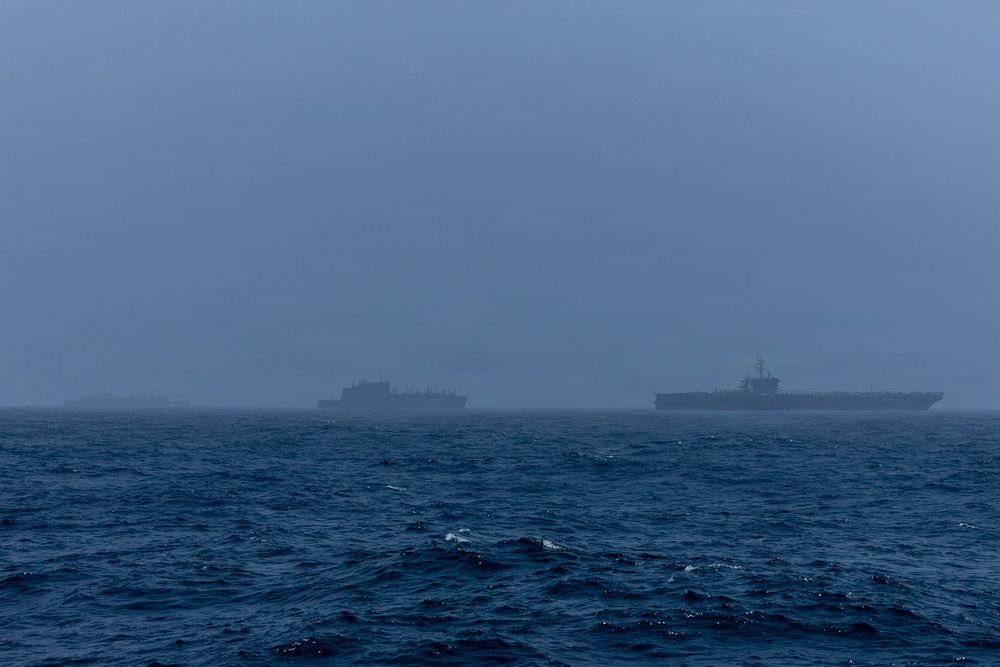
The USS Abraham Lincoln is finally moving toward home after one of the most demanding carrier deployments in recent U.S. naval history. Its departure resolves one immediate question for thousands of sailors, Marines and family members who have spent months wondering when the carrier would be relieved, but it does not resolve the questions that accumulated while the ship remained at sea.
Reports from military families, military-focused news organizations and members of Congress have described supply shortages, water-quality concerns, plumbing failures, mail disruptions, exhaustion and serious mental-health concerns aboard the carrier. Defense and Navy leaders have pushed back on that characterization and say the crew remained supported while successfully carrying out its wartime mission. Those ideas are not necessarily mutually exclusive: a crew can perform its mission successfully while legitimate questions remain about the conditions under which it was asked to do so.
What is confirmed about the Lincoln deployment
The broad timeline is not seriously disputed. USS Abraham Lincoln departed San Diego in November 2025 and was subsequently directed to the Middle East as U.S. military operations involving Iran expanded. On August 22, 2026, USNI News reported that the carrier had been deployed for 274 days and had departed the Middle East after almost seven months in the U.S. Central Command area.
The ship was then operating in the Indian Ocean under U.S. 7th Fleet. USS George Washington had entered the Central Command area earlier in the week, providing the carrier presence needed for the rotation.
According to USNI News, the Lincoln's last publicly declared port visit was Guam on December 11, 2025. That does not prove that no undisclosed operational stop occurred—the Navy does not publicly release every movement of a deployed carrier—but the public record does establish an extraordinary publicly known period at sea.
The deployment was also not simply a prolonged peacetime cruise. The carrier and its air wing were supporting U.S. combat operations connected to the continuing conflict with Iran. Acting Secretary of the Navy Hung Cao acknowledged on August 14 that the deployment had been extended because, in his words, the mission demanded it. He said the Lincoln would return home as part of a planned rotation and argued that Navy leaders had balanced mission requirements with troop welfare.
What sailors and military families have reported
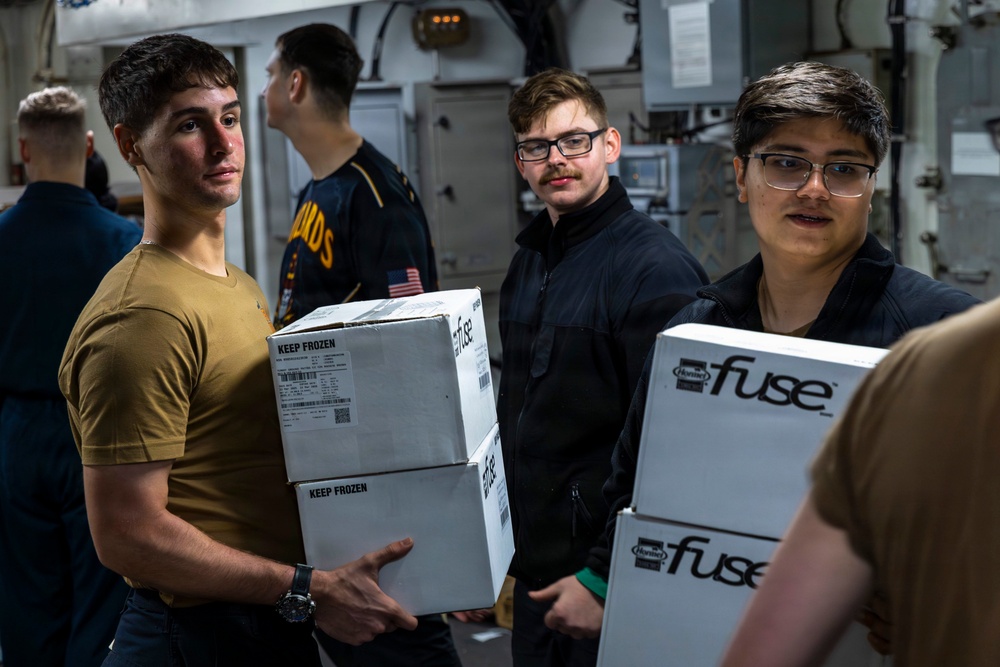
Reports about conditions aboard the Lincoln have included shortages of some food and basic supplies, concerns about water quality, malfunctioning plumbing, shower and laundry problems, delayed mail and care packages, exhaustion and declining morale.
Senator Richard Blumenthal, a member of the Senate Armed Services Committee, cited reports of basic-supply shortages, water contamination, plumbing problems, deteriorating mental health, deck-safety concerns and disruptions to the mail system in an August 12 letter seeking answers from Defense Secretary Pete Hegseth and Acting Navy Secretary Cao.
Five days later, Democratic members of the Senate Armed Services Committee, along with Democratic appropriations leaders, called for additional accountability and answers regarding the carrier's extended deployment and reported conditions.
Mental-health allegations require particular care
The most serious reports concern sailors experiencing mental-health crises, including reports that multiple sailors attempted to go overboard. Those allegations have been repeated in congressional correspondence and news reporting, but publicly available information does not yet provide enough independent evidence to establish the circumstances surrounding every reported incident.
The available public evidence does not justify treating every allegation as established fact, but incomplete records also do not justify dismissing the concerns raised by sailors and their families.
What Navy and Pentagon leaders say
Defense Secretary Pete Hegseth has rejected the broader portrayal of conditions aboard the carrier. Reuters reported on August 13 that Hegseth called accounts of poor conditions aboard the Lincoln “completely misrepresented.” He said the military makes every effort to support crews operating in difficult conditions and emphasized the demands placed on sailors during wartime.
Acting Secretary Cao took a similar position the following day.
Cao said the Lincoln was extended because the mission demanded it and argued that the crew had accomplished its mission while leaders continued caring for their people.
U.S. Central Command commander Adm. Brad Cooper also praised the crew's resilience during the deployment. Reuters reported that Cooper said the Lincoln had comparatively few reported mental-health cases relative to other active Navy carriers.
Those official statements are relevant evidence about the Navy's position, but they do not, by themselves, establish that every complaint made by a sailor or military family was inaccurate. The unanswered question is whether reported hardships were unavoidable consequences of sustained wartime operations or whether some were preventable failures of logistics, staffing, planning or leadership.
A 274-day deployment changes the context
Life on an aircraft carrier is demanding even during a conventional deployment. Thousands of people live and work inside a moving industrial complex containing aircraft, jet fuel, weapons, electrical systems, machinery and a nuclear propulsion plant. Flight operations can continue around the clock, maintenance never ends, and personal space is limited.
Fatigue under those conditions is more than a question of comfort. It can become a readiness and safety problem.
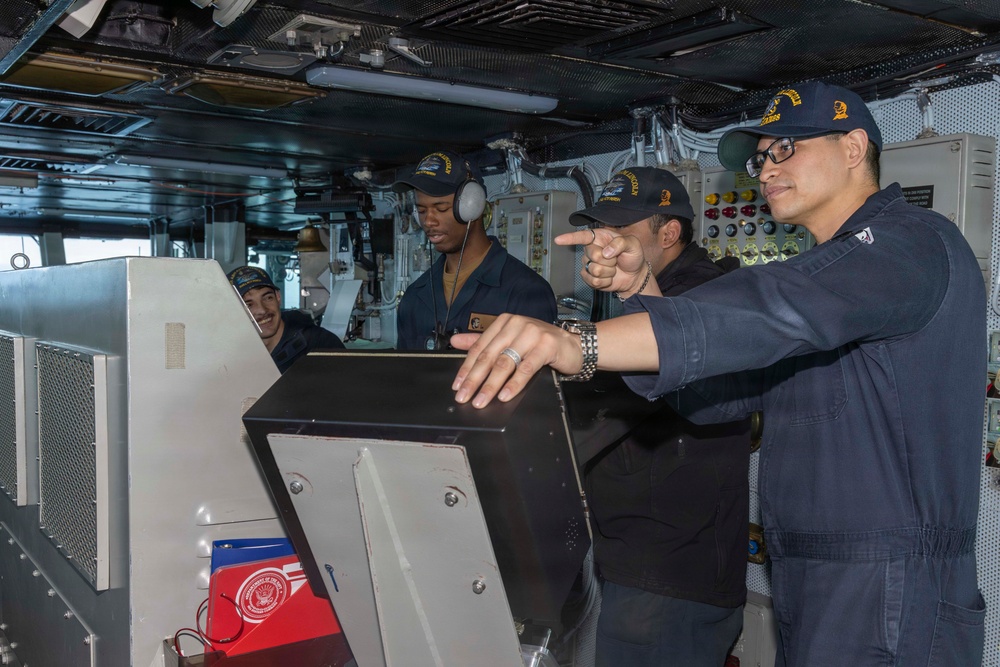
The strongest public data on Navy fatigue are not specific to USS Abraham Lincoln. A 2023 Government Accountability Office report found that sailors across the Navy surface force averaged about 5.25 hours of sleep per day, below the Navy standard of providing at least 7.5 hours of sleep opportunity. GAO identified crew shortages and heavy workloads among the obstacles to adequate rest.
The agency has also noted that fatigue contributed to the 2017 Navy collisions that killed 17 sailors. Those findings are not measurements taken aboard the Lincoln; they establish the broader point that insufficient sleep and fatigue are recognized Navy readiness concerns. A combat deployment extending beyond nine months therefore deserves scrutiny even without assuming any particular allegation aboard this carrier is true.
The Pentagon says the mission required the extension
There is also a military reality that cannot be ignored. Aircraft carriers allow the United States to sustain combat aviation without relying entirely on access to land bases in another country. During a war, commanders may determine that keeping a carrier on station is more important than maintaining an ordinary deployment schedule.
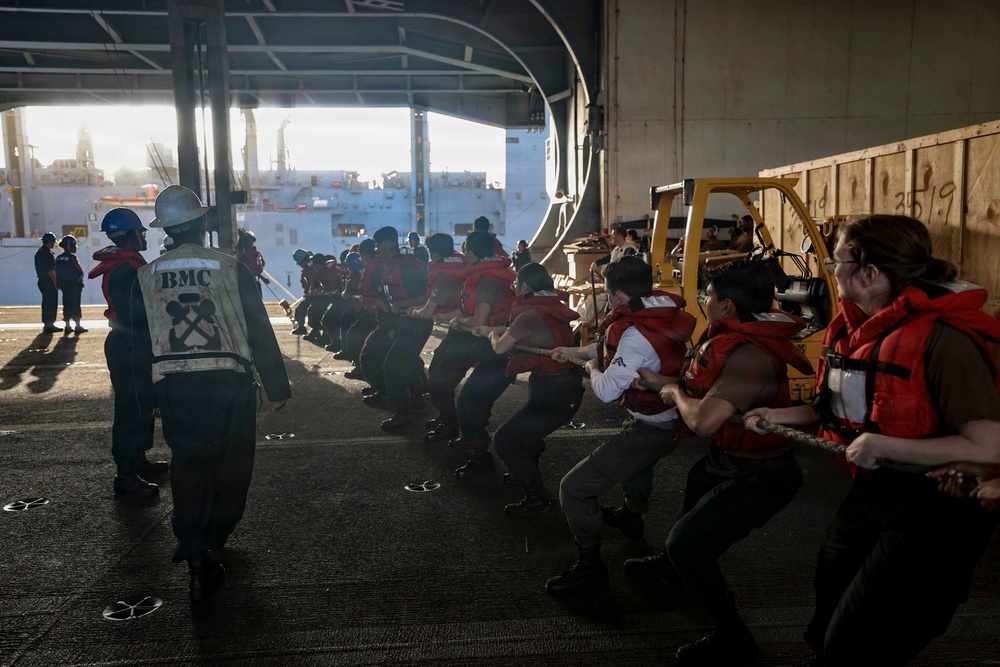
Resupply can become more difficult when ports, regional infrastructure or shipping routes face threats. Operational security can also prevent the Navy from publicly explaining every movement or logistical decision while it is happening.
Difficult conditions therefore do not automatically prove that an improper decision was made. Wartime necessity, however, should not make every decision immune from examination.
A military capable of keeping an aircraft carrier in combat for months should also be capable of explaining how long that tempo can safely continue, how crews will be relieved, how supplies will reach them and how physical and mental-health resources scale when deployments extend beyond their original plans.
The military-spending question
The scale of U.S. military spending makes those questions especially important. The Department of the Navy's fiscal year 2027 budget request totals $377.5 billion, and Navy budget officials have described readiness, personnel, procurement, modernization and the health and welfare of sailors, Marines and their families as priorities within that request.
That number is the budget request for the entire Department of the Navy. It is not $377.5 billion available to the USS Abraham Lincoln, and it is not evidence that money assigned to the carrier was misappropriated. A defense budget pays for personnel, ships, aircraft, weapons, maintenance, health care, logistics, construction, research, training, installations and operations around the world.
But the scale of that spending creates a reasonable oversight question:
If the United States can devote hundreds of billions of dollars each year to naval power, are enough of those resources reaching the people expected to operate that power under sustained combat conditions?
That question should be answered using budgets, maintenance records, supply records, deployment data and testimony—not assumptions about either political party.
Congress is beginning to ask for answers
Formal congressional pressure over the Lincoln has so far been most visible among Democratic senators. Members of the Senate Armed Services Committee minority have requested explanations regarding the deployment extension, food and water conditions, plumbing, medical and mental-health resources, fatigue, morale and reported overboard incidents.
Asking those questions does not require beginning with the conclusion that misconduct occurred. An independent review could establish the facts and identify which problems, if any, were preventable.
- Were food, drinking water and basic supplies adequate?
- Which major shipboard systems experienced persistent problems?
- When were those problems first reported through the chain of command?
- Were sailors receiving adequate opportunities for rest?
- Were mental-health resources adequate for the deployment's duration?
- How were repeated deployment extensions evaluated?
- Were families given accurate information when schedules changed?
- Were logistics constrained by legitimate wartime requirements?
- Which reported problems were preventable?
- What should change before another crew faces the same circumstances?
The Lincoln is leaving. The requirement is not.
Replacing the Lincoln with USS George Washington solves the Lincoln crew's immediate deployment problem, but it does not eliminate the military requirement that kept a carrier in the region. Another ship and another crew now carry that burden.
This matters because aircraft carriers are finite resources. Keeping one carrier deployed longer can affect maintenance, training and the availability of other ships expected to respond elsewhere. The George Washington is normally forward-deployed in Japan, so its movement toward the Middle East illustrates how requirements in one theater can affect force availability in another.
The larger question is not simply whether a particular shower worked or whether a particular meal contained fresh produce. It is whether the United States can sustainably match its global military commitments with the ships, maintenance capacity, logistics and people required to carry them out.
The Iran conflict remains unresolved
The carrier rotation should not be confused with an end to the conflict between the United States and Iran. As of August 23, diplomatic efforts and regional mediation continued while disputes involving sanctions, security and the wider conflict remained unresolved. A durable political settlement has not yet emerged.
That means sailors and military families remain exposed to the consequences of political and military decisions that extend far beyond one carrier.
Service members deserve accountability—and this war should end
A Wandering Mind supports bringing the U.S.-Iran war to an end through a durable diplomatic settlement. Calling for an end to the war does not require pretending that security threats do not exist, accepting either government's version of events without evidence, or assuming that every military action was unjustified. It means recognizing that prolonged conflict carries costs beyond budgets and geopolitical strategy—costs paid by the people ordered to fight, the families waiting for them to return and civilians across the region.
We also believe the circumstances surrounding the USS Abraham Lincoln's extended deployment warrant independent oversight. Congress and appropriate military oversight bodies should establish what conditions actually existed aboard the carrier, when senior officials learned about significant problems, how logistics and resupply decisions were made, whether staffing and mental-health resources were adequate, and whether deployment extensions were managed responsibly.
The same standard should apply regardless of administration, political party, civilian office or military rank. An investigation should not presume guilt, but if evidence shows that public officials or military leaders ignored known risks, concealed serious problems, misrepresented conditions or made avoidable decisions that unnecessarily endangered service members, accountability should follow the evidence.
The United States asks an extraordinary amount of its service members. A military establishment funded at this scale should be capable of providing the food, safe water, sanitation, medical care, rest, equipment and logistical support necessary for them to perform the missions the government assigns them. They deserve that much.
Sources
- USNI News — August 22, 2026: USS Abraham Lincoln Leaves the Middle East After Almost 7 Months .
- USNI News — August 20, 2026: Carrier USS George Washington Now in the Middle East .
- U.S. Navy — August 14, 2026: Statement from Acting Secretary of the Navy Hung Cao .
- Reuters — August 13, 2026: Hegseth says reports about poor conditions aboard carrier are misrepresented .
- Reuters — August 16, 2026: Admiral praises USS Lincoln crew amid reports of worsening conditions .
- Office of Sen. Richard Blumenthal — August 12, 2026: Request for answers on conditions aboard USS Abraham Lincoln .
- Office of Sen. Richard Blumenthal — August 17, 2026: Senate Armed Services Committee minority letter .
- U.S. Government Accountability Office — October 11, 2023: Navy Readiness: Challenges to Addressing Sailor Fatigue in the Surface Fleet Continue .
- Department of the Navy — FY2027: Department of the Navy Fiscal Year 2027 budget materials .
- DVIDS / U.S. Navy: USS Abraham Lincoln operations imagery — August 2026 .
- DVIDS / U.S. Navy: Sailors conducting a working party aboard USS Abraham Lincoln .
- DVIDS / U.S. Navy: Sailors standing watch aboard USS Abraham Lincoln .
- DVIDS / U.S. Navy: USS Abraham Lincoln conducts replenishment at sea .
Service members and military families: tell us what the public is missing
If you served aboard USS Abraham Lincoln, supported this deployment, or had a family member at sea, your experience may help readers understand what official statements and news reports cannot.
You do not have to agree with this article—or with A Wandering Mind's position on the war. Firsthand accounts that challenge our reporting are just as valuable as accounts that support it.
Do not post classified information, controlled unclassified information, nonpublic ship locations or movements, future schedules, military vulnerabilities, security procedures, private medical information, or identifying information about another person who has not chosen to make it public. Speak only from experience you can safely discuss.
Reader comments are personal accounts. Unless independently verified, they should not be interpreted as established facts or official Navy statements. If new evidence shows that our reporting is wrong, we will correct it.