
Norovirus: Symptoms, Cleanup and When Dehydration Needs Care
Norovirus earns its reputation by spreading quickly through households, schools, restaurants and care facilities. The practical response is not panic or a vague command to sanitize. It is a short list of specific actions: soap-and-water handwashing, careful food handling, prompt cleanup with an effective product and close attention to dehydration.
What illness looks like
Norovirus causes acute gastroenteritis, most often vomiting, diarrhea, nausea and stomach pain. It is not influenza, despite the nickname “stomach flu.” Fever, headache and body aches can also occur. Young children, older adults and people whose health makes fluid loss dangerous may become dehydrated sooner.
Typical timing
Symptoms commonly begin 12–48 hours after exposure and improve within 1–3 days.
Main complication
Fluid and electrolyte loss can outpace what a person is able to drink and keep down.
How it actually spreads
Infection occurs when tiny particles of feces or vomit enter another person's mouth. That can happen through direct contact, contaminated food or drink, or hands touching contaminated surfaces and then the mouth. During vomiting, tiny drops can spray through the air and contaminate nearby food and surfaces. That is different from describing norovirus as routinely spreading through the air like measles.
People can continue shedding virus after they feel better. That is why hygiene still matters after symptoms stop and why one ill food worker can expose many people.
Soap and water do the central work
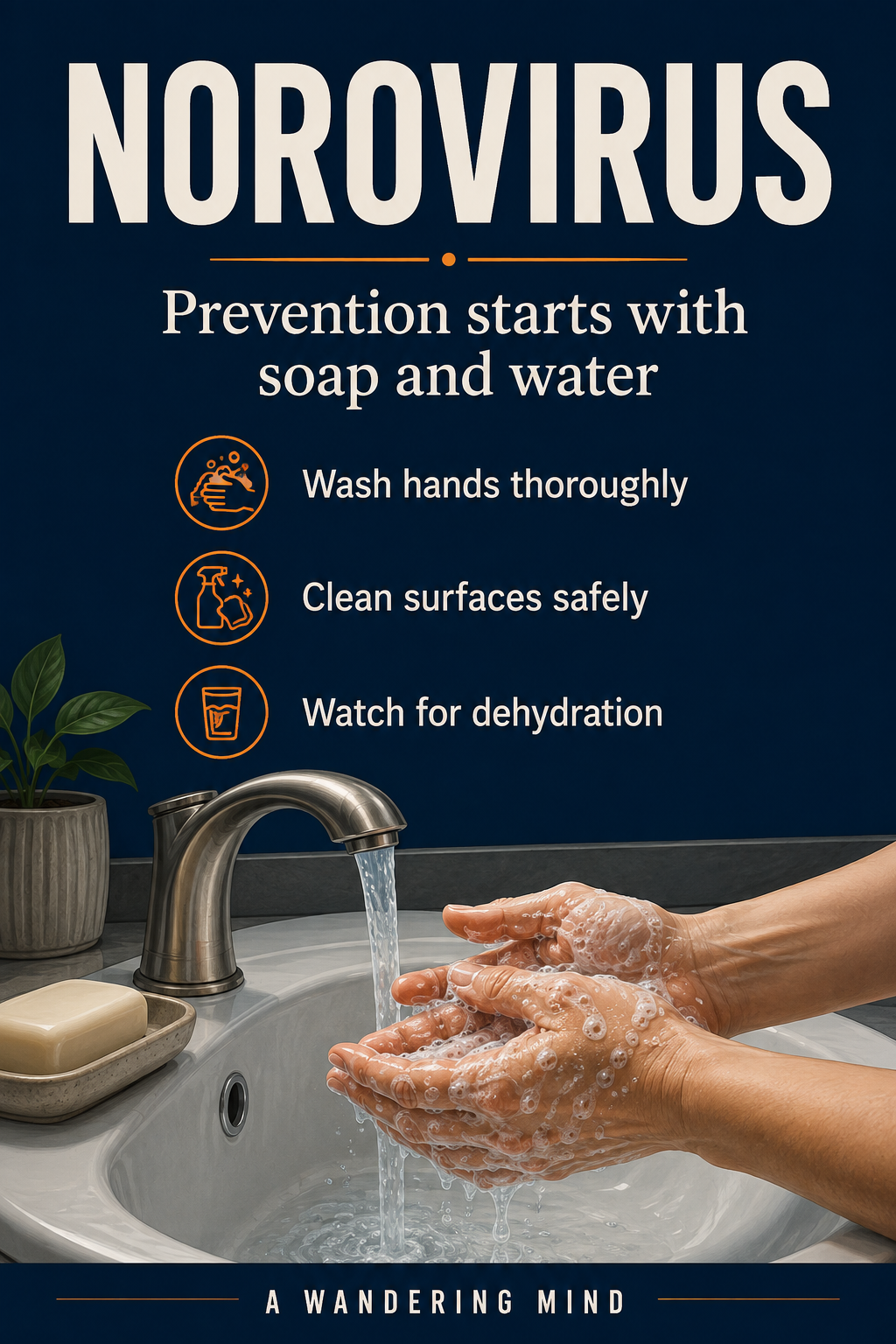
- Wash with soap and water for at least 20 seconds after using the toilet or changing diapers and before preparing food, eating or giving medicine.
- Use hand sanitizer only as a supplement; CDC says it does not work well against norovirus.
- Wash produce and cook shellfish thoroughly. Quick steaming may not kill norovirus in shellfish.
- Do not prepare food for others or care for them while sick and for at least 48 hours after symptoms stop. Workplace rules may be stricter.
Advertisement
Use CDC's current prevention instructions during household or workplace illness. Open the official resource.
Public information; no purchase required.
Clean a vomit or diarrhea area safely
- Protect yourself. Wear disposable gloves. Remove visible material carefully, bag waste and avoid shaking contaminated laundry.
- Use a proven disinfectant. Choose an EPA-registered List G product and follow its label, or use a CDC-described bleach solution appropriate for the surface.
- For household bleach, check the strength. CDC's norovirus range is 1,000–5,000 ppm chlorine—about 5–25 tablespoons of 5%–8% household bleach per gallon of water. Never mix bleach with ammonia, acids or other cleaners; ventilate the area.
- Respect contact time. CDC says to leave bleach on the affected area for at least five minutes, then clean again with soap and hot water. A product label may specify its own contact time.
- Finish the surrounding area. Clean nearby and high-touch surfaces, then wash contaminated laundry with detergent and hot water when the fabric permits and dry thoroughly.
Bleach can damage surfaces and irritate skin, eyes and lungs. More concentrated is not automatically better; follow product and public-health instructions.
Hydration and warning signs
Small, frequent amounts of fluid may be easier to keep down. Oral rehydration fluids are particularly useful for mild dehydration because they replace water and electrolytes. Antibiotics do not treat this virus, and severe dehydration may require intravenous fluids.
Advertisement
Check EPA List G before choosing a disinfectant for norovirus. Open the official resource.
Public information; no purchase required.
Why the 48-hour rule is a minimum
CDC advises food workers, healthcare workers and caregivers to stay home and avoid food preparation or care for at least 48 hours after symptoms stop. Hour 49 is not a magic end to shedding. The interval is a practical minimum for high-exposure activities; careful handwashing and bathroom cleaning should continue afterward.
When several people in one setting develop vomiting or diarrhea, notify the school, workplace, facility or local health authority. Outbreak control works better when the pattern is recognized early.
Sources and editorial notes
- CDC — About Norovirus
- CDC — How to Prevent Norovirus
- CDC — How Norovirus Spreads
- EPA — List G products
- CDC — Cleaning and disinfecting with bleach
Sources checked September 7, 2026. Published by A Wandering Mind. Editorial review is not medical, legal, tax or financial review. No affiliate links or sponsorship are included.