
Harry Potter and the Sorcerer’s Stone Book Review: Hogwarts Is Magical—and Terribly Run
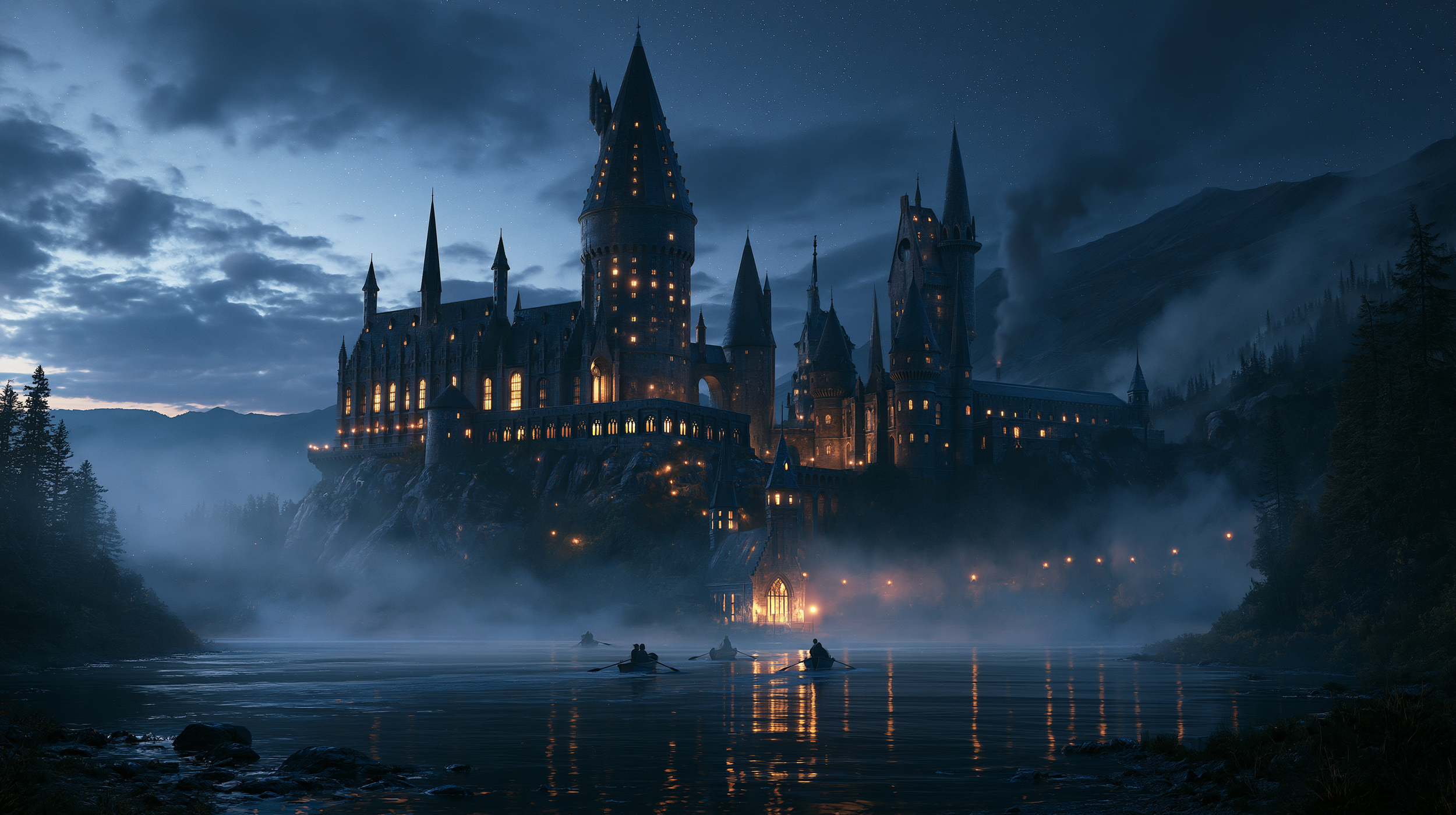
Book Review Harry Potter, Book One Spoiler-aware
A magical invitation, a remarkably effective story of belonging—and a school whose safety record collapses the moment nostalgia stops protecting it.
Quick verdict
Harry Potter and the Sorcerer’s Stone remains a warm, funny and compulsively readable beginning to the series. Its emotional journey from exclusion to belonging is stronger than its mystery, its magical rules or the judgment of nearly every adult responsible for keeping Harry alive.
There are two ways to read Harry Potter and the Sorcerer’s Stone.
The first is the way the novel initially asks to be read: as an invitation. A neglected child learns that the world is larger, stranger and more welcoming than he was ever allowed to imagine. Letters fly through a house. A giant knocks down a door. A hidden shopping district opens behind a London pub. A boy who has spent his life sleeping beneath the stairs discovers that people have been waiting years to meet him.
The second way emerges when the wonder begins to settle.
Hogwarts is a boarding school where eleven-year-olds are assigned to tribal factions minutes after arriving, teachers openly humiliate students, a lethal forest borders the grounds, and an object capable of granting immortality is hidden behind obstacles that three first-year students can defeat.
The first reading explains why the novel became a phenomenon. The second explains why returning to it as an adult can be both hilarious and disturbing.
The original spellWhy the opening still works
The opening chapters remain among the strongest in the series because they establish Harry’s emotional reality before offering an escape from it. The Dursleys are exaggerated, but the exaggeration has a purpose. They embody suffocating normality: incurious, status-conscious, cruel and terrified of anything they cannot control.
Harry enters the story with almost nothing—no privacy, dependable affection, understanding of his parents or meaningful power over his own life. Magic therefore arrives as more than spectacle. It is vindication.
The letters begin dismantling the Dursleys’ authority before Harry understands what any of them mean. Their control depended on restricting what he knew. Every new magical discovery then answers one question while opening several more: Who were his parents? Why does everyone recognize him? Why did Voldemort fail to kill him? Why did nobody tell him?
The book keeps moving because Harry is not merely exploring a new world. He is recovering a stolen identity.
Belonging before loreHogwarts as emotional wish fulfillment
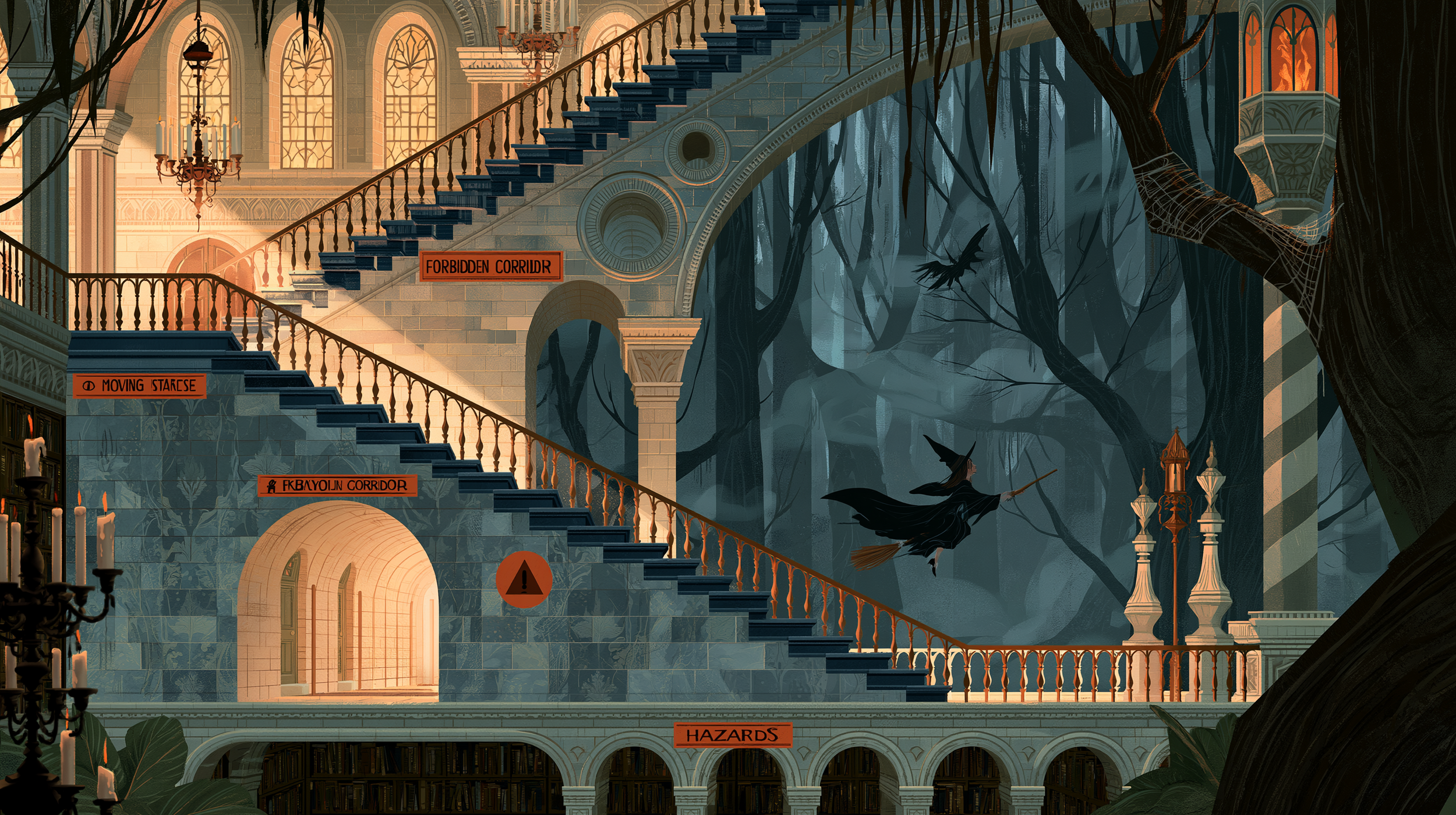
Hogwarts succeeds first as a fantasy of belonging. It offers feasts, ghosts, secret passages, moving staircases, unusual classes, midnight adventures and the promise that ordinary life contains hidden dimensions. Its rules feel ancient enough to carry authority but inconsistent enough to invite rebellion.
For a child denied affection, the school offers several needs at once:
- Friends who choose him rather than tolerate him.
- Adults who knew and respected his parents.
- Talents that belong specifically to him.
- A shared culture he can learn.
- A home that feels larger than the people currently occupying it.
- A mystery that gives him agency.
The school is compelling because it feels discoverable. Readers are not simply told that Hogwarts is magical. They repeatedly encounter spaces, customs and objects suggesting that more exists beyond the page.
The real magicHarry, Ron and Hermione
The novel’s emotional success depends heavily on its central friendship. Harry and Ron connect because neither approaches the other with a calculated expectation. Ron knows Harry’s name but quickly treats him as a boy sharing a train compartment rather than a monument to wizarding history.
Harry, meanwhile, sees in Ron the chaotic family life he never experienced. Ron considers himself overlooked because he has inherited clothes, expectations and comparisons. Harry sees abundance: parents, siblings, stories and people who notice whether he comes home.
Hermione initially disrupts this ease. She is knowledgeable, anxious, overly eager to demonstrate competence and frequently unable to understand why being correct does not automatically make her welcome. Her eventual friendship with Harry and Ron works because it is earned through action. The relationship begins when the children survive danger together and then protect one another from the consequences.
Friendship in this book is not merely affection. It is loyalty expressed under pressure.
A familiar formula is bornThe mystery is simple—but effective
The mystery surrounding the hidden Stone is not especially difficult for an adult reader to solve. The clues are clearly planted, the suspects are broadly drawn and the eventual revelation depends on deliberate misdirection.
But the mystery performs several useful functions. It gives the school year forward momentum, brings apparently disconnected classroom details into the final sequence and encourages Harry, Ron and Hermione to act as investigators rather than passive students.
It also teaches readers how much of the series will often be structured: a school year, an emerging threat, a misunderstood adult, a concealed history and a final confrontation that reinterprets earlier events.
The formula is visible almost immediately. It works because the mystery is not the novel’s only source of satisfaction. The plot asks who is trying to steal the Stone. The reading experience asks what else might be hiding inside Hogwarts.
Featured critical companion
Josh Everton’s “Harry Potter and the Negligent Nightmare of Hogwarts”
Josh Everton’s Harry Potter Roasts series takes a deliberately less forgiving approach to the novels. His Book One video examines the magical rules, Hagrid, the house system, Quidditch and Hogwarts’s teachers while asking what happens when the school is judged as an institution responsible for children rather than protected by childhood nostalgia.
The video is worth watching even when its harshest conclusions are debatable. “The story needs this to happen” and “this makes sense inside the world” are not the same defense.
The remainder of this review discusses the Stone, its protections, Quirrell, Voldemort and the final chapters.
Institutional reviewIs Hogwarts a bad school?
By almost any realistic standard, yes.
That answer becomes difficult to avoid once the school’s major decisions are listed without the protective language of fantasy.
The case against Hogwarts
Children are sorted into inherited rivalries, exposed to dangerous creatures, subjected to inconsistent teachers and sent into a lethal forest as punishment. The school repeatedly treats warnings as an adequate substitute for safeguarding.
The strongest defense
Hogwarts belongs to a tradition of children’s literature in which weakened adult authority creates space for young protagonists to act. A competently supervised school would prevent most of the novel.
The house system makes identity feel like destiny
New students are divided into houses through a ceremony that encourages them to interpret personality as a fixed category. The system creates community and tradition, but it also concentrates similar personalities, reproduces old rivalries and attaches moral reputations to children before they have had time to develop.
The competitive point system makes entire groups responsible for individual conduct. That is excellent for drama and questionable for education.
Student safety is treated as negotiable
A lethal forest sits beside the grounds. A three-headed dog is placed inside the school. Students play a high-speed sport with minimal protection. A troll reaches the interior. Teachers supervise children with wildly different levels of care.
The most indefensible example is detention in the Forbidden Forest. Harry, Hermione, Neville and Draco are first-year students. Their punishment for being out of bed is to enter an area they have repeatedly been told is dangerous. They are then divided into smaller groups while something is killing unicorns nearby.
The sequence succeeds as horror and expands the mystery. As school policy, it is institutional negligence disguised as character development.
The teachers range from demanding to abusive
Snape humiliates students, applies standards selectively and uses his authority to continue grievances formed when he was a student himself. His later complexity does not erase his classroom conduct.
Binns is disengaged from the living world. Quirrell spends a year concealing Voldemort. Hagrid is warm and loyal but repeatedly gives sensitive information to children, keeps dangerous creatures and responds to Dudley’s behavior by magically injuring him.
Hogwarts has memorable teachers. That is different from having consistently good ones.
The defense of Hogwarts
A perfectly supervised Hogwarts would keep students away from the Stone. Professional information-sharing would expose Quirrell sooner. Reasonable security would make the final adventure impossible. Effective adult intervention would turn Harry, Ron and Hermione into observers of their own story.
The school’s failures create the space in which children become heroes. That is not unique to Harry Potter. Children’s adventures routinely weaken adult authority so younger characters can make consequential decisions.
The difference is that Hogwarts is described so vividly as a functioning institution that its failures invite inspection. The school works emotionally. It works narratively. It often fails logically. All three statements can be true.
Wise mentor or dangerous strategist?Is Dumbledore a bad headmaster?
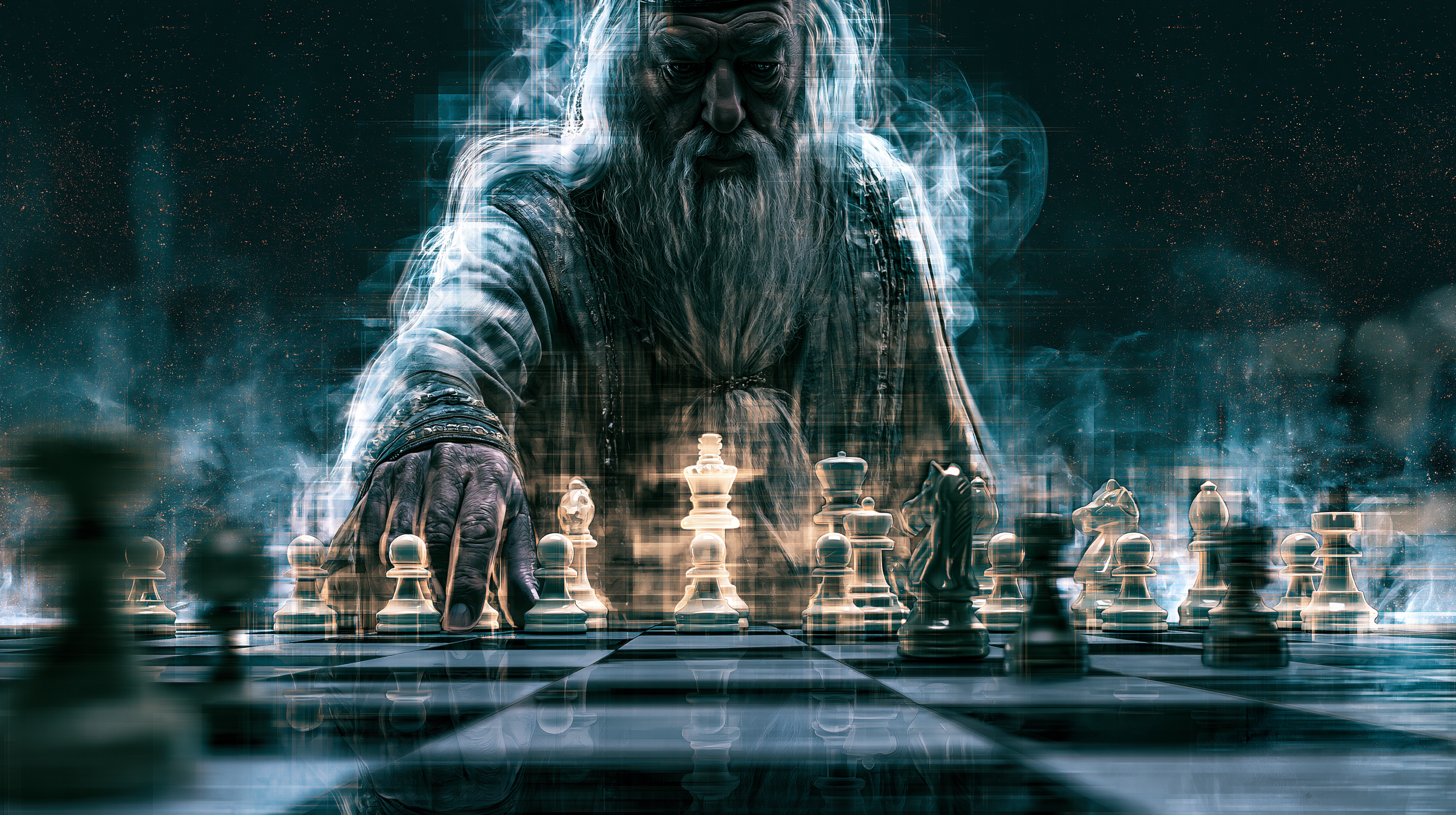
Dumbledore is more complicated than Hogwarts because his apparent negligence may not be accidental. He is introduced as eccentric, powerful, benevolent and unusually perceptive. That combination encourages readers to interpret every questionable decision as part of a larger plan.
Sometimes that interpretation protects him too easily.
The Stone is hidden inside a school
The Philosopher’s Stone is being hunted by Voldemort. Moving it away from Gringotts after the attempted theft may be reasonable. Moving it into a school full of children is harder to defend.
The protections are dangerous enough to harm students but simple enough to be overcome by three first-years. That creates the worst possible combination: lethal security that is not particularly secure.
Dumbledore either misses Quirrell or tolerates the risk
Dumbledore is presented as one of the greatest wizards alive, yet Quirrell carries Voldemort inside the school for most of the academic year. Either Dumbledore fails to recognize this, weakening his reputation for insight, or he suspects something and permits the situation to continue, creating a more serious moral problem.
Adults continue controlling Harry’s history
Dumbledore knows Harry’s past, understands that Voldemort may return and knows more about Lily’s protection than he explains. Yet Harry receives remarkably little information about his own life.
The Dursleys conceal the magical world from him. Dumbledore and other adults continue deciding what Harry should know after he enters it. Their intentions differ. The pattern remains.
Did Dumbledore deliberately test Harry?
A popular interpretation is that Dumbledore expected Harry to pursue the Stone and arranged events as a test. There is suggestive evidence: Dumbledore gives Harry the Invisibility Cloak, the protections align with the trio’s abilities and he speaks afterward as though he understands more about their actions than Harry expected.
But the first book does not conclusively prove that he engineered the entire adventure. If Dumbledore deliberately created the path, he used children as participants in a confrontation with Voldemort. If he did not, his security failed catastrophically.
Neither option makes him look like an excellent administrator.
The house-point decision is needlessly theatrical
Dumbledore’s end-of-year points reward courage, intelligence, loyalty and Neville’s willingness to oppose his friends. The recognition is emotionally satisfying. The delivery is unnecessarily cruel to Slytherin.
The Great Hall is decorated for their victory. The students believe they have won. Dumbledore then awards enough last-minute points to reverse the result publicly. Neville deserves recognition and Gryffindor may deserve the Cup, but the headmaster chooses the most divisive possible way to announce it.
The defense of Dumbledore
Dumbledore ensures that Harry remains protected by his mother’s sacrificial magic. He allows Harry to develop friendships and independence. He warns that the Mirror of Erised can become psychologically destructive, and his final conversation offers guidance without answering every future mystery.
He also seems to understand that protecting a child from all knowledge and risk can become another form of control.
The problem is proportion. Dumbledore does not merely allow Harry room to grow. He allows Harry to operate near dangers that would overwhelm most adults.
Verdict: bad headmaster, compelling character
Dumbledore is not cartoonishly uncaring. He is a strategic thinker whose priorities do not always align with the ordinary duties of a school administrator.
He cares about Harry and withholds information from him. He protects the school and brings the object Voldemort wants inside it. He rewards courage and manipulates the house competition. He respects choice and repeatedly shapes the circumstances under which other people must choose.
These contradictions make Dumbledore interesting. They do not make him innocent.
Where the critique landsDo the logical failures damage the novel?
They damage the worldbuilding more than the story.
The magical world is built from memorable ideas rather than a fully coherent system. Rules are often introduced when the plot needs them. Economic structures, educational standards, government oversight and magical limitations remain vague.
This approach gives the book tremendous imaginative freedom. It also creates instability. Magic can feel rare and wondrous in one chapter, then casual and bureaucratic in another. Hogwarts feels ancient and prestigious while operating through policies that seem to survive because nobody has seriously considered alternatives.
Readers who approach fantasy primarily as a system may find the novel frustrating. Readers who approach fantasy as atmosphere, metaphor and emotional experience are more likely to forgive it.
Sorcerer’s Stone is not great because every element fits into a flawless structure. It is great because so many of its elements are immediately memorable.
More than a blank chosen oneHarry is a stronger protagonist than his reputation suggests
Harry is observant, sarcastic, stubborn and acutely sensitive to humiliation. He does not immediately become confident when he learns he is famous. His childhood has trained him to distrust good fortune because it can disappear without warning.
He is also drawn toward danger partly because mystery offers him something ordinary life denied: control. Investigating the Stone allows him to act rather than wait for adults to decide what happens next.
His bravery therefore has several sources—loyalty, curiosity, anger, fear of losing his new home and a willingness to confront what adults avoid. That mixture makes him more compelling than a purely noble hero would be.
The novel’s deepest inventionThe Mirror of Erised
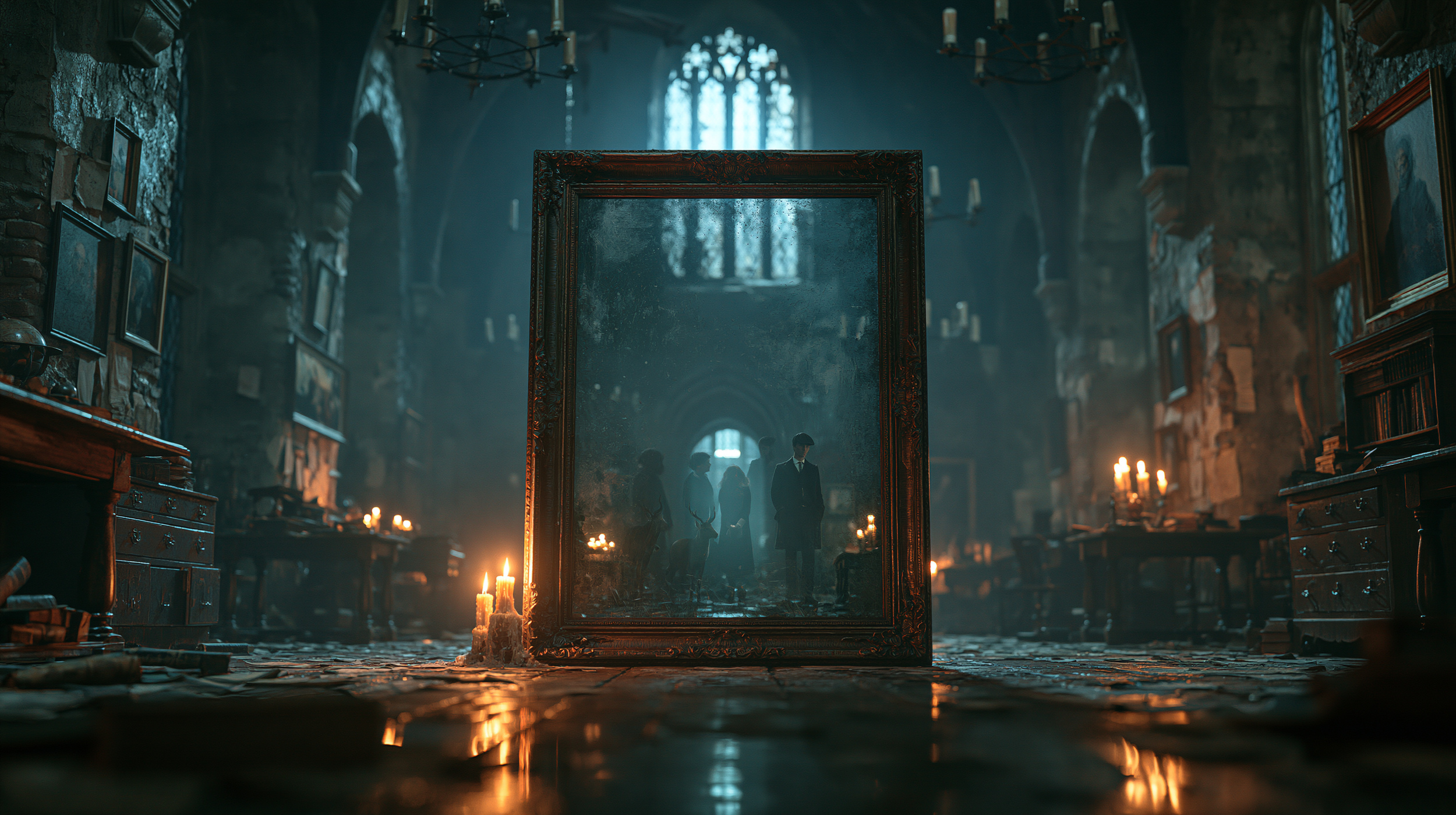
The Mirror of Erised transforms desire into a danger without claiming desire itself is wrong. Harry sees the family he never knew. Ron sees achievement and recognition. Neither longing is shameful.
The danger comes from replacing life with longing. The mirror offers emotional certainty without requiring action, risk or change. A person can remain before it indefinitely, experiencing the image of fulfillment while accomplishing nothing.
The Stone offers immortality. The mirror offers perfect desire. Both promise escape from human limitation. The book ultimately rejects both.
Then and nowReading the book as a child and as an adult
A younger reader is likely to focus on receiving a Hogwarts letter, choosing a wand, entering the Great Hall, learning to fly and discovering what lies beneath the trapdoor.
An adult reader is more likely to notice the surrounding systems: the Dursleys’ abuse receives little formal intervention; the magical world admires Harry while leaving him uninformed; Hogwarts divides children through inherited identities; teachers exercise enormous authority with limited accountability; and Dumbledore’s wisdom depends partly on everyone accepting his secrecy.
The adult reading does not destroy the childhood one. It reveals the cost of the fantasy.
The coming adaptationWhat HBO should preserve—and improve
HBO has announced that its long-form adaptation will begin with Harry Potter and the Philosopher’s Stone and debut during Christmas 2026. The television format creates room to restore details, but additional time will not automatically create a stronger story.
The adaptation should preserve the slow intrusion of magic into Privet Drive, Harry’s dry humor, Ron’s strategic intelligence, Hermione’s social difficulty, the darkness of the Forbidden Forest and the emotional meaning of the Mirror of Erised.
It should improve the logic of the Stone’s protections, the adults’ response to known threats, the consequences of Snape’s classroom behavior and the distinction between intentional risk and institutional incompetence.
Improving those elements would not require making Hogwarts safe. It would require making its danger feel like part of a coherent culture rather than a collection of oversights.
Best for
- Younger fantasy readers
- Adults revisiting formative books
- Fans of boarding-school mysteries
- Readers who value atmosphere and character over rigid magical systems
Less likely to work for
- Readers who need tightly defined magical rules
- Anyone frustrated by negligent or incompetent adults
- Readers seeking morally complicated villains immediately
- Those who dislike episodic school-year structures
Read—or revisit—the first book
The American edition is titled Harry Potter and the Sorcerer’s Stone; the original British edition is Harry Potter and the Philosopher’s Stone. The story is the same, although some wording differs between editions.
Affiliate disclosure: A Wandering Mind may earn a commission from qualifying Amazon purchases made through the link below. It costs you nothing extra and does not affect this review.
Final verdict
Harry Potter and the Sorcerer’s Stone remains a very good book and an exceptional invitation. Its world is imaginative without becoming difficult to enter. Its friendships feel earned. Its best emotional ideas—belonging, choice, desire and the difference between fame and love—remain effective.
The weaknesses are real. The house system is reductive, the magical rules are unstable, several adults behave appallingly, Hogwarts is unsafe even by the standards of a school teaching children to cast spells, and Dumbledore’s choices become less defensible the more seriously they are examined.
Those flaws do not erase what the novel achieves. They complicate it. The first Harry Potter book creates a place readers still want to inhabit after recognizing that it should probably fail every inspection ever devised.
That is not rigorous institutional design. It is powerful fantasy.
Frequently asked questions
Is Harry Potter and the Sorcerer’s Stone still worth reading?
Yes. Its prose is accessible, the emotional journey is effective and the gradual discovery of the magical world remains compelling. Readers who require tightly consistent worldbuilding may notice more problems than younger readers do.
Is Hogwarts actually a bad school?
As a realistic institution responsible for children, Hogwarts is dangerously managed. As a children’s fantasy setting, its weak supervision creates the freedom necessary for Harry, Ron and Hermione to become protagonists.
Is Dumbledore a bad headmaster in the first book?
He is a fascinating mentor but a questionable administrator. Bringing the Stone into a school, failing to stop Quirrell and allowing children near lethal dangers are difficult decisions to defend, whether they were deliberate or accidental.
Why is the book called Philosopher’s Stone outside the United States?
Harry Potter and the Philosopher’s Stone is the original British title. Scholastic changed the title to Sorcerer’s Stone for the American edition published in 1998.
Sources and further viewing
- Bloomsbury: Harry Potter activity pack and publication history.
- Scholastic: Harry Potter highlights and publishing milestones.
- Warner Bros. Discovery Pressroom: official Harry Potter television-series announcements.
- Josh Everton: “Harry Potter and the Negligent Nightmare of Hogwarts”.
- Josh Everton: Harry Potter Roasts playlist.
Editorial disclosure: This review contains independent opinion and criticism. It is not affiliated with or endorsed by J.K. Rowling, Bloomsbury, Scholastic, Warner Bros. Discovery, HBO or Josh Everton. AI assisted with drafting and page construction; the article was editorially directed and reviewed for publication by A Wandering Mind.