
Fort Benning Is Getting a Nuclear Microreactor. Here’s What That Actually Means
A small reactor.
Much bigger questions.
Fort Benning is becoming one of the Army's first Janus Program microreactor sites. The questions now extend beyond how the reactor works: safety, jobs, nuclear waste, emergency planning, oversight, public transparency—and what information should remain protected for national security.
A nuclear reactor is coming to Fort Benning. That does not mean Columbus is getting another Plant Vogtle—and it does not mean every detail about a nuclear facility on an active military installation should be published on the internet.
On August 26, 2026, the U.S. Army announced that Fort Benning, Georgia, is one of five initial installations selected for the Janus Program, an effort to deploy commercially developed nuclear microreactors on military bases. Radiant Industries has been paired with Fort Benning.
The stated goal is energy resilience: critical military systems should be able to continue operating even when the surrounding commercial electrical grid cannot.
The announcement naturally creates questions in Columbus, Phenix City and across the Chattahoochee Valley. Is the reactor safe? How much radiation could people nearby receive? What happens to the fuel? Could it create jobs? Who regulates it? And how much information should the Army reveal about a nuclear facility that also supports a national-security mission?
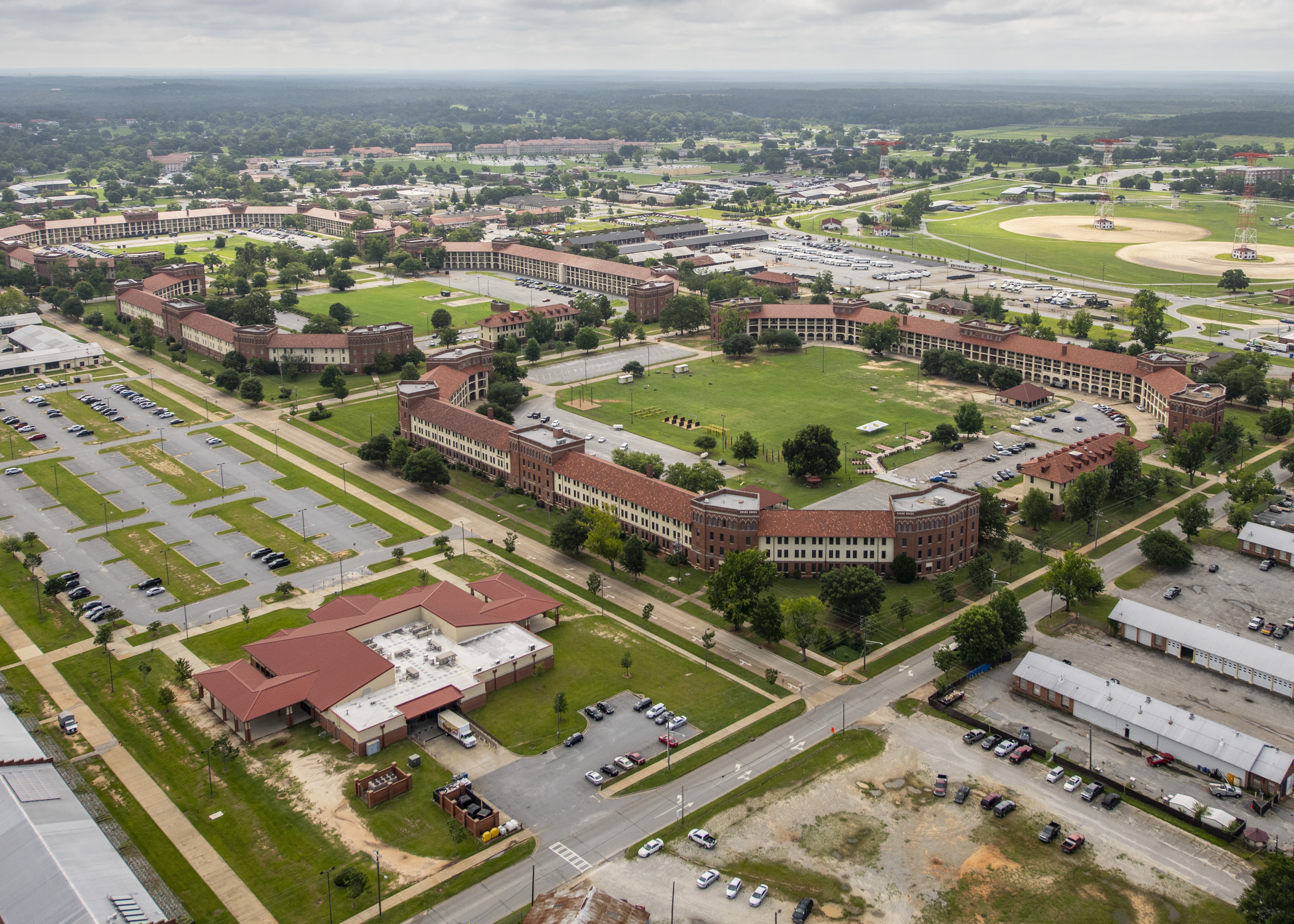
Fort Benning has been paired with Radiant Industries for the Army's Janus Program. Radiant's Kaleidos design is a factory-built, transportable high-temperature gas-cooled microreactor producing about 1 megawatt of electricity. Available evidence from conventional U.S. nuclear plants shows very low radiation exposure to nearby communities during normal operation. Kaleidos adds modern features including TRISO fuel and passive-safety concepts—but it is a new design, so Fort Benning-specific safety evidence and operating data should be made public wherever doing so does not compromise security.
Fort Benning is becoming an Army nuclear microreactor site
The Janus Program is intended to move advanced nuclear systems from demonstrations toward years of real-world operation.
The Army selected five initial company-and-installation pairings: Radiant Industries at Fort Benning, Antares Nuclear at Fort Bragg, BWXT Advanced Technologies at Fort Campbell, General Atomics at Fort Hood and Westinghouse Government Services at Fort Drum.
The Army says it may award up to a combined $2.2 billion through Janus alongside private-sector investment, and expects the broader effort eventually to result in more than 20 microreactors across military installations.
Radiant separately announced an agreement worth up to $750 million to develop and deploy as many as 15 Kaleidos units through Janus. That does not mean all 15 units are going to Fort Benning.
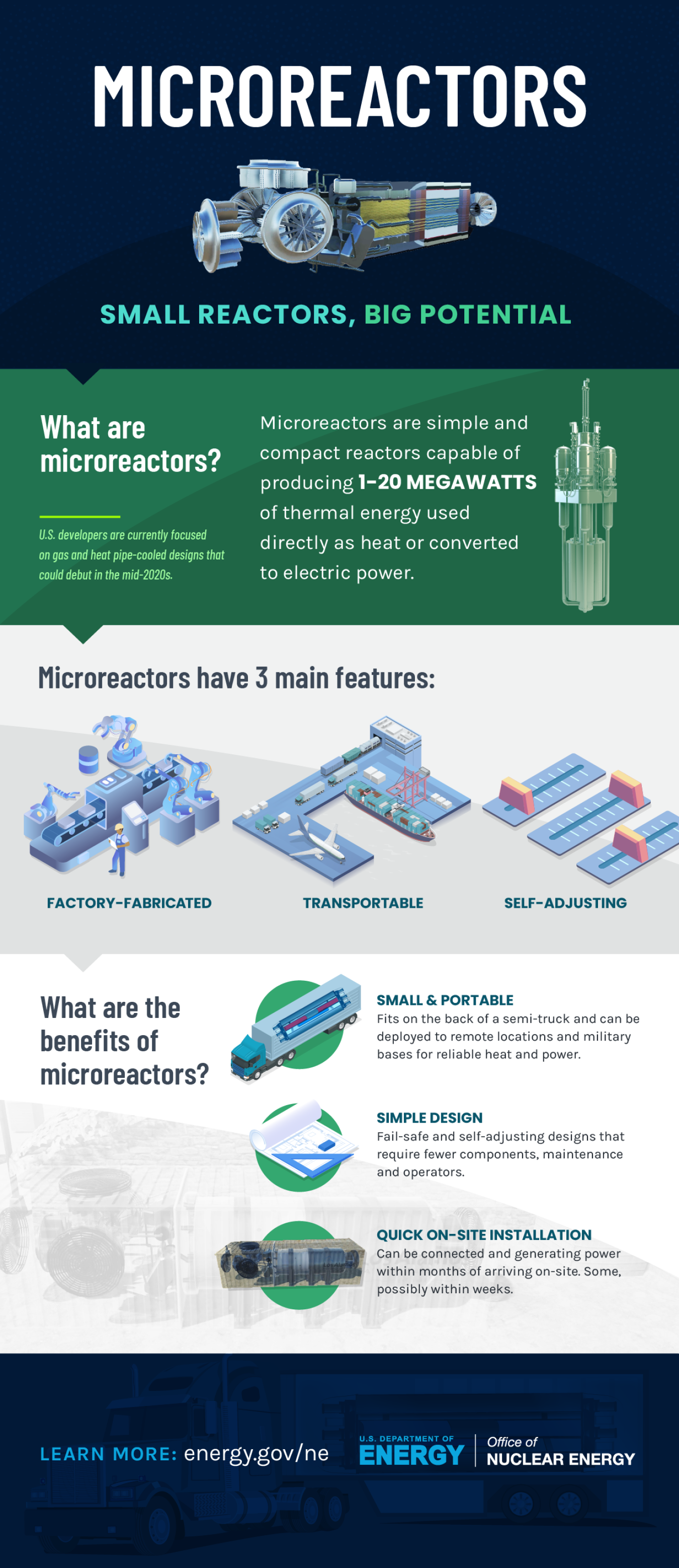
What exactly is a microreactor?
A microreactor is a much smaller nuclear reactor intended to be factory-built and transportable. DOE describes microreactors as compact systems that can supply electricity or heat to places such as remote communities, commercial facilities and military bases.
Radiant's Kaleidos is approximately a 1-megawatt-electric high-temperature gas-cooled reactor.
That scale matters. A one-megawatt unit is not designed to replace a large regional generating station. Its military value is having dependable electricity at a critical location when the surrounding grid fails.
A Kaleidos microreactor and a multi-gigawatt commercial nuclear station have radically different scales and operating missions. Large reactors serve grids. Microreactors are designed to put resilient power close to a specific load.
Is it dangerous to live near a nuclear power plant?
Radiation deserves respect. That does not mean a nuclear facility automatically exposes its neighbors to dangerous radiation.
Ionizing radiation can cause harm at sufficient doses. Nuclear regulation, shielding, containment, monitoring and emergency planning exist because radioactive material needs to be controlled.
But dose matters.
NRC's personal radiation-dose calculator estimates that living within 50 miles of a conventional pressurized-water nuclear plant adds about 0.0009 millirem per year from the plant.
NRC also requires commercial nuclear facilities to monitor radioactive effluents and the surrounding environment.
Conventional U.S. reactor experience is useful evidence that nuclear facilities can operate while exposing neighboring communities to extremely small routine doses.
Kaleidos is a new design. When it operates, the strongest case for public confidence will be actual environmental and radiation data from the installation.
Why TRISO fuel matters
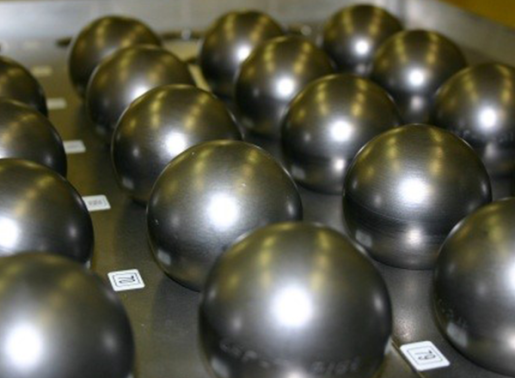
Kaleidos uses TRISO fuel. Each tiny fuel particle surrounds the uranium-bearing kernel with multiple carbon and ceramic layers designed to retain radioactive fission products.
DOE testing has exposed modern TRISO fuel to temperatures exceeding predicted accident conditions for high-temperature gas reactors.
Why helium cooling matters
Kaleidos is a high-temperature gas-cooled reactor that uses helium rather than water as its primary coolant.
Helium is chemically inert and does not undergo the same boiling behavior as water in a conventional light-water reactor.
Can it explode like a nuclear bomb?
No. A power reactor cannot detonate like a nuclear weapon.
Reactor accidents can still be serious, but nuclear weapons and nuclear reactors use fundamentally different fuel configurations, geometry and operating conditions.
What happens to the radioactive fuel?
Used nuclear fuel remains radioactive and needs secure handling. That issue should not be waved away simply because the reactor is small.
Radiant says it plans to manage fueling, refueling and spent-fuel handling as part of the Kaleidos service model.
The public does not need advance disclosure of detailed transport routes or timing. It does deserve to understand the safety standard, responsible agencies and overall waste-management process.
Should the public know exactly where the reactor will be located?
This is where the conversation needs more precision than simply saying either “tell us everything” or “it's classified.”
The location apparently has not yet been finalized.
Radiant says its current Fort Benning renderings are conceptual and that the planned reactor location is still to be determined.
Even after a site is selected, it would be premature to assume the exact location will necessarily be formally classified.
The Army's OPSEC guidance makes an important distinction: critical information can be unclassified and still require protection if putting those details together could help an adversary understand vulnerabilities or security procedures.
Environmental findings, radiation measurements, responsible regulators, emergency instructions, broad operating performance and information needed to understand public-health consequences.
Exact sensitive-material locations, detailed security systems, access controls, guard procedures, cyber defenses, vulnerability analyses and specific transport timing or routes.
The goal should be accountable transparency: give residents enough information to independently understand health, environmental and emergency consequences while withholding operational details that would make the installation easier to attack.
Transparency does not require publishing the security plan
Civilian nuclear regulation already provides a useful model. Public versions of regulatory documents can be released while security-sensitive portions remain protected.
The Army can protect physical security and cyber security while still publishing an understandable safety case, environmental findings, radiation data and community emergency guidance.
Emergency information still has to be useful
Residents do not need guard schedules or facility vulnerability maps. They do need to know how they would be alerted, what protective actions would be recommended and which agencies would communicate during an incident with off-base consequences.
Ask for information that helps the community evaluate risk, oversight and response. Do not ask the Army to publish information whose primary value would be helping someone defeat the installation's security.
Can the Army explain the general siting criteria and public-safety assumptions without providing sensitive coordinates?
Explain the categories and security rationale even when the protected information itself cannot be released.
Can sensitive portions be redacted while environmental and public health findings remain available?
What prevents genuine security protection from becoming a blanket answer to ordinary public questions?
Will routine environmental measurements and reportable releases be published on a predictable schedule?
What instructions would residents and local emergency managers receive if an incident could affect areas outside Fort Benning?
Explain standards and responsible agencies without publishing transport schedules or sensitive routing information.
The public does not need network diagrams, but it can reasonably ask who verifies that required security standards are being met.
Will the reactor power all of Fort Benning or Columbus?
No. A roughly one-megawatt Kaleidos unit is tiny compared with a conventional commercial nuclear generating station.
| Characteristic | Kaleidos microreactor | Large nuclear station |
|---|---|---|
| Electrical scale | About 1 MW per Kaleidos unit | Hundreds to thousands of MW |
| Main purpose | Local resilient / mission-critical power | Regional grid generation |
| Construction model | Factory-built and transportable | Large permanent generating site |
| Potential users | Bases, industry, remote sites and critical infrastructure | Utilities and regional electrical grids |
Will the Fort Benning nuclear project create jobs in the community?
Probably—but no Fort Benning-specific employment estimate has been published yet.
The Army says Janus vendors will construct and operate the microreactors, and Fort Benning has referred to an upcoming planning and construction process.
That makes some local economic activity likely.
Site preparation, electrical integration, construction support, logistics, physical security, inspection, maintenance and ongoing operations can all require labor and contracted services.
Civil, electrical, utility and infrastructure work may create contractor opportunities while the site is prepared.
Nuclear operations, maintenance, security, safety and technical support could create ongoing roles.
Contractors, engineers and permanent personnel also spend money on housing, transportation, food and local services.
But the reactors themselves will not be manufactured in Columbus
Kaleidos is deliberately designed to be factory-built. Radiant is developing its major manufacturing facility in Oak Ridge, Tennessee.
The Fort Benning employment impact is therefore more likely to center on deployment, construction, integration, operations and support rather than large-scale reactor manufacturing.
Neither the Army nor Radiant has announced a Fort Benning-specific local-hiring estimate. Claims about a specific number of Columbus-area jobs would currently be speculation.
How much project work will be available to Chattahoochee Valley contractors, and will transitioning Soldiers or veterans have access to training or hiring pathways connected to Janus?
Getting out soon? The nuclear project may eventually become a career story too.
Advanced energy infrastructure needs more than nuclear physicists. Construction, logistics, cyber security, industrial safety, electrical work, mechanical systems, project management and physical security are all relevant fields.
Soldiers approaching separation should not wait for Janus hiring before beginning their transition.
Fort Benning's Transition Assistance Program provides transition and employment support. VA's Benefits Delivery at Discharge program may allow eligible service members to file a disability claim 180 to 90 days before separation.
Nuclear power should be a major part of America's energy future.
The best argument for nuclear power is not that solar or wind are bad. They are not.
The stronger argument is that a modern, highly electrified economy is going to need enormous quantities of dependable electricity.
Data centers, artificial intelligence, advanced manufacturing, semiconductor fabrication, transportation electrification and future technologies are increasing pressure on the grid.
A wealthy technological society should be trying to create energy abundance, not deciding which useful source of electricity must lose so another can win.
Large reactors can provide electricity at enormous scale. Smaller modular systems may make nuclear construction more repeatable. Microreactors can serve military bases, remote communities, industrial sites and critical infrastructure.
Fort Benning's reactor will be one small machine. If the model succeeds, however, it could help demonstrate that nuclear energy can also be manufactured, transported and repeatedly deployed.
The questions Fort Benning and Radiant should answer as the project develops
Explain safety-relevant siting criteria without exposing security-sensitive details.
Publish non-sensitive environmental findings and mitigation measures.
Publish useful conclusions while protecting vulnerability information.
Explain the monitoring system and publish results on a predictable schedule.
Public protective-action guidance should remain available even when tactical response plans are protected.
Clarify Army, DOE, NRC and other technical-review roles.
Separate temporary construction employment from permanent operations and support roles.
Explain opportunities for Columbus and Chattahoochee Valley businesses.
Identify training, apprenticeship or hiring routes when staffing plans become mature enough.
Establish a durable public information process rather than relying only on occasional announcements.
Fort Benning nuclear microreactor FAQ
Is Fort Benning getting a nuclear power plant?
Where exactly will the Fort Benning reactor be located?
Is it safe to live near a nuclear power plant?
Can the microreactor explode like a nuclear bomb?
What is TRISO fuel?
Why might some reactor information not be public?
Will the Fort Benning microreactor create local jobs?
Could transitioning Soldiers qualify for nuclear-industry jobs?
Why does the Army want nuclear microreactors?
Sources & further reading
- WTVM — Fort Benning selected for Army nuclear microreactor program
- U.S. Army — Fort Benning selected for next-generation nuclear initiative
- U.S. Army — Janus vendors, installations and program funding
- Radiant — Janus contract and Kaleidos deployment information
- U.S. Nuclear Regulatory Commission — Kaleidos
- U.S. Department of Energy — What is a Nuclear Microreactor?
- U.S. Department of Energy — TRISO nuclear fuel
- NRC — Personal Annual Radiation Dose Calculator
- NRC — Classified, safeguards and sensitive nuclear information
- U.S. Army — Operations Security and protecting critical information
- Radiant — Oak Ridge Kaleidos manufacturing facility
- Fort Benning — Transition Assistance Program
- VA — Benefits Delivery at Discharge
AI-assisted, human-reviewed editorial research. Sources are linked so readers can review the underlying material directly.