
Bugonia Explained: Why the Movie Works
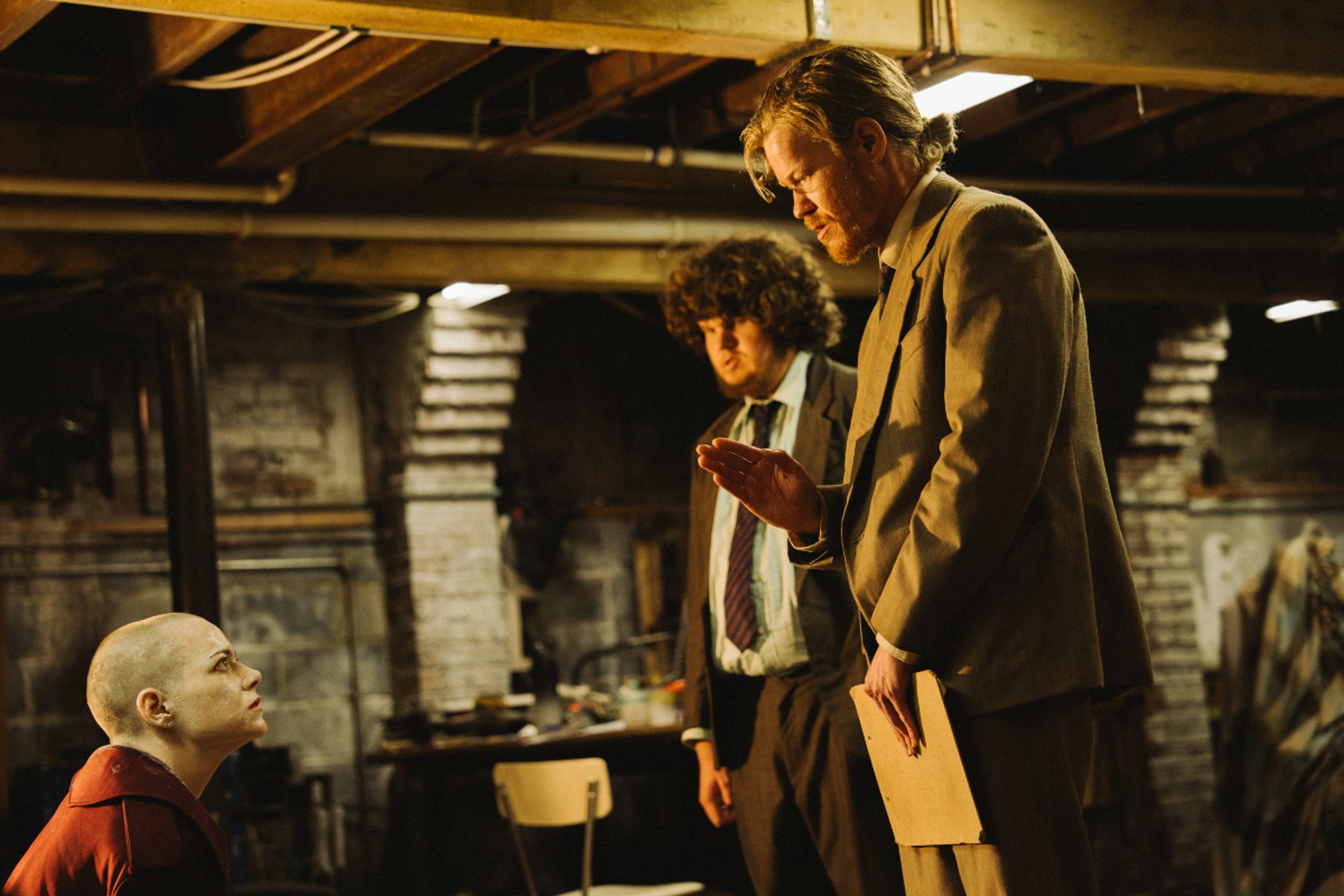
I never thought Teddy was right. The movie showed me evidence anyway — and made the person explaining it seem so delusional that I dismissed the clue.
I knew almost nothing about Bugonia. I noticed it on Netflix, watched part of the preview with the television muted, and decided to give it a shot. I had never seen a Yorgos Lanthimos movie, did not know this was a remake, and had no theory about where the story was going.
That lack of preparation may have made the experience even better. The performances, direction, sound, visual language and ending all seemed to lock together while I was watching rather than asking me to admire the machinery from a distance.
I read Teddy as an intelligent man whose trauma, isolation and anger had given a conspiracy theory somewhere to take root. Michelle, meanwhile, seemed exactly like the kind of executive who could survive a hostage situation by turning corporate communication skills into a weapon. That interpretation felt so complete that I never seriously considered the impossible explanation.
Teddy Is Intelligent Enough to Be Dangerous.
Jesse Plemons never plays him as a fool. That is essential.
Teddy can plan, research, persuade and build a theory sophisticated enough to absorb almost anything that happens. His problem is not a lack of intelligence. It is what happens when intelligence is recruited to defend a conclusion that has become emotionally necessary.
His mother’s condition gives his anger a real source. His distrust of a biotech company does not emerge from nowhere. His environmental concerns are not invented. The movie surrounds the absurd alien theory with enough genuine injury and institutional failure that Teddy can keep finding real facts to attach to the wrong framework.
That is one reason Plemons is so effective. He lets you see the person Teddy might have been if his abilities had been pointed somewhere healthier. I have watched Plemons in very different roles for years, starting with Black Mirror, and this performance pushed him closer to the group of actors whose presence alone can make me interested in a film.
The movie shows the clue. Teddy makes the clue easier to ignore.
The movie did not need to hide the truth from me. It only needed to make the person telling me the truth seem untrustworthy.
Would you have believed him?
Michelle survives the shock
Teddy immediately turns her survival into proof of his alien theory. His certainty makes the event feel like one more fact being forced into a preexisting conspiracy.
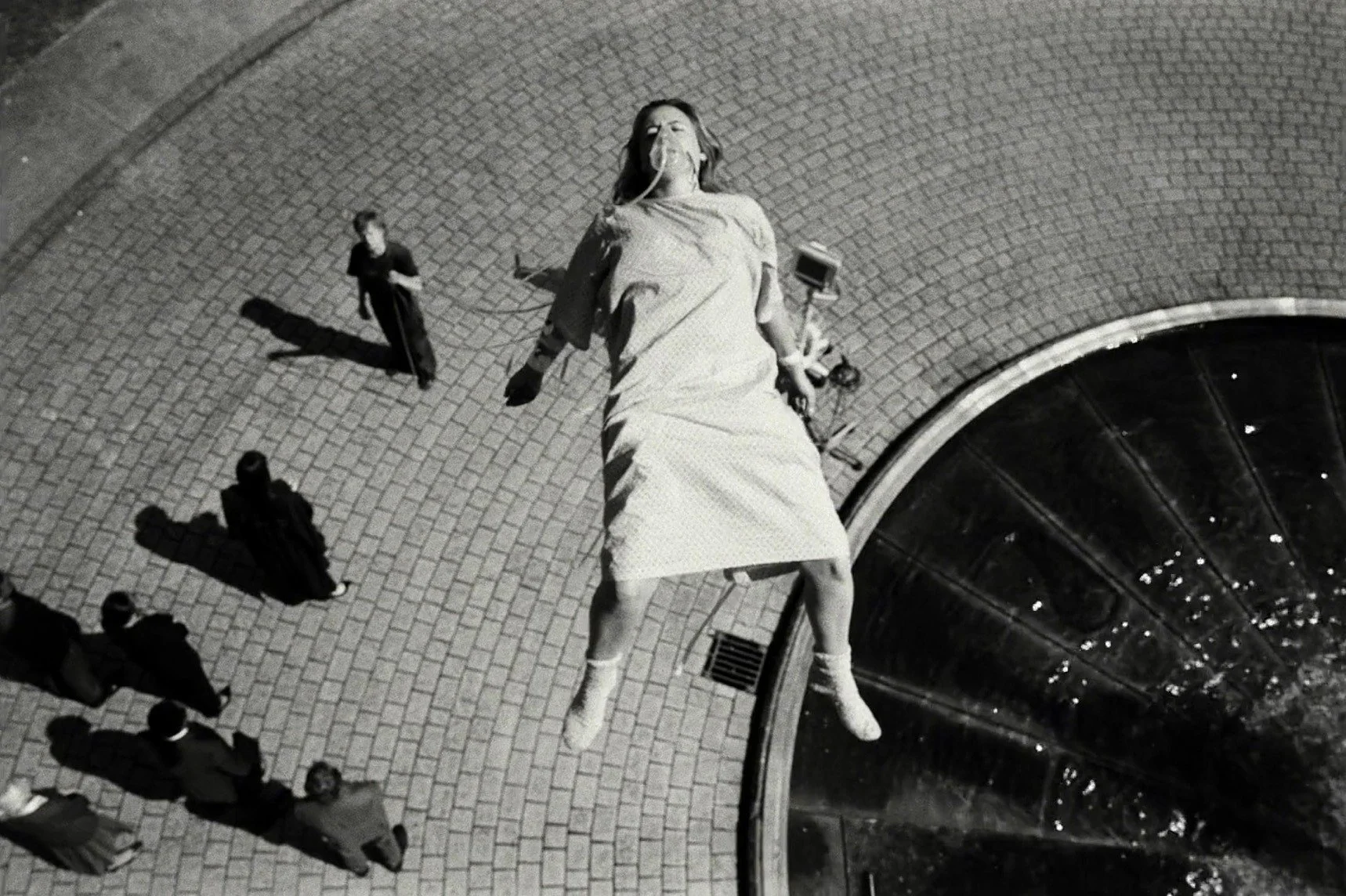
The physical clue was real. Michelle’s resilience was one of the movie’s clearest pieces of foreshadowing — and Teddy’s response helped disguise it.
Michelle can manipulate the room
Of course she can. She is a powerful biotech CEO trained to control conversations, perform empathy and redirect pressure.
That interpretation was still correct. Her alien identity does not erase the corporate manipulation. It makes the camouflage better.
The bees matter too much
The bees read as environmental symbolism and part of Teddy’s attempt to connect unrelated events into a single explanation.
The bees were both symbol and plot. The movie let a familiar metaphor conceal a literal part of its science-fiction reality.
Teddy knows too much
Research plus obsession can create the illusion of expertise. His confidence sounded exactly like someone who had spent too long validating himself online.
His methodology was still terrible — but buried inside it was one extraordinary truth. Being right once did not make his reasoning rational.
Teddy was the perfect person to hide the truth.
The shock could have been the moment I seriously questioned Michelle. Instead, Teddy’s conspiratorial reaction pulled me back toward the rational explanation: he was delusional and interpreting every strange event as confirmation. The movie weaponizes the credibility problem of its own truth-teller.

Michelle: control by polish
Stone’s performance made Michelle believable as the cold, calculating, well-meaning biotech CEO. Her empathy had the right tone — controlled, measured, useful. Even when she appeared compassionate, I read it as a professional skill.
Validate. Redirect. Control.
Teddy: control by certainty
Teddy has none of Michelle’s institutional power, but Don shows that he can manipulate too. He offers belonging, explanation and certainty. That is enough to pull another lonely person into his reality.
Trauma → isolation → explanation → certainty.
Don Shows How a Rabbit Hole Becomes a Shared Reality.
Don keeps the movie from being only a duel between a powerful CEO and the man who kidnapped her. He shows what Teddy’s certainty can do to someone who needs connection.
Michelle manipulates through polish, status and an almost professional command of empathy. Teddy manipulates through intimacy. He gives Don an explanation for why the world feels wrong, gives him an enemy, and then gives him a role in fixing it. That combination can be enormously powerful because belonging and belief begin reinforcing one another.
This is where the film’s social commentary on loneliness, misinformation and conspiracy culture becomes more interesting than a simple warning about “people believing things on the internet.” Teddy does not merely consume a bad idea. He builds an identity around it and brings another person inside.
The tragedy is that affection and manipulation can exist at the same time. Teddy appears to care about Don. That does not prevent him from pulling Don deeper into a worldview that eventually helps destroy them both.
The Movie Feels Wrong Before You Know Why.
Bugonia was shot in VistaVision, and the unusually tall frame immediately felt different on my television. Cinematographer Robbie Ryan has explained that the format was especially useful for a film that spends so much time in Teddy’s basement: faces, depth and the physical relationship between captor and captive become more important than conventional widescreen spectacle.
The sound works the same way. Music, electrical noise, bees and sudden changes in intensity do not merely decorate the scenes; they make Teddy’s world feel oppressive and unstable. Some of the most intense sequences become almost physical because the soundtrack is pushing on the audience at the same time as the performances.
That is why this page uses controlled geometry for Michelle, fractured relationships for Teddy and a calmer layout after the reveal. The design is not meant to imitate the movie literally. It is meant to recreate the sensation of information changing meaning depending on who is framing it.
Bugonia’s Ending Explained: The Reveal Rewrites the Movie.
Being Correct Does Not Make Teddy Rational.
That distinction is what keeps the ending from collapsing into a cheap “the conspiracy guy was right” joke.
Teddy reaches one extraordinary correct conclusion through a process full of paranoia, violence, assumptions and confirmation bias. The result does not retroactively validate the method. He can be right about Michelle’s species and still be disastrously wrong about how a person should evaluate evidence or treat other people.
The electrical shock is the perfect miniature version of the entire movie. Michelle survives something that should make me question my assumptions. Teddy notices it. Yet because he interprets the event through a framework I already distrust, his explanation actually pushes me back toward disbelief.
In other words, Bugonia hides truth behind a messenger who has destroyed his own credibility. That is a much more unsettling idea than simply hiding a twist until the final scene.
Michelle’s Corporate Persona Was the Perfect Disguise.
The reveal does not make my earlier reading of Michelle meaningless. It makes it funnier. Stone really does play her like a highly capable executive who knows how to perform concern, control a conversation and make another person feel heard while steering them toward the outcome she wants.
That is why the scene involving Teddy’s mother is so effective. Michelle’s tone sounds believable not because she suddenly becomes warm, but because she knows exactly how warmth is supposed to sound. The empathy feels calibrated. When she later becomes firmer, the performance changes pressure without changing the underlying sense of control.
I interpreted that skill as evidence that years in a powerful corporate role had turned Michelle into an exceptional manipulator. The movie lets that perfectly reasonable explanation do most of the camouflage for the actual science-fiction answer.
The Flat Earth Joke Finally Lands.
These frames explain the joke much better than a diagram. Earlier, Flat Earth imagery helps define Teddy’s conspiracy-minded worldview. Later, the ending folds that same visual idea into the movie’s absurd extraterrestrial payoff.

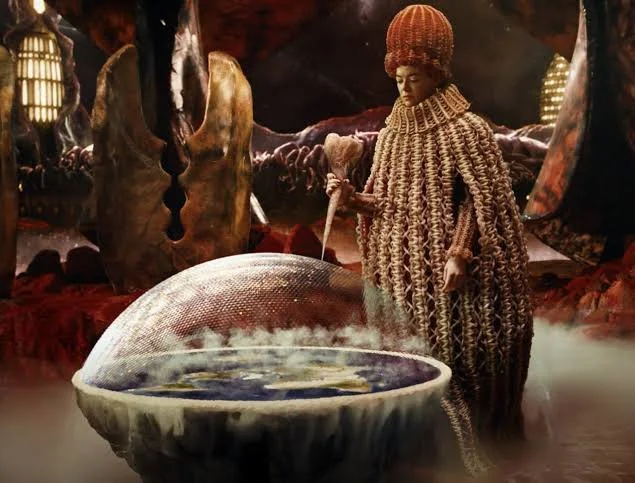
That is why the ending works so well: the movie does not merely reveal that Teddy was right about something impossible. It keeps making that truth feel funny, unsettling and a little humiliating for the audience.
Humanity Loses.
No heroic final battle. No last-minute redemption. No speech about humanity’s potential. Michelle makes a decision, and humanity simply disappears.
That tonal shift is one of my favorite choices in the film. After all the noise, paranoia, argument, torture and manipulation, the end is almost serene. The absurdity does not disappear; it becomes colder.
And then the bees matter again. What looked earlier like another object in Teddy’s conspiracy worldview becomes part of a final image in which the planet continues without us. The movie is bleak, but it delivers that bleakness with such confidence and dark humor that my immediate reaction was not disappointment. It was delighted disbelief.
I Did Not Know Bugonia Was a Remake.
I only learned after watching it that Bugonia adapts the 2003 South Korean film Save the Green Planet!. I have not seen the original, so I am not going to pretend I can compare the two yet.
I do plan to watch it. If anything, discovering the connection after the fact makes me more curious about which ideas belong to the original story and which choices are specific to this version.
I cannot currently think of anything that detracts from this film. Maybe repeated viewings will expose something. That is fine. I intend to find out.